
US Swiss Bank Sanctions: A Strategic Escalation in Global Financial Enforcement
Strong Opening Hook
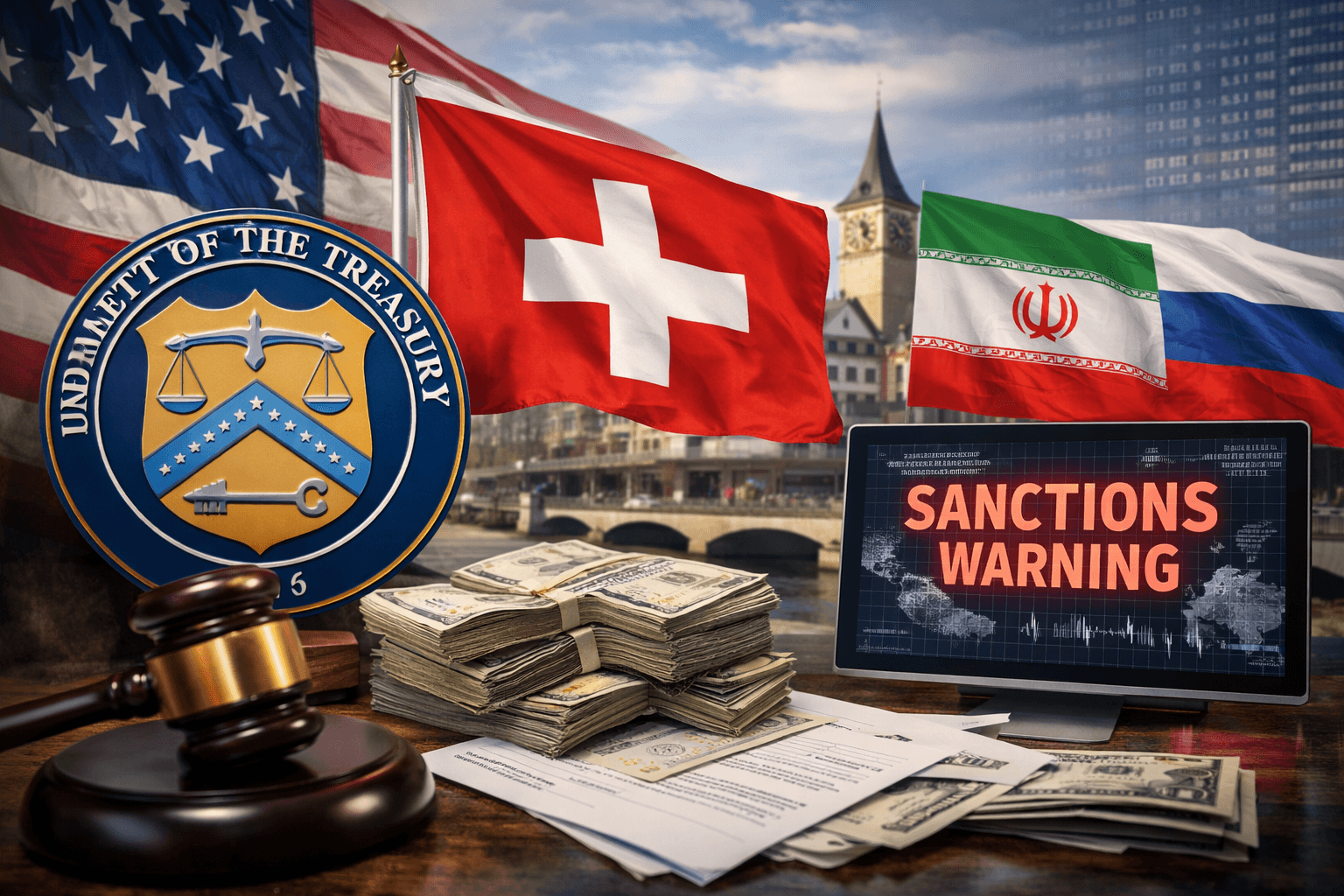
The United States is taking a decisive step to protect its financial system. It has proposed cutting a Swiss bank off from global dollar flows.
This move signals a broader shift. Financial enforcement is now a central tool of geopolitical strategy.
Clear Explanation of the Situation
The US Treasury Department has proposed a rule to sever MBaer Merchant Bank AG, a Zurich-based institution, from the US financial system.
If finalized, US banks will be barred from maintaining correspondent accounts with the bank. This effectively removes access to dollar-based transactions.
The action falls under anti-money laundering authority managed by the Financial Crimes Enforcement Network (FinCEN).
Background Context
The US has long used financial restrictions as a policy instrument. Sanctions and access controls allow Washington to influence global capital flows.
This case focuses on alleged links to sanctioned actors. The Treasury claims the Swiss bank enabled financial flows tied to Iran, Russia, and Venezuela.
The timing is significant. It coincides with renewed US-Iran nuclear negotiations and ongoing tensions with Russia.
Key Developments
Alleged Illicit Financial Activity
US authorities claim the bank facilitated over $100 million in transactions linked to illicit actors.
These activities reportedly include:
- Money laundering tied to Russian networks
- Corruption-linked transactions involving Venezuela
- Terrorist financing linked to Iran’s IRGC and Quds Force
Regulatory Action
The proposed rule would:
- Prohibit US banks from dealing with MBaer
- Block access to US dollar clearing
- Sever its integration into the global financial system
FinCEN has opened a 30-day comment period before finalizing the decision.
Swiss Regulatory Response
Switzerland’s financial regulator has already taken action. It launched enforcement proceedings related to anti-money laundering compliance.
You might Like this :- India’s $217 Billion AI Push and Sovereign AI Model Strategy
Industry and Market Impact
Rising Compliance Pressure
This case reinforces a clear message. Even small banks face significant consequences for compliance failures.
MBaer is relatively small, with limited assets. Yet its alleged activities triggered a major US response.
Dollar System Dominance
Access to the US dollar remains critical. Losing this access can isolate a bank from global finance.
For institutions worldwide, compliance with US regulations is no longer optional. It is essential.
Increased Regulatory Coordination
The case highlights cross-border enforcement. US and Swiss regulators are both investigating the bank.
This trend will likely accelerate. Financial oversight is becoming increasingly global.
Strategic Implications
Financial System as a Geopolitical Tool
The US continues to use financial leverage to enforce foreign policy.
By targeting financial intermediaries, Washington can disrupt networks without direct confrontation.
Signal to Global Banks
The message is clear.
Institutions facilitating illicit flows, even indirectly, face systemic exclusion.
This raises risk for banks operating in complex jurisdictions or dealing with sanctioned regions.
Alignment with Broader Policy Goals
The action aligns with US efforts to pressure Iran and Russia.
It also complements diplomatic efforts, including ongoing nuclear negotiations with Iran.
Future Outlook
Likely Enforcement Expansion
The proposed rule may set a precedent. More banks could face similar scrutiny.
Authorities are increasingly targeting financial nodes that enable illicit flows.
Heightened Due Diligence
Banks will need stronger compliance frameworks.
Enhanced monitoring and reporting systems will become standard.
Geopolitical Financial Fragmentation
Global finance may become more fragmented.
Different regulatory blocs could emerge based on geopolitical alignment.
Topics
Covering startup news, AI, technology, and business at ThePrimely. Delivering accurate, in-depth reporting on the stories that shape the future.