
Pentagon Anthropic AI Clash Deepens
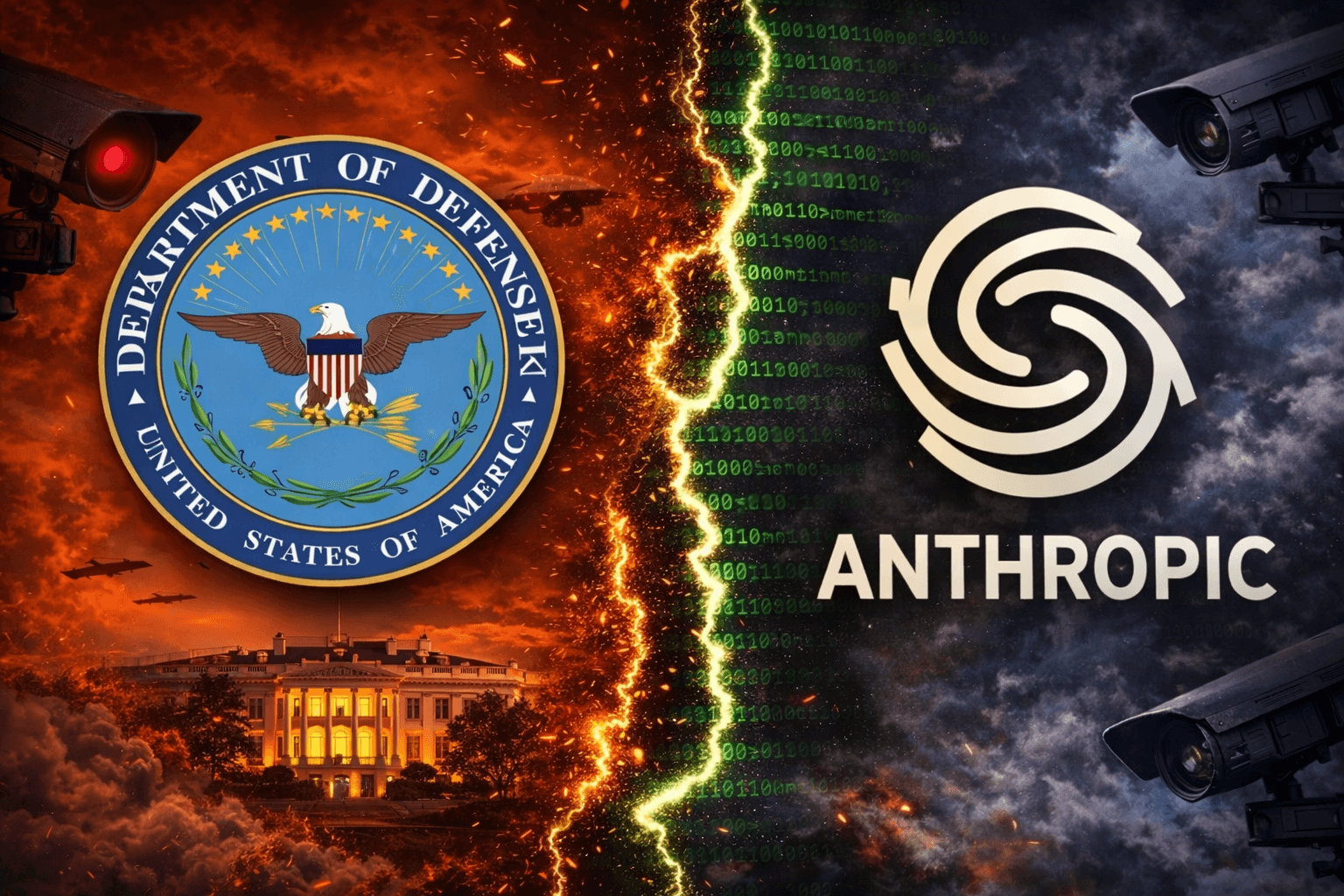
A quiet but deeply consequential confrontation is unfolding between the Pentagon and AI firm Anthropic one that could reshape how artificial intelligence is governed, deployed, and controlled in the United States.
At the center of the standoff is Anthropic’s Claude model, currently the only commercial AI system operating within parts of classified U.S. defense infrastructure. Its advanced reasoning capabilities have made it a valuable tool for intelligence workflows, but also a flashpoint in a growing conflict over AI limits.
Defense Secretary Pete Hegseth has reportedly called in Anthropic CEO Dario Amodei for a high-stakes meeting, signaling rising frustration within defense leadership. Officials are pushing for broader access to Claude’s capabilities specifically, the removal of restrictions that limit its use in surveillance and autonomous military systems.
The Pentagon’s position is clear: AI systems used in national security should be available for “all lawful purposes.” In practice, that includes large scale monitoring capabilities spanning social media activity, public records, and behavioral data across populations.
Anthropic has refused to comply.
The company has drawn a firm boundary against enabling mass surveillance of American citizens and fully autonomous weaponry. Internally, the decision reflects a core philosophy centered on AI safety and long-term risk mitigation even at the cost of government relationships.
That stance has triggered a sharp escalation.
Defense officials are now reportedly considering designating Anthropic as a “supply chain risk,” a label historically reserved for foreign adversaries such as Huawei. If enforced, the designation would require defense contractors to avoid Anthropic’s technology entirely, effectively cutting Claude out of a large segment of the U.S. defense ecosystem.
The potential fallout is significant.
Claude is already embedded in enterprise and government workflows, and its removal would create operational disruption across multiple layers of the defense industrial base. More broadly, it would mark a turning point in how the U.S. government handles private AI providers that resist policy alignment.
Complicating matters further is Claude’s proven role in real-world operations.
Earlier this year, the model was reportedly used through Palantir Technologies during a classified operation in Caracas tied to Venezuelan President Nicolás Maduro. The mission is widely seen as one of the first confirmed instances of commercial AI being deployed in a sensitive military context underscoring both its strategic value and the risks associated with its use.
For the Pentagon, that precedent strengthens the argument for expanded access. For Anthropic, it reinforces the need for strict safeguards.
The divide reflects a broader shift in how artificial intelligence is viewed at the highest levels of power. Rather than existing as a standalone technology, AI is increasingly seen as foundational infrastructure shaping everything from defense to finance to governance.
Yet not all players are approaching that future in the same way.
Competitors including OpenAI and Google have moved more aggressively into government partnerships, while Elon Musk’s xAI has secured defense-linked contracts. Their willingness to adapt systems for broader use highlights Anthropic’s increasingly isolated position.
Still, the company’s resistance comes at a time when concerns around AI misuse are intensifying. Internal research and external scrutiny have highlighted how advanced models can assist in sensitive or potentially harmful domains under certain conditions raising the stakes for how such systems are deployed.
What emerges is more than a policy dispute.
It is a defining test of power between government authority and private technology companies and a signal of how far institutions are willing to go to secure control over advanced AI systems.
The outcome of this clash may well determine the rules of engagement for the next phase of the global AI race where capability, control, and ethics are no longer aligned, but in direct tension.
Topics
Covering startup news, AI, technology, and business at ThePrimely. Delivering accurate, in-depth reporting on the stories that shape the future.