
AI Impact Summit 2026: Big Tech Bets and the Galgotias Robodog Controversy
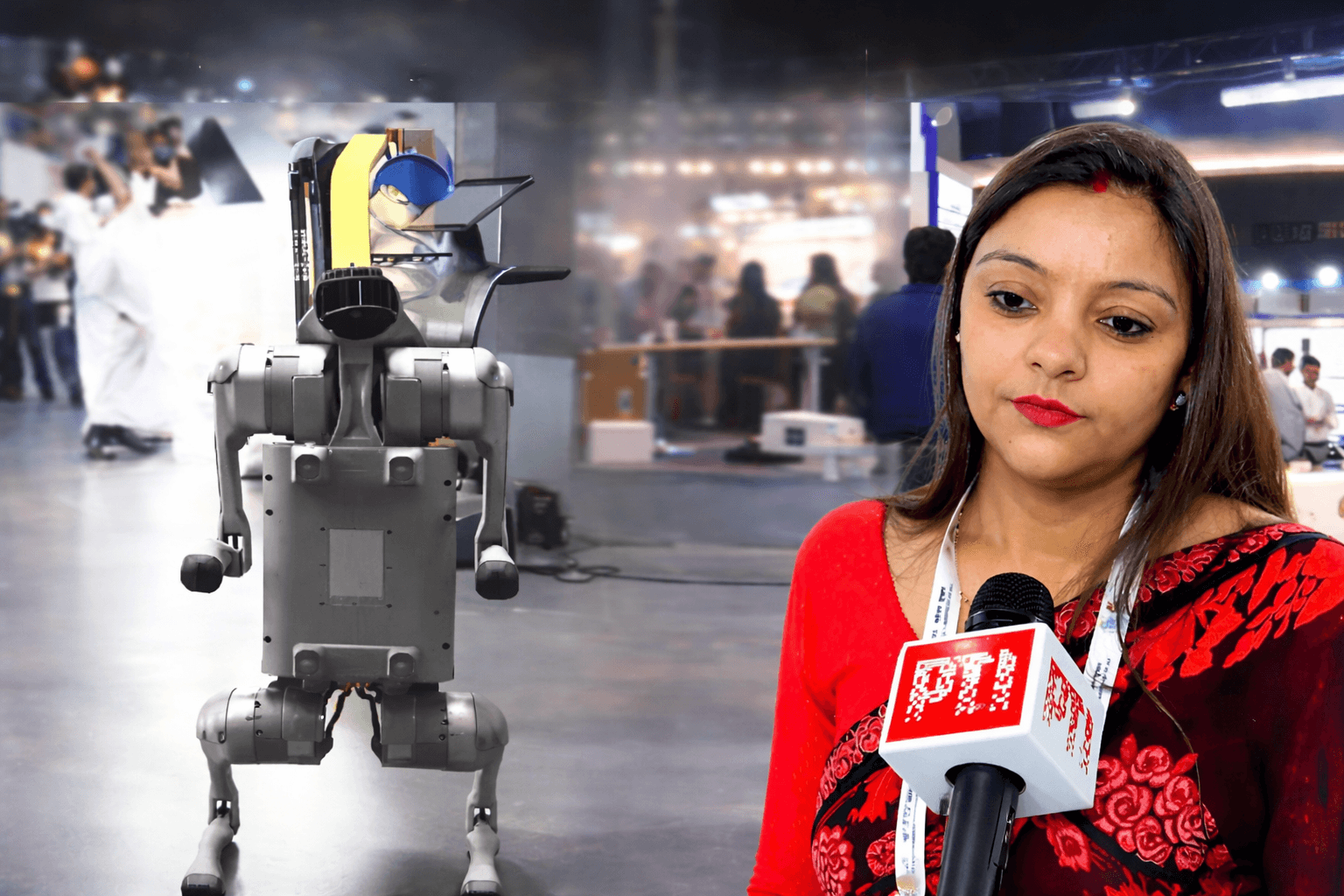
Day three of the India AI Impact Summit 2026 in New Delhi combined promising announcements from global technology leaders with a high-profile controversy that drew scrutiny over standards of innovation showcased at the event. While industry giants reaffirmed India’s growing role in the global AI landscape, an unexpected dispute over a robotic dog underscored the challenges of credibility, attribution, and transparency in tech exhibitions.
Big Tech’s Strategic Commitments
On the infrastructure and investment front, major players used the summit as a platform to extend their engagement with India’s AI ecosystem. Nvidia revealed a suite of partnerships aiming to scale sovereign compute capabilities, including deploying one of the Asia-Pacific region’s largest DGX Cloud clusters in collaboration with Yotta Data Services. The initiative will provide enterprises, research labs, and startups with access to advanced AI compute resources powered by Blackwell Ultra GPUs.
Meanwhile, Microsoft reiterated its strategy to expand AI infrastructure and services globally, including in emerging markets like India. The company plans significant investment and development support tailored to enhance research, adaptation, and enterprise usage of AI technologies across the Global South.
Tech giant Google DeepMind also announced deeper cooperation with Indian research institutions, granting access to frontline models and AI science initiatives aimed at accelerating domestic capability building.
These announcements reflected a broader pattern of strategic alignment between global AI frontrunners and India’s rapidly expanding digital economy, where infrastructure, data architectures, and compute scalability are priorities for future growth.
Sarvam and the Push for Local Innovation
Amid these global bets, Indian startup Sarvam unveiled a new AI model oriented around regional languages and enterprise use cases. Designed to address limitations of global models trained mainly on Western datasets, this domestic effort highlighted the importance of local nuance, language diversity, and contextual relevance in AI applications.
The Robot Dog Controversy
However, not every moment at the summit was celebratory. A significant portion of attention on Day 3 was focused on a controversial display by Galgotias University involving a robotic dog at their exhibition stall. The device, showcased under the name “Orion,” was quickly identified by attendees and onlookers as a commercially available Chinese-made robot — the Unitree Go2 — sold for approximately ₹2–3 lakh. Critics claimed the university presented it as an innovation developed in-house, which sparked wide-ranging backlash online.
Social media users and news outlets captured and amplified a video in which a university representative appeared to attribute the robot’s development to the institution’s Centre of Excellence in AI. The impression that the product was a domestic breakthrough triggered a controversy about misrepresentation.
Conflicting Narratives and Clarifications
Galgotias University responded to the backlash with clarifications. Professors insisted the device was acquired for student research and experiential learning rather than as a proprietary innovation. According to statements, the university never altered the original branding of the robot nor claimed it was solely designed and manufactured in-house. They emphasised that providing students with access to advanced tools was part of a broader strategy to enhance research exposure.
Despite this defence, debate continued online and among observers about how the situation was communicated. Fact-checking notes and social commentary suggested that initial impressions from public presentations were interpreted inaccurately, which compounded the public controversy.
Broader Implications for Innovation Showcases
The robodog incident underscored two interconnected challenges at high-profile tech events: attribution transparency and standards for technological demonstration. In environments where innovation is foregrounded, expectations of originality and rigorous sourcing become critical to maintaining credibility. Missteps, even when unintentional, can shape public perception and raise questions about quality controls in exhibition curation.
The episode also highlighted how quickly narratives can form — and spread — in the digital age, particularly when amplified by social media. At a summit that otherwise featured significant commitments from global partners and cutting-edge domestic contributions, the controversy revealed the tight interplay between presentation, interpretation, and public trust in the innovation ecosystem.
The Summit’s Larger Context
Despite the controversy, the India AI Impact Summit 2026 continued to attract world leaders, policymakers, and technology executives, reinforcing India’s ambition to play a major role in shaping international AI norms and infrastructure. Participants debated topics ranging from inclusive AI access to sovereign compute strategies and ethical deployment frameworks.
As India positions itself at the intersection of technological growth and global collaboration, balancing celebration with accountability remains a priority. The juxtaposition of global tech investment announcements and the domestic exhibition controversy offers a layered snapshot of the complex dynamics driving the AI era.
Topics
Covering startup news, AI, technology, and business at ThePrimely. Delivering accurate, in-depth reporting on the stories that shape the future.