
Trump Global Tariff Rate Hike: 15% Plan After Court Ruling
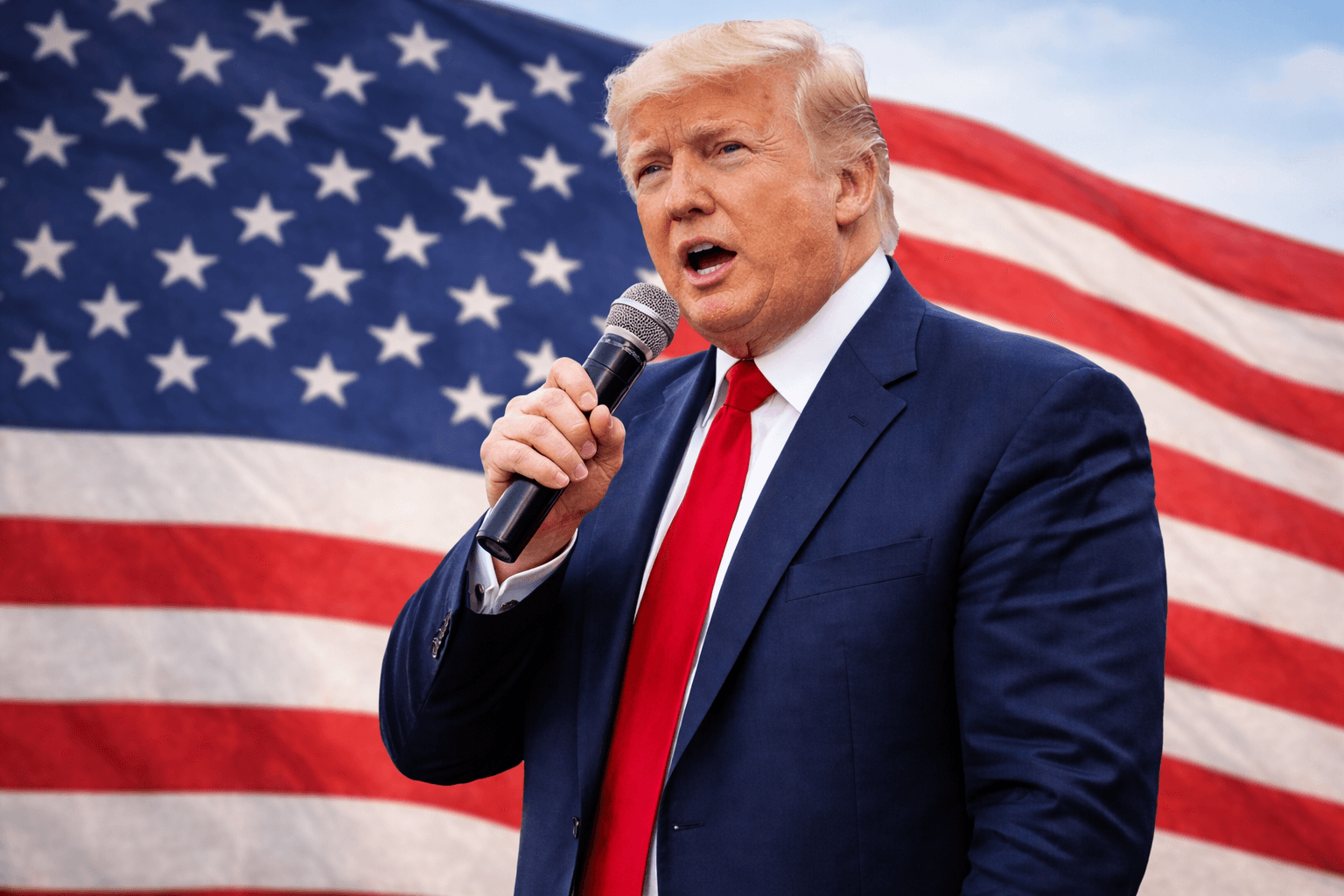
Trump Announces Higher Global Tariffs After Court Setback
Former U.S. President Donald Trump said on Saturday he will raise the temporary global tariff rate on imports from 10 percent to 15 percent, following a Supreme Court ruling that blocked his earlier tariff program.
Trump said the higher tariff, which takes effect immediately, would apply broadly to imports from all countries. He described the increase as “fully allowed and legally tested,” and said it would help protect American industries.
The move comes after the U.S. Supreme Court struck down his earlier authority to impose sweeping tariffs under emergency powers, prompting Trump to shift tactics and rely on alternative trade law provisions.
New tariffs under alternate authority
Trump’s new approach relies on Section 122 of the Trade Act of 1974, which allows the president to impose temporary tariffs of up to 15 percent for 150 days without explicit congressional approval, if there is a significant balance-of-payments issue.
At the same time, the administration may also pursue additional tariff measures under other statutes such as Section 301 (unfair trade practices) and Section 232 (national security), though those would require separate procedures.
Officials said the intent is to maintain broad tariff pressure despite legal setbacks. However, some experts warn that the legal basis for Section 122 has not been widely tested in courts.
Immediate reactions and market uncertainty
Trump’s announcement followed a 6-3 Supreme Court ruling that invalidated his previous emergency-based tariff authority. The court said only Congress can grant broad tariff powers, a decision that undercut a signature element of Trump’s economic agenda.
Trump called the ruling “anti-American” on social media and signaled he would continue to fight for more tariffs through other legal channels.
Some analysts said markets reacted with renewed uncertainty, as businesses and investors waited to see how the new tariff regime will work in practice. The shift in legal basis could complicate enforcement and invite legal challenges.
Global trade implications
The increase to a 15 percent global tariff rate heightens trade policy uncertainty worldwide. Countries that export goods to the U.S. may re-evaluate supply chains and pricing strategies, while import costs in the U.S. could rise, at least temporarily.
Asian economies with deep integration into U.S. supply chains, including China, Japan and South Korea, said they would monitor the situation closely and respond as needed. Some officials described the pace of policy change as a “fiasco” and highlighted the importance of trade predictability.
Canada and Mexico, exempt from certain U.S. tariffs because of regional trade agreements, are watching closely for any broader implications. Europe and other partners may seek clarification on how new duties interact with existing agreements and dispute settlement mechanisms.
What comes next
Trump’s latest tariff plan is temporary and set to last 150 days unless extended by Congress or replaced by other trade measures. The administration also plans to use other statutory tools to sustain its trade agenda.
Legal challenges to the Section 122 tariffs are expected, and courts may be asked to review whether they too exceed executive authority. Meanwhile, businesses face uncertainty about costs and supply chains as trade policy evolves rapidly.
Topics
Covering startup news, AI, technology, and business at ThePrimely. Delivering accurate, in-depth reporting on the stories that shape the future.