
Apple AI Smart Glasses and Camera AirPods Signal a Strategic Shift Beyond Screens.
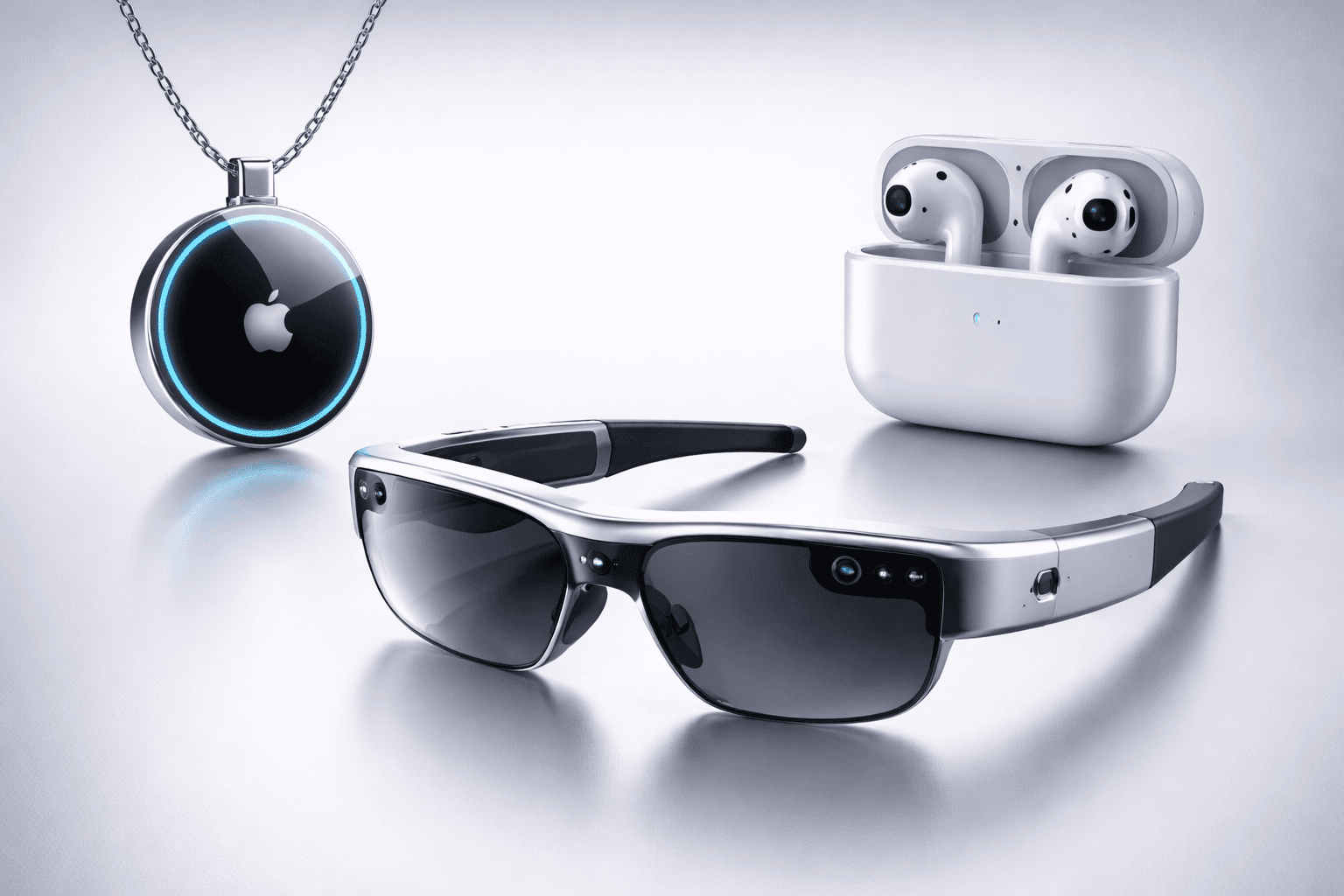
Apple Inc. is preparing its most ambitious wearable expansion since the launch of the Apple Watch. Reports across multiple technology publications indicate that Apple AI smart glasses, a camera equipped version of AirPods, and an AI powered pendant device are in development.
This is not a routine product cycle. It reflects a deeper strategic shift toward ambient computing, where artificial intelligence operates seamlessly in the background.
If accurate, these devices could redefine how users interact with technology.
Apple’s AI Wearable Ecosystem
Apple’s next wave of devices centers on AI first hardware. Unlike the premium and niche focused Apple Vision Pro, these new products aim for mass adoption.
The reported lineup includes:
- AI powered smart glasses
- AirPods with integrated cameras
- A wearable AI pendant
Together, they point to a screen light or screen free computing model.
Apple appears to be building a distributed AI ecosystem where intelligence lives across devices rather than inside a single screen.
you might like this :- AI Adoption Slows Entry-Level Hiring in India’s IT Sector | ThePrimely
Apple AI Smart Glasses: Lightweight, Intelligent, Context Aware
What We Know So Far
The Apple AI smart glasses are expected to prioritize practicality over immersive virtual reality.
Reports suggest:
- Built in cameras and microphones
- Environmental awareness capabilities
- Real time AI assistance
- Seamless integration with iPhone
Unlike the Vision Pro, these glasses are designed for daily use. The form factor will likely resemble traditional eyewear.
Strategic Positioning
This places Apple in direct conceptual competition with smart glasses initiatives from other major tech players. However, Apple’s strength lies in ecosystem control.
If launched successfully, these glasses could:
- Replace certain smartphone interactions
- Enable hands free AI queries
- Deliver contextual information instantly
Apple is not chasing novelty. It is building continuity.
Camera AirPods: A New Interface Layer
One of the more intriguing developments is the possibility of AirPods with built in cameras.
This is not about photography. It is about perception.
By embedding cameras in AirPods, Apple could enable:
- Spatial awareness
- Gesture detection
- Real time translation
- AI powered contextual assistance
AirPods already serve as a primary interface for voice interaction through Siri. Adding cameras would expand them into spatial computing territory.
This would transform AirPods from audio accessories into AI sensing devices.
The AI Pendant: Apple’s Ambient Assistant
Reports also mention a pendant style wearable device powered by AI.
This device may function as:
- A continuous listening assistant
- A health and activity tracker
- A contextual AI companion
The pendant concept signals Apple’s exploration of always on AI hardware.
Such a device would reduce dependency on smartphones for routine tasks.
It also aligns with the industry wide movement toward wearable AI companions.
Apple’s Screenless Strategy
Apple’s broader vision appears clear.
Move computing from screens to surroundings.
The iPhone remains central. But long term growth may depend on reducing screen dependency while increasing AI integration.
Apple’s wearables strategy already generates significant revenue through products like Apple Watch and AirPods. Expanding into AI glasses and pendants builds on an existing hardware base rather than starting from scratch.
This reduces risk.
It also increases ecosystem lock in.
Market and Industry Impact
Competitive Landscape
Apple’s move comes as the global wearable market grows steadily. Smart glasses remain early stage but strategically important.
If Apple enters this category:
- Consumer trust could accelerate adoption
- Developers may prioritize wearable AI apps
- Hardware competitors may intensify R&D
Apple rarely enters markets first. It enters when integration is ready.
AI Hardware as the Next Platform
The real story is not glasses or AirPods.
It is AI native hardware.
The smartphone defined the last decade. AI wearables may define the next.
Apple appears to be positioning itself for that transition.
Launch Timeline and Development Outlook
Reports suggest these devices are in development, not imminent release.
Industry coverage points toward a multi year roadmap. Apple is likely refining:
- Battery efficiency
- On device AI processing
- Privacy safeguards
- Miniaturized camera systems
Given Apple’s historical product cycles, expect measured rollouts rather than rushed announcements.
The company will prioritize ecosystem cohesion over speed.
Senior Editor Verdict
Apple AI smart glasses are more than a hardware experiment.
They represent a deliberate pivot toward ambient intelligence.
Camera AirPods and an AI pendant strengthen that strategy by distributing AI across wearable touchpoints.
The transition away from screen heavy computing will not happen overnight.
But Apple is preparing the infrastructure now.
If execution matches ambition, this could mark the beginning of Apple’s post iPhone evolution.
A Controlled Leap Into AI Wearables
Apple AI smart glasses anchor a broader transformation.
This is not about adding cameras to devices.
It is about redefining interaction.
By combining smart glasses, sensing enabled AirPods, and a wearable AI pendant, Apple is constructing a layered AI ecosystem.
The company is betting that the future of computing will be invisible, contextual, and always available.
That is a strategic shift worth watching.
Topics
Covering startup news, AI, technology, and business at ThePrimely. Delivering accurate, in-depth reporting on the stories that shape the future.