
Israel Iran Conflict Escalates After Israeli Strikes Kill Iranian Nuclear Scientists
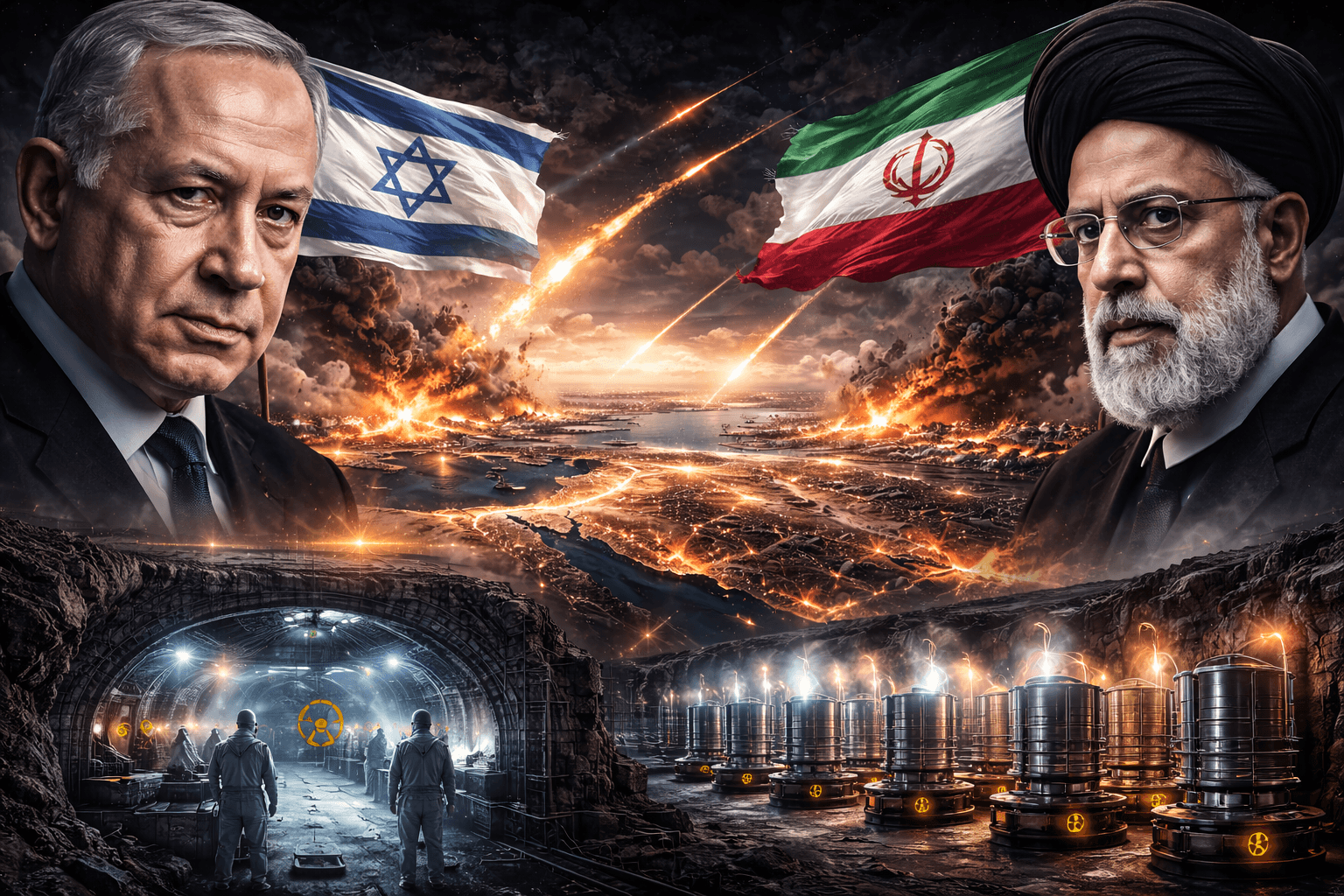
The Israel Iran conflict has entered a dangerous new phase. Israeli strikes reportedly killed several senior Iranian nuclear scientists, according to statements from Israeli leadership.
The development signals a sharp escalation in an already volatile Middle East confrontation. Moreover, it raises serious concerns about regional stability, global energy markets, and wider geopolitical consequences.
At the same time, Iran has warned that the conflict could disrupt global oil shipping routes. Officials in Tehran suggested that oil prices could surge dramatically if the situation worsens.
Therefore, governments and markets worldwide are watching the situation closely.
The Immediate Trigger in the Israel Iran Conflict
Israeli Prime Minister Benjamin Netanyahu stated that recent Israeli operations targeted individuals connected to Iran’s nuclear program.
According to Israeli officials, the strikes successfully eliminated several top Iranian nuclear scientists involved in advancing the country’s nuclear capabilities.
Israel has long viewed Iran’s nuclear ambitions as a direct national security threat. Consequently, Israeli leadership has repeatedly pledged to prevent Tehran from developing nuclear weapons capability.
The latest strikes appear to reflect that strategic doctrine.
Meanwhile, Iranian officials have condemned the attacks and warned of retaliation. The development significantly raises the risk of direct military confrontation between the two regional powers.

A Long Running Strategic Rivalry
The Israel Iran conflict did not emerge suddenly. It is the result of decades of geopolitical rivalry and ideological hostility.
Iran supports several armed groups across the Middle East that oppose Israeli influence. These include militant organizations operating in Lebanon, Syria, and Gaza.
Israel, on the other hand, views Iran’s regional network as a major security threat.
In addition, Iran’s nuclear program remains a central point of tension. Western intelligence agencies have long debated whether Tehran aims to develop nuclear weapons.
Israel has repeatedly conducted covert operations against Iran’s nuclear infrastructure over the past decade.
These actions reportedly included cyber operations, sabotage campaigns, and targeted killings of nuclear scientists.
Iran’s Warning: Oil Prices Could Surge
The geopolitical impact extends beyond the Middle East. Iran has warned that oil markets could experience major disruptions if the conflict escalates.
Officials suggested that global oil prices could reach $200 per barrel if shipping routes become unstable.
This warning reflects the strategic importance of the region.
The Middle East controls a significant portion of global oil production. Moreover, the Strait of Hormuz remains one of the most critical energy shipping corridors in the world.
Nearly 20 percent of global oil supply moves through this narrow waterway.
Therefore, any disruption could trigger immediate market volatility.
Energy markets have already shown signs of nervousness as tensions increase.
Key Military and Political Developments
Several developments are shaping the trajectory of the crisis.
Israeli Military Strategy
Israel appears to be targeting individuals linked to Iran’s nuclear development. This approach focuses on slowing scientific and technical progress rather than attacking large facilities.
Such operations reduce the risk of immediate large scale war while still weakening Iran’s capabilities.
Iranian Response Signals
Iranian leaders have issued warnings of retaliation. However, officials have not yet confirmed the exact form of response.
Historically, Iran has used indirect strategies through allied groups across the region.
United States Position
The United States continues to monitor the situation closely.
Washington has long supported Israel’s security concerns regarding Iran’s nuclear ambitions. However, American officials also aim to prevent the conflict from expanding into a broader regional war.
Economic and Market Implications
The Israel Iran conflict could have significant economic consequences if escalation continues.
First, oil markets remain highly sensitive to Middle East instability. Even small disruptions can trigger rapid price increases.
Second, shipping insurance and maritime security costs could rise sharply if threats emerge near key trade routes.
Third, global inflation pressures could intensify if energy prices surge.
Countries that rely heavily on imported oil may face significant economic strain.
Therefore, financial markets are closely tracking military developments.
Strategic Implications for the Middle East
The conflict also carries major geopolitical implications.
Israel seeks to maintain military dominance and prevent nuclear proliferation in the region.
Iran, however, aims to expand its regional influence and strengthen deterrence capabilities.
These competing strategic objectives make compromise extremely difficult.
Moreover, several regional actors are watching carefully. Gulf states, European governments, and Asian energy importers all have significant interests at stake.
Consequently, the conflict could reshape regional alliances and security frameworks.
Future Outlook for the Israel Iran Conflict
The immediate trajectory of the crisis remains uncertain.
Several scenarios are possible.
Iran could respond through proxy forces in neighboring regions. Alternatively, it could launch direct retaliatory actions against Israeli or allied targets.
Israel may also continue targeted operations if it believes Iran’s nuclear program is advancing.
At the same time, diplomatic channels may attempt to prevent broader escalation.
However, the strategic rivalry between the two nations makes lasting de escalation difficult.
Therefore, the situation remains one of the most closely watched geopolitical flashpoints in the world.
Topics
Covering startup news, AI, technology, and business at ThePrimely. Delivering accurate, in-depth reporting on the stories that shape the future.