
Iran War Exposes World’s Reliance on Gulf Oil and Gas
The war involving Iran has revealed just how deeply the global economy depends on energy supplies from the Gulf.
Since the conflict began, oil prices have surged and energy markets have become highly volatile. Brent crude now trades above $100 per barrel, more than a third higher than before the war began.
Air strikes on shipping routes and energy facilities have disrupted supply across the region. At the centre of the crisis lies the Strait of Hormuz, a narrow shipping corridor through which about 20% of global oil supplies normally pass.
Shipping traffic through the strait has slowed dramatically since the conflict escalated, pushing fuel prices higher worldwide.
Asia Feels the Energy Shock First
The region feeling the impact most strongly is Asia.
Last year nearly 90% of the oil and gas transported through the Strait of Hormuz was destined for Asian markets.
Countries across the region rely heavily on these supplies to power their economies.
Energy from the Gulf fuels vehicles, generates electricity and supports the manufacturing industries that drive economic growth across Asia.
In South East Asia the situation is particularly acute.
Even countries that produce oil themselves, including Malaysia and Indonesia, have seen domestic production decline in recent years. As a result they have become increasingly dependent on imported fuel.
Why Middle Eastern Oil Is Hard to Replace
Replacing Gulf energy supplies is not as simple as switching to another supplier.
Jane Nakano, a senior fellow at the Center for Strategic and International Studies, explains that the type of crude oil exported from the Middle East plays a key role.
Most Gulf oil is classified as “heavy sour” or “medium sour” crude.
Refineries across South East Asia have been designed specifically to process these grades of oil.
Switching to lighter crude from regions such as the United States would require costly upgrades to refinery equipment.
“It would take significant investment to alter refinery specifications,” Nakano says.
That technical constraint leaves many Asian countries with limited short-term alternatives.
Governments Introduce Fuel-Saving Measures
Several Asian governments have already introduced emergency measures to cope with rising fuel prices.
In the Philippines, which imports about 95% of its crude oil from the Middle East, authorities have ordered public sector employees to move to a four-day work week to reduce fuel consumption.
Thailand has encouraged working from home and raised recommended air conditioner temperatures in public offices to 26°C to save electricity.
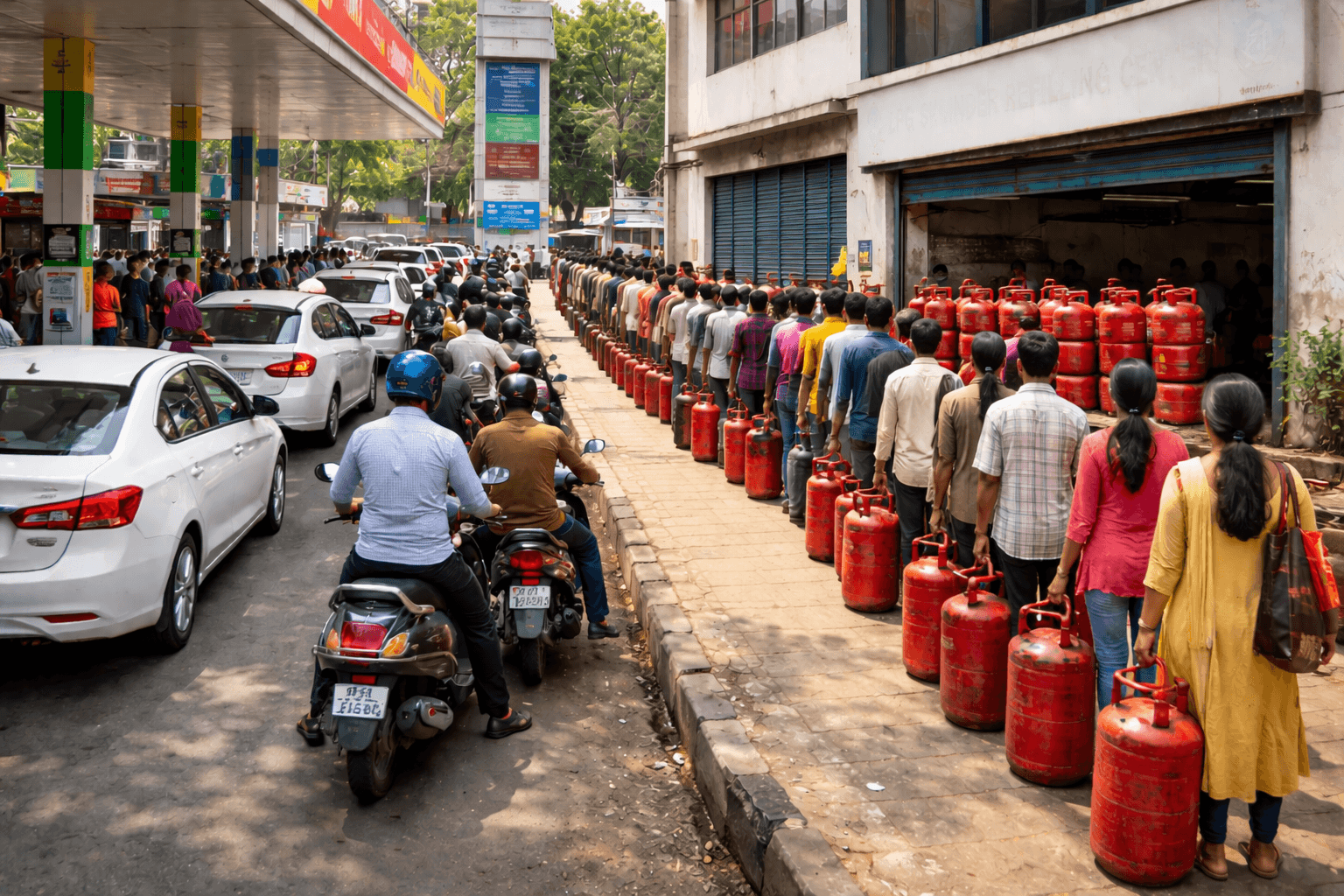
Across the region, long queues have formed at petrol stations as motorists rush to fill their tanks.
Similar scenes have appeared in cities across Bangladesh, Vietnam and Thailand.
Rising Energy Costs Push Up Food Prices
The energy crisis is also affecting food costs.
Many countries in South East Asia depend heavily on imported food, making them vulnerable to rising transport costs.
Singapore imports around 90% of its food supply, while Indonesia relies entirely on imports for wheat.
When fuel prices increase, shipping costs rise as well.
The price of jet fuel has jumped nearly 60% in recent weeks, increasing transportation costs for food and other goods.
Fuel Prices Rise Around the World
Rising energy costs are now spreading across global markets.
In the United States petrol prices have increased 23% in the past month, while diesel prices have risen by roughly one-third.
In the United Kingdom diesel prices have climbed by around 9%.
Governments are beginning to intervene in an attempt to limit the impact on consumers.
South Korea has introduced temporary caps on fuel prices.
Japan has announced subsidies for oil wholesalers to prevent petrol prices from rising too sharply.
In France, energy company TotalEnergies has capped the price of petrol and diesel at its service stations until the end of the month.
The UK government is also reviewing a planned increase in fuel duty scheduled for later this year.
China Better Positioned to Handle the Crisis
China, Asia’s largest economy, may be better positioned than most to manage the shock.
The country has spent years building large strategic oil reserves that could last several months.
China also continues to import Iranian oil despite US sanctions.
Shipping data suggests that some of these deliveries have continued during the conflict.
In addition, analysts estimate that more than 46 million barrels of Iranian crude are currently held in floating storage in the South China Sea.
China’s growing fleet of electric vehicles also reduces the impact of rising fuel prices.
Around one-third of new cars sold in China are electric, lowering the country’s reliance on petrol.
Unlike many other Asian countries, China also generates most of its electricity using coal rather than oil.
Japan and South Korea Turn to Strategic Reserves
Other major Asian economies have fewer options.
Japan and South Korea have agreed to release oil from their national stockpiles as part of a coordinated move by the International Energy Agency (IEA).
Both countries rely heavily on imported energy from the Middle East.
Their dependence has increased in recent years after they reduced purchases of Russian oil and gas following the invasion of Ukraine in 2022.
Global Gas Markets Also Under Pressure
The conflict has also shaken global gas markets.
Europe shifted away from Russian gas after the Ukraine war and now relies heavily on liquefied natural gas from Norway and the United States.
The European Union receives only about 10% of its gas directly from Qatar, while the UK imports roughly 2% from the Gulf state.
However, disruptions in Gulf gas supplies still affect global markets.
When Asian buyers lose access to Gulf gas, they compete for shipments from other suppliers, pushing prices higher worldwide.
The United States Remains Relatively Protected
Among major economies, the United States remains the least exposed to the crisis.
In recent years the country has dramatically increased domestic oil and gas production through hydraulic fracturing, or fracking.
That has reduced its reliance on imported energy.
However, expanding exports of American gas takes time and requires expensive infrastructure.
Although new export terminals are under construction, they cannot quickly replace lost supplies from the Gulf.
A Global Energy System Under Strain
The conflict in the Middle East has once again revealed how interconnected the global energy system remains.
A disruption in a single shipping route or production region can ripple across markets worldwide.
For now, governments and businesses are scrambling to manage the immediate consequences.
But the crisis has also raised a broader question: how long the world can remain so dependent on a single region for such a large share of its energy supply.
Topics
Covering startup news, AI, technology, and business at ThePrimely. Delivering accurate, in-depth reporting on the stories that shape the future.