
Iran Allows Indian Tankers Through Strait of Hormuz Amid Regional Conflict
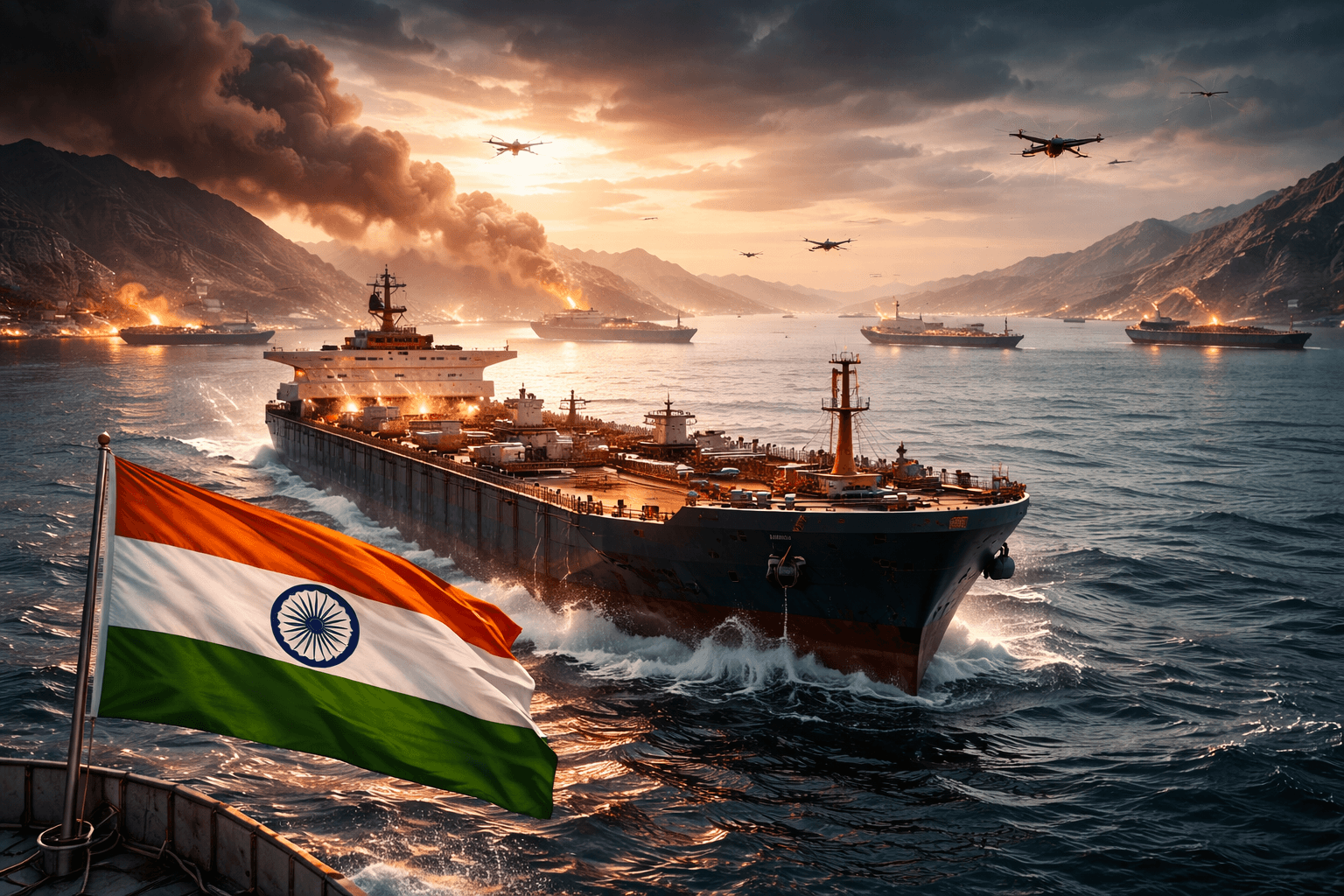
The Strait of Hormuz has become the center of the global energy crisis. Tanker attacks and naval tensions have disrupted shipping routes across the Persian Gulf.
Amid this instability, Iran has taken a notable step. Tehran has allowed Indian flagged vessels to pass safely through the strait. The decision comes as several ships from other nations face heightened risk in the region.
This development highlights India’s diplomatic balance in the Middle East. More importantly, it protects a critical supply route for the country’s energy needs.
Rising Conflict in the Gulf
The ongoing Iran war has sharply increased security risks in the Persian Gulf. Tanker attacks and naval confrontations have disrupted global energy transport.
Several vessels have faced strikes or security threats while traveling near the Strait of Hormuz. The corridor connects the Persian Gulf with international shipping lanes.
Nearly 20 percent of global oil trade passes through this narrow route each day. Therefore, even small disruptions can push oil prices higher and destabilize supply chains.
As tensions escalated, shipping companies began rerouting vessels. Insurance premiums for Gulf transit also rose sharply.
Against this backdrop, the status of Indian ships became a key concern.
Iran Allows Indian Tankers
Iran has now permitted Indian flagged vessels to cross the Strait of Hormuz without interference.
According to Indian government sources, two Indian tankers recently passed through the strait safely during the conflict. Iranian authorities did not obstruct the ships.
This move signals a deliberate decision by Tehran. While tensions remain high with Western countries, Iran appears to maintain stable maritime engagement with India.
Indian officials confirmed that the ships moved through the corridor without incident.
Why This Matters for India
Energy Security
India is one of the world’s largest energy importers. A significant share of its crude oil arrives from the Middle East.
Because of this dependence, the Strait of Hormuz serves as a lifeline for India’s economy.
Allowing Indian flagged vessels to pass ensures that energy shipments continue without disruption.
Without this access, India could face supply shortages and rising fuel costs.
Trade and Shipping Stability
Indian shipping companies also rely heavily on Gulf trade routes.
By permitting safe passage, Iran has reduced operational risk for Indian maritime operators.
Consequently, cargo movements and energy deliveries can continue despite regional tensions.
Diplomatic Balance Behind the Decision
India maintains complex relationships across the Middle East. The country engages diplomatically with Iran, Israel, Gulf states and the United States.
This balanced approach may have influenced the decision to allow Indian ships through the strait.
India has historically avoided taking direct sides in regional conflicts. Instead, it focuses on strategic neutrality and economic cooperation.
This policy appears to be delivering results in the current crisis.
Iran’s willingness to allow Indian vessels suggests recognition of India’s independent diplomatic stance.
Strategic Importance of the Strait of Hormuz
A Global Energy Chokepoint
The Strait of Hormuz is one of the most critical shipping passages in the world.
Every day, millions of barrels of oil pass through this narrow channel between Iran and Oman.
Energy exports from Saudi Arabia, Iraq, Kuwait and the United Arab Emirates rely heavily on this route.
When shipping slows or stops, global oil prices react immediately.
Market Impact
Recent tensions have already triggered strong market reactions.
Oil prices surged past 100 dollars per barrel after attacks on multiple tankers in the region.
Energy markets remain volatile as traders assess the risk of further disruption.
Allowing Indian vessels to pass could help stabilize part of the supply flow.
Impact on Global Shipping
The broader shipping industry remains cautious.
Many shipping operators have reduced Gulf transit due to security concerns. War risk insurance premiums have also increased significantly.
However, safe passage for Indian ships sends a signal that selective navigation through the region may still be possible.
Shipping companies are now closely watching diplomatic developments.
If tensions ease, traffic through the Strait of Hormuz could gradually recover.
Future Outlook
The situation in the Gulf remains uncertain.
Further attacks on vessels could again disrupt shipping through the strait. Energy markets will continue to react quickly to new developments.
However, diplomatic channels remain active.
If dialogue continues, selective safe passage agreements could expand to other countries.
For India, the priority remains clear. Protect energy imports while maintaining balanced relations across the region.
Topics
Covering startup news, AI, technology, and business at ThePrimely. Delivering accurate, in-depth reporting on the stories that shape the future.