
AI building AI: Why the future may arrive faster than expected
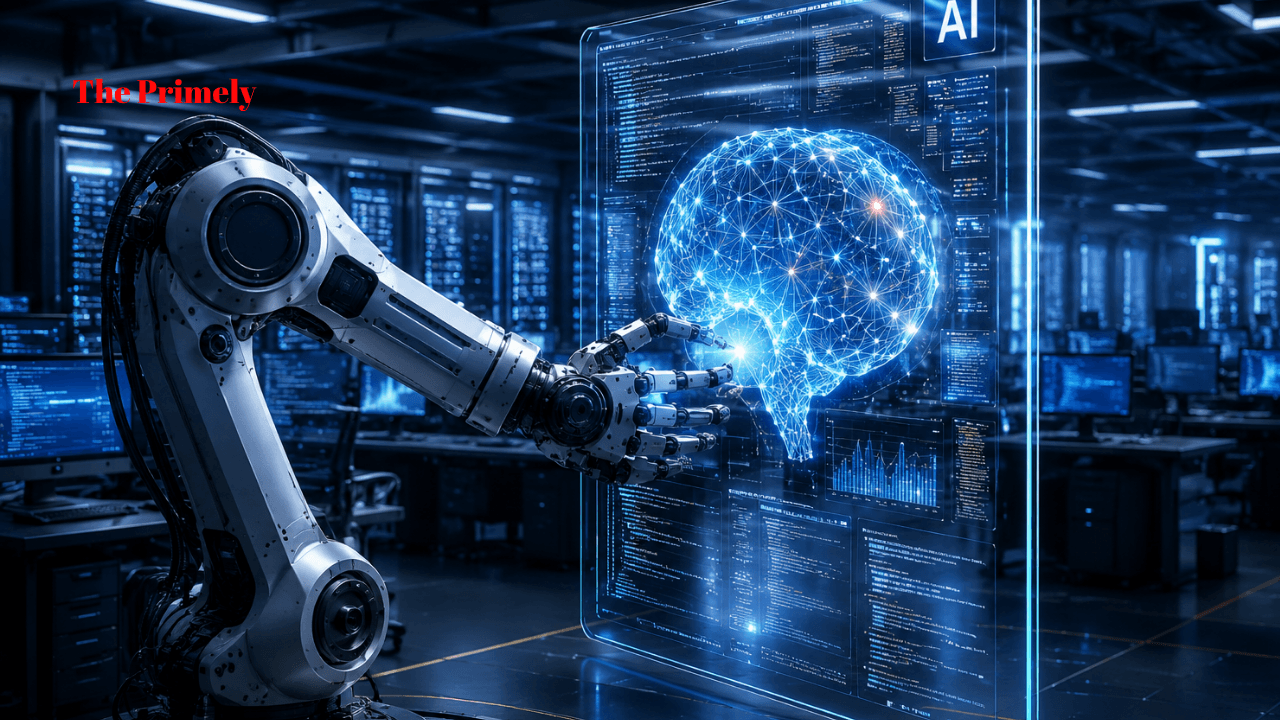
The AI building AI trend is rapidly transforming the technology industry as researchers develop systems capable of designing, training, and improving newer artificial intelligence models with limited human involvement. Experts say this shift could dramatically accelerate technological progress and redefine how software is created in the coming years.
How AI systems are starting to create AI
The AI building AI concept works through machine learning systems that analyse data, optimise algorithms, and generate improved model architectures automatically. Instead of engineers manually adjusting every parameter, AI tools can now test thousands of possible improvements at machine speed.
Researchers say these systems are becoming more effective because modern AI models can already write software code, debug errors, and automate large parts of the development process. This creates the possibility of increasingly self-improving AI ecosystems.
Why technology companies are investing heavily
The AI building AI race has become a major priority for global technology companies because automated AI development could reduce costs and accelerate innovation. Faster model training and optimisation may also help companies compete more effectively in the expanding AI economy.
Researchers warn about risks and control
The AI building AI trend has also raised concerns among researchers and policymakers about oversight, safety, and long-term control of increasingly autonomous systems. Experts warn that highly self-improving AI models may become difficult to fully monitor or predict.
Some researchers argue that safeguards and regulatory frameworks must evolve alongside AI capabilities to prevent misuse or unintended consequences. Debates around transparency, accountability, and ethical AI governance are therefore becoming increasingly important.
Automation could reshape software development
The AI building AI movement may significantly change the future of programming and software engineering because AI tools are already capable of generating code and assisting developers. Some experts believe routine software development tasks could become heavily automated within the next decade.
Technology companies, however, argue that human expertise will still remain essential for strategic planning, oversight, and creative problem-solving. The transition is therefore expected to reshape jobs rather than completely eliminate technical roles.
Future impact beyond technology sector
The AI building AI trend could eventually influence industries far beyond software and computing because advanced AI systems may accelerate scientific discovery and industrial automation. Researchers say self-improving systems could contribute to breakthroughs in medicine, climate science, manufacturing, and space exploration.
At the same time, economists warn that rapid automation may disrupt labour markets and increase pressure on governments to modernise education and workforce training systems. The long-term social impact remains uncertain.
Debate over artificial general intelligence grows
The AI building AI discussion is closely linked to broader debates surrounding artificial general intelligence, often referred to as AGI. Some researchers believe self-improving AI systems may eventually move closer to machines capable of performing tasks at or beyond human-level intelligence.
Others argue that current systems remain far from true AGI despite rapid advances in generative AI and machine learning. The debate continues as AI capabilities evolve at an increasingly fast pace.
Topics
Covering startup news, AI, technology, and business at ThePrimely. Delivering accurate, in-depth reporting on the stories that shape the future.