
Tankers Burn in Iraqi Waters as Iran War Shows No End
The war involving Iran, the United States and Israel is showing few signs of ending, as fresh attacks on oil tankers and escalating rhetoric continue to destabilise the Middle East.
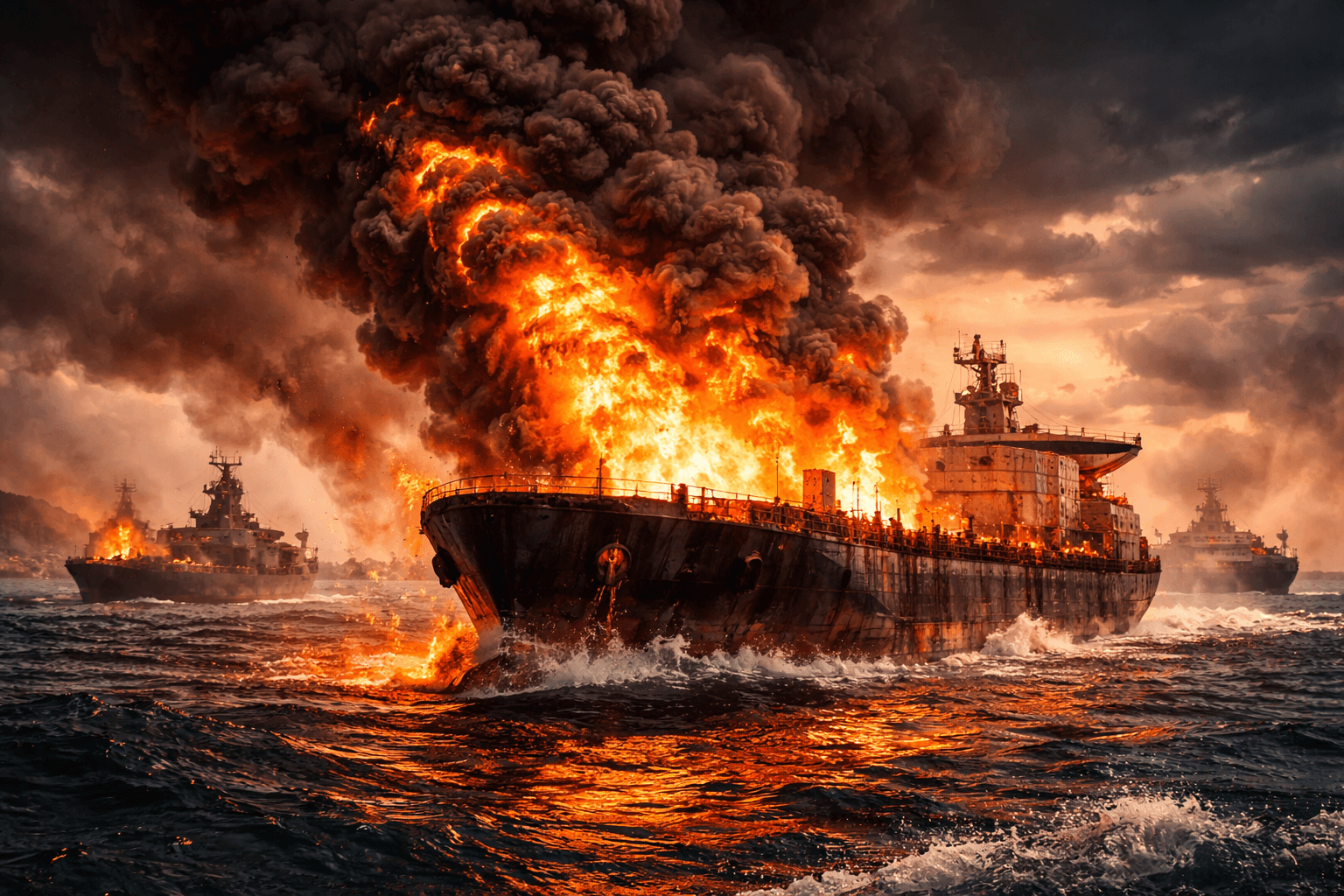
Two fuel tankers caught fire in Iraqi waters after explosive-laden boats struck them, killing at least one crew member and forcing port authorities to halt operations in the area.
The attacks came as US President Donald Trump signalled that Washington intends to continue military operations against Iran.
Trump said the campaign aims to eliminate threats to shipping and energy infrastructure in the Gulf region.
Iran, however, warned that global markets should prepare for oil prices reaching $200 per barrel if the conflict continues.
Shipping Attacks Spread Across the Gulf
The tanker explosions in Iraqi waters mark the latest escalation in a widening maritime conflict.
Reports indicate that explosive-laden boats and drone attacks struck several vessels near the Persian Gulf shipping routes.
The two tankers that caught fire were believed to carry large quantities of Iraqi crude oil, and their destruction raised concerns about the safety of commercial shipping in the region.
Over recent days, several cargo ships and tankers have been damaged or targeted across the Gulf.
These attacks have pushed shipping companies and insurers to reconsider sending vessels through the region.
Strait of Hormuz at the Centre of the Crisis
The violence has intensified fears surrounding the Strait of Hormuz, a narrow waterway between Iran and Oman that serves as one of the world’s most important energy corridors.
About 20% of the world’s daily oil supply normally passes through the strait, along with significant volumes of liquefied natural gas.
Since the war began, tanker traffic through the route has fallen sharply.
Satellite tracking data suggests that many ships now wait outside the strait rather than risk travelling through a potential combat zone.
Shipping companies also face higher insurance costs and greater security risks.
Oil Markets Thrown Into Turmoil
Energy markets have reacted dramatically to the disruption.
Brent crude prices surged above $100 per barrel, reaching their highest level in several years as traders feared prolonged supply shortages.
Before the conflict began in late February, oil traded at around $73 per barrel.
The sudden price spike has added to inflation concerns and rattled global financial markets.
Energy analysts warn that prolonged disruption could trigger one of the largest supply shocks since the oil crises of the 1970s.
War Expands Across the Region
The conflict began when the United States and Israel launched air strikes against Iranian military and nuclear facilities.
Iran responded with missile attacks, drone strikes and threats to block shipping routes across the Gulf.
Fighting has since spread to neighbouring countries including Lebanon and Iraq.
The violence has already killed around 2,000 people, many of them civilians.
Humanitarian agencies have also warned that more than 1,100 children have been killed or injured since the war began.
Global Energy System Under Pressure
The conflict has disrupted global energy supply chains and forced governments to intervene in oil markets.
Several major economies have agreed to release emergency oil reserves in an attempt to stabilise prices.
However, analysts say such measures can only provide temporary relief.
If tanker attacks continue and shipping through the Strait of Hormuz remains restricted, global fuel prices could rise even further.
That could push inflation higher and slow economic growth in many countries.
Markets Brace for Prolonged Conflict
For now, traders and governments are preparing for continued instability.
The war has already triggered the most severe disruption to oil shipments in decades.
With tanker attacks spreading and neither side signalling a willingness to back down, analysts warn that the conflict could reshape global energy markets for months to come.
As one shipping executive told industry analysts, the Gulf has become one of the world’s most dangerous maritime corridors — and the consequences of that instability are now being felt across the global economy.
Topics
Covering startup news, AI, technology, and business at ThePrimely. Delivering accurate, in-depth reporting on the stories that shape the future.