
India US Trade Deal 2026 How $500 Billion Target Could Reshape Bilateral Commerce
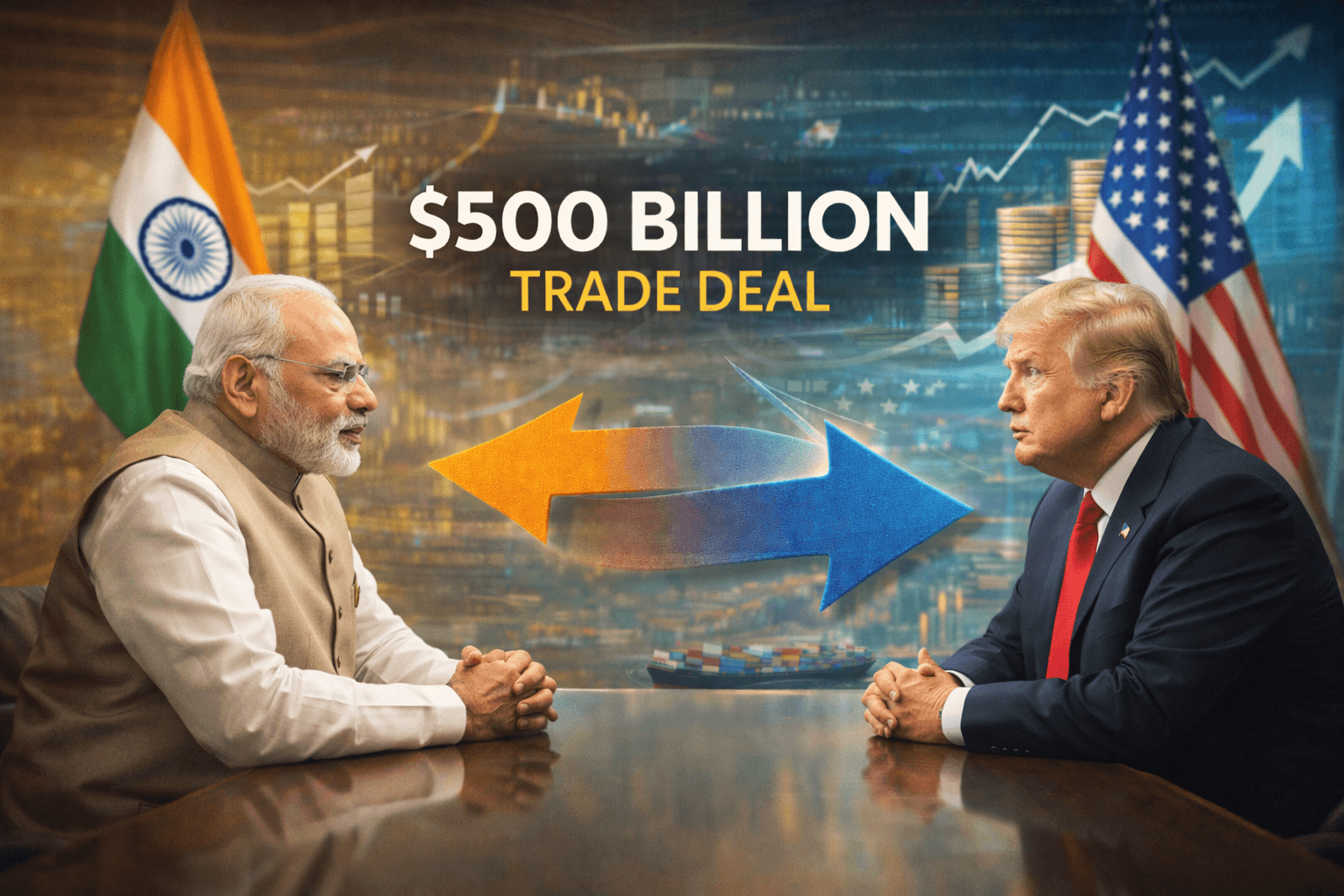
India US Trade Deal 2026 What the $500 Billion Target Really Means
A major economic shift is underway. India and the United States are moving rapidly from negotiations to real world trade strategy with an ambitious goal to increase bilateral trade to $500 billion over the next five years. This target comes as part of a deepening trade understanding that includes tariff restructuring, protections for sensitive industries, and opportunities for exporters on both sides.
Called by some officials the father of all deals for its scale and potential long range impact on global commerce, this agreement is already shaping investor sentiment, market dynamics, and diplomatic relations.
From $130 Billion to $500 Billion
Bilateral trade between India and the United States has already been strong. In 2024-25, total commerce stood at approximately $131.8 billion, with Indian exports making up a significant portion of that figure.
The new deal envisages pushing trade to an astonishing $500 billion within about five years nearly a fourfold increase. This would expand India’s market reach and deepen integration into global supply chains.
The agreed framework embraces a wide variety of goods and services, from energy and data infrastructure to technology, aerospace, and industrial equipment. Government officials stress that this commitment covers merchandise imports over five years and not a spontaneous one-year spike.
Tariff Resets and Market Access
One of the big pushes in the deal comes through tariff realignment. The United States has agreed to reduce duties on Indian goods, bringing many tariffs down from levels that had climbed as high as 50% in the recent past to around 18% on select categories. This makes Indian exports more competitive compared to rivals like Vietnam or Bangladesh.
In exchange, India is expected to open certain product categories to U.S. goods, which could help deepen technology and high-value imports such as aerospace components, industrial machinery, and energy products.
Officials indicate that zero duty benefits may apply in some cases under the agreement once technical details and joint frameworks are formalized.
Safeguarding Sensitive Industries
Despite the enthusiasm around the trade deal, Indian leaders have been clear that key domestic sectors will be protected. Commerce Minister Piyush Goyal has stressed that industries like agriculture and dairy, which employ millions, will remain shielded and not compromised in negotiations.
Government sources clarified that while the headline “$500 billion” figure represents a multi-sector commitment over five years, the structuring of trade terms carefully accounts for national priorities and economic needs.
This aspect of protection is crucial for political consensus and industry confidence, especially among small scale exporters and farming communities.
Export Champions and Opportunity Zones
Once the deal is fully operational with detailed tariff schedules and market access pathways, several sectors stand to gain:
Engineering and Industrial Goods
Expanded U.S. access could spur demand for Indian machinery, parts and industrial exports.
Textiles and Apparel
Duty reduction makes Indian fabrics and garments more competitive, potentially revitalizing an export engine.
Gems, Jewellery and Leather
These sectors could see renewed export growth with greater market penetration and tariff relief.
Technology and Data Centres
In areas like data centres and tech equipment, both countries see mutual benefits, helping build infrastructure and secure supply chains.
Exporters have welcomed the direction, and markets responded with optimism when the initial outline was announced.
Political and Economic Significance
Calling the pact the father of all deals, senior diplomatic voices emphasize its importance for India’s economic strategy. Former foreign officials have noted that this helps keep Indian exporters within a high value market and leverages trade diversification beyond traditional partners.
In parallel, reports indicate that joint statements from both sides are expected imminently, which will bring greater clarity on timelines and implementation phases.
This trade agreement sits at the intersection of economics, geopolitics, and strategic collaboration in a changing global order.
Challenges and Realistic Expectations
While $500 billion is a headline figure, experts caution that achieving it requires solid policy follow through:
- Detailed legal text and tariff maps need to be released before industries can fully strategize.
- Balancing the pace of imports and exports matters for macroeconomic stability.
- Protecting national sectors while expanding access is a diplomatic tightrope.
Government sources have countered claims that India must give up market autonomy on energy or essentials, emphasizing that foreign policy and commercial decisions remain grounded in national interest.
This dual focus on growth and sovereignty has defined India’s negotiation stance.
Market and Growth Implications
Analysts see this deal as a major economic lever that could:
- Increase foreign direct investment flows
- Make Indian exports more resilient
- Attract U.S. companies to base operations partially in India
- Strengthen India’s share in global value chains
Rather than an isolated diplomatic event, this trade agreement is being read as a structural pivot for India’s commerce strategy aligning economic policy with long term global integration.
Topics
Covering startup news, AI, technology, and business at ThePrimely. Delivering accurate, in-depth reporting on the stories that shape the future.