
Why the India–EU Trade Deal Is a Game Changer for India’s Economy and Exports
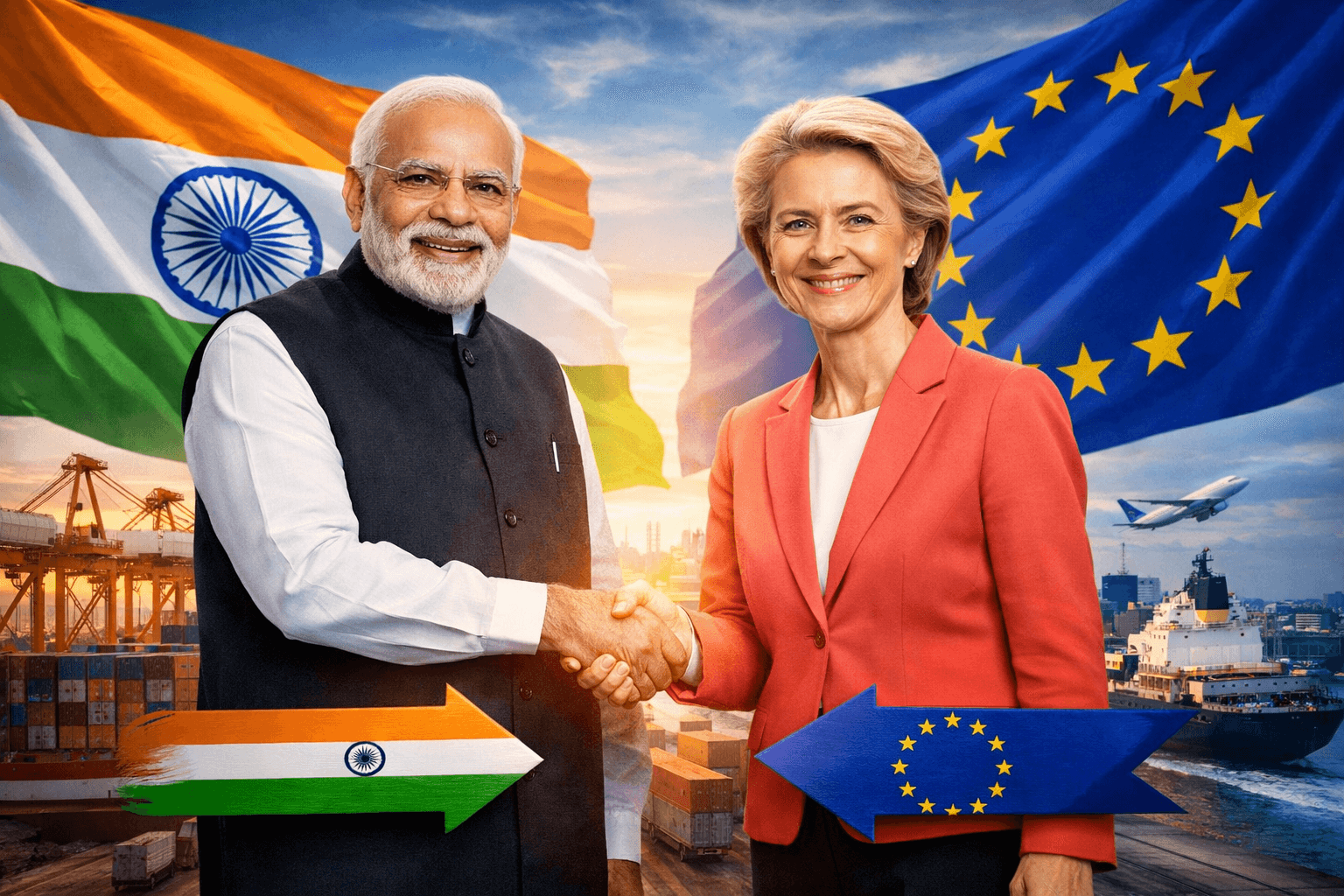
After nearly two decades of negotiations, India and the European Union have reached one of the most significant trade deals in recent history, a free trade agreement (FTA) often dubbed the “mother of all deals.” This pact aims to redefine bilateral commerce, enhance market access, and forge deeper economic cooperation between India and the EU’s 27 member states.
At its core, the India–EU trade agreement impact speaks not just to statistics but to long-term shifts in regional trade competitiveness, industrial opportunity, and geopolitical economics.
What Makes This Agreement Historic?
- Massive Market Access
The EU and India together represent about one-third of global trade and roughly a quarter of global GDP, making this one of the largest trade pacts in the world.
• Indian exports will receive zero or reduced tariffs on most categories, with duty-free access to the EU for nearly all export value lines once implemented.
• EU firms will also see tariff eliminations on up to 96.6% of European goods exported to India, unlocking new opportunities for European exporters and broader market integration. - Balanced Opening With Safeguards
India has taken a calibrated approach, offering duty-free access immediately on a significant share of tariff lines and phasing in cuts on others over time while protecting sensitive sectors like agriculture and dairy from full liberalization. - A New Long-Term Economic Architecture
This deal isn’t just about lowering tariffs: it strengthens services cooperation, regulatory alignment, investment protections, customs procedures, and intellectual property safeguards, all of which underpin sustained commerce growth between the two economies.
Benefits for Indian Industry and Consumers
1. Explosive Export Potential
Indian exporters stand to gain duty-free access to some of Europe’s most lucrative markets. This is expected to:
- Boost Indian textiles, apparel and leather goods by eliminating tariffs that previously made them less competitive compared to rivals like Bangladesh and Vietnam.
- Expand engineering, machinery and gems & jewellery exports, with sectors potentially doubling export values in coming years.
- Enhance pharmaceutical and medtech growth by providing better integration into EU health supply chains and larger market demand.
2. Consumer Benefits from Lower Prices
For Indian consumers, reduced tariffs mean more affordable European products over time. Expect:
- Cheaper premium cars, wines, spirits, chocolates, olive oil and other goods as duties are phased down.
- Better access to industrial machinery and medical equipment, which can indirectly lower production and healthcare costs domestically.
3. Stronger Services and Jobs Growth
The pact also amplifies trade in services from finance and maritime to education and tourism helping Indian firms deepen skills integration and capital flows into European markets.
Strategic and Geopolitical Dimensions
1. Diversification Beyond Western Ties
This agreement comes at a time of rising trade uncertainty globally, especially amid tariff pressures from other major economies. The FTA strengthens India’s ties beyond traditional North American alignments and positions it as a central node in global trade networks.
2. Boost to ‘Make in India’ and Value Chains
By reducing trade frictions and simplifying rules, Indian manufacturers can integrate more deeply into global value chains, attracting foreign direct investment, bolstering industrial clusters, and supporting employment growth.
Regional Trade Implications
One notable ripple effect of the India–EU trade deal is its impact on neighboring economies, particularly Pakistan. Analysts warn that:
- Pakistan’s long-standing GSP+ tariff advantage in the EU market may erode, especially in textile exports, which make up a large share of its economy and jobs.
- With India now enjoying similar tariff access under a binding FTA framework, Pakistan and other competitors may see reduced competitiveness in EU markets unless they diversify or modernize their export strategies.
This dynamic underscores how trade agreements can reshape regional trade balances, with benefits and challenges extending beyond bilateral parties.
What Happens Next?
The India–EU FTA will still require ratification by the European Parliament and India’s cabinet before it comes into full force, likely in early 2027. Once implemented, its phased tariff reductions and regulatory cooperation frameworks will unfold over several years, shifting trade patterns gradually but persistently.
Finally
The India–EU trade deal is much more than a tariff reduction pact, it’s a strategic economic partnership that:
- Links nearly 2 billion consumers and producers across global markets
- Enhances export competitiveness across key Indian sectors
- Encourages investment and integration into international value chains
- Forces regional competitors to rethink their export strategies
In a world where trade is increasingly strategic, this milestone puts India in a stronger position to compete, collaborate, and grow sustainably on the global economic stage.
Topics
Covering startup news, AI, technology, and business at ThePrimely. Delivering accurate, in-depth reporting on the stories that shape the future.