
Why the India US Trade Deal 2026 Is a Major Win for India’s Economy and Exports
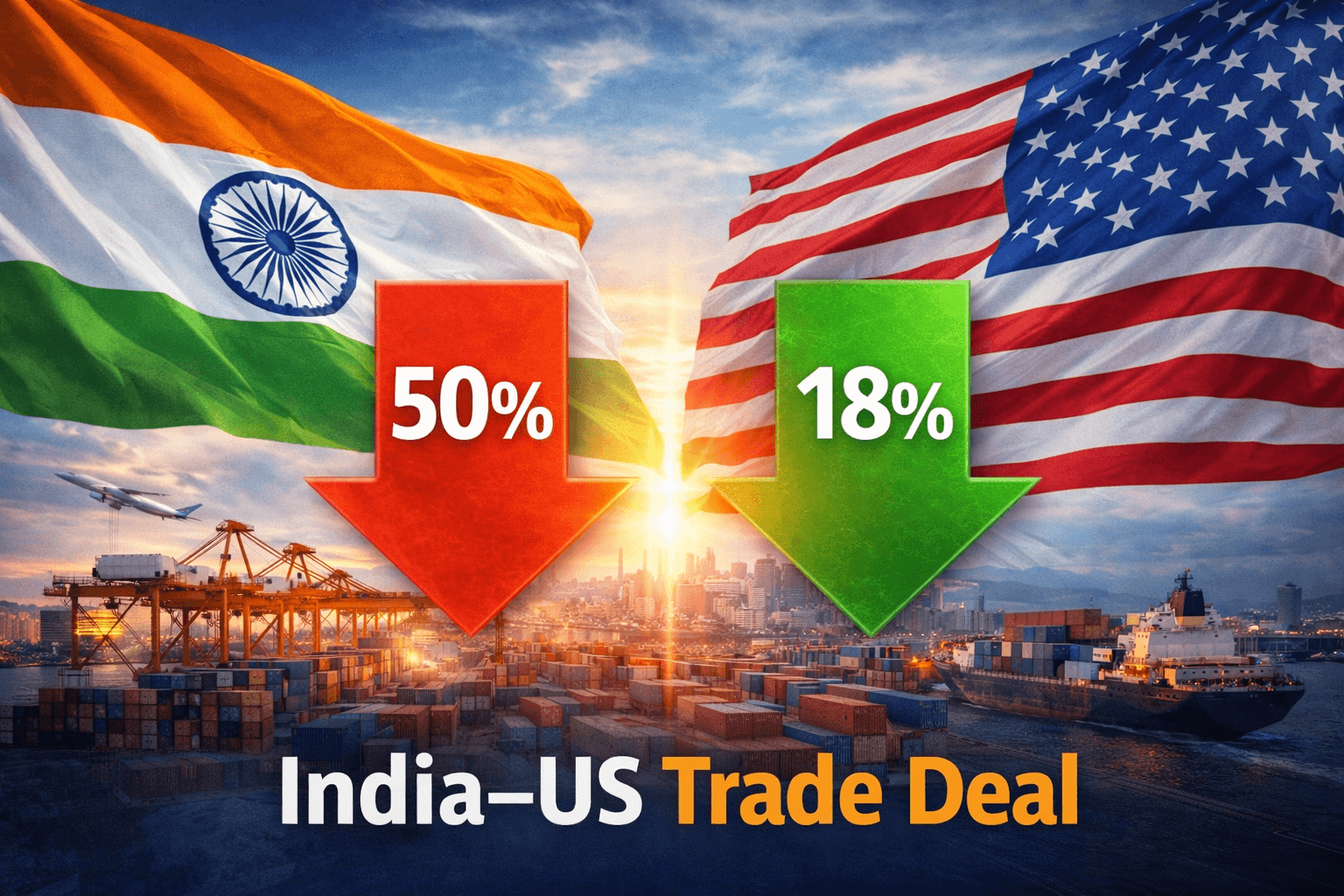
In early February 2026 India and the United States announced a landmark trade deal that has caught global attention. After months of negotiations and sometimes tense relations, leaders in New Delhi and Washington agreed to thaw bilateral trade tensions and reset economic engagement with a deal that cuts tariffs, expands market access, and lays the foundation for deeper cooperation between two of the world’s largest democracies.
This article dives into what this India US trade deal means for Indian exporters, jobs, key industries, market sentiment, and the broader economic landscape.
- Before Deal
▓▓▓▓▓▓▓▓▓▓▓▓▓▓▓▓▓▓▓▓▓▓ 50% - After Deal
▓▓▓▓▓▓▓▓▓▓▓ 18%
A New Phase of Economic Cooperation
At the heart of the deal is a significant reduction in U.S. tariffs on Indian goods from steep levels that had risen to effective penalties of around 50 percent down to 18 percent giving Indian exporters a competitive edge in a key global market.
In parallel, India has agreed to reduce or eliminate tariffs on U.S. goods, opening doors for American imports in sectors like petroleum, defense equipment, agriculture, telecommunications and pharmaceuticals. Officials have framed these moves as part of a broader effort to strengthen strategic and economic ties between the two nations.
Leaders from both sides have welcomed the deal as a reset in relations, with political figures calling it a step toward shared prosperity, stronger business ties, and deeper geopolitics cooperation.
What Changed on Tariffs and Market Access
Tariff Reductions on Indian Exports
Before the deal, India faced high U.S. tariffs particularly after punitive levies linked to past disagreements over India’s energy sourcing. The new agreement resets this structure:
- U.S. tariff on Indian exports is now 18 percent, down from higher combined duty levels that included punitive surcharges.
- This reduction improves Indian goods’ competitiveness compared to regional rivals like China, Vietnam and Bangladesh.
Broader U.S. Market Opening
In return, India will ease import restrictions on certain U.S. goods, including in sectors that historically carried higher duties. This includes:
- Petroleum and energy supplies
- Agricultural goods and technology inputs
- Defense and aerospace equipment
- Pharmaceuticals and advanced technologies
This mutual openness reflects a shift toward reciprocal market access, reinforcing economic interdependence.

Strategic Components Beyond Tariff Cuts
Energy Supply Realignment
One of the most discussed elements is India’s commitment to reduce purchases of Russian crude oil in response to U.S. concerns. This is intended to improve trade dynamics and support long-term energy collaboration between India and the United States.
While official government statements emphasize that energy decisions are driven by India’s national interest, observers see this as a strategic pivot that strengthens India’s alignment with global energy partners.
Opportunities for Indian Exporters
The trade deal opens meaningful doors for several key Indian industries:
Textiles and Apparel
Indian garments and textiles are major export pillars. Lower tariffs mean better price competitiveness in the U.S. market, which can translate to higher volumes and increased foreign exchange.
Gems, Jewellery and Engineering Goods
These sectors have historically carried significant export potential. With tariff relief, companies may see restored margins and improved global demand in the U.S. market.
Electronics and Technology
Industry leaders expect up to $100 billion in bilateral electronics trade opportunities, with cooperation in semiconductors and advanced tech bolstered by the deal.
Agriculture and MSME Growth
Farmers and micro, small and medium size enterprises (MSMEs) are among the groups likely to benefit from improved market access for agricultural products and traded goods.
Immediate Economic Signals
The agreement had a real-time impact on markets:
- Indian equity benchmarks like the Sensex and Nifty saw sharp gains as business sentiment improved.
- The rupee strengthened, signaling confidence that improved trade visibility could support macroeconomic stability.
Industry groups have also praised the deal. Leaders in business circles see tariff reductions as a catalyst for stronger bilateral investment, resilient supply chains and long-term competitiveness.
What Experts and Leaders Are Saying
Several key voices have weighed in:
- India’s External Affairs Minister emphasized that the pact would spur job creation, growth and innovation for both economies.
- Business leaders such as Kumar Mangalam Birla highlighted the opportunity to strengthen resilient supply chains and long-term cooperation.
- The US-India Strategic Partnership Forum called the tariff cut an important first step toward even broader engagement.
These comments reflect broad support across diplomatic, business and industry circles.
Challenges and the Importance of the Details
Experts caution that while the headline tariff cuts are significant, the detailed legal text of the trade agreement will determine how benefits flow to real sectors. Rules around compliance, phase in periods and sector exclusions can all affect outcomes.
Analysts note that once reciprocal tariffs and negotiated duty structures are fully implemented, India’s effective average tariff could settle around competitive levels similar to or better than regional trade partners. A clearer picture will emerge as the full agreement text is published.
The India–US trade deal is less about numbers and more about narrative. It signals that India is no longer negotiating from the margins but shaping global trade conversations as a strategic equal.
Topics
Covering startup news, AI, technology, and business at ThePrimely. Delivering accurate, in-depth reporting on the stories that shape the future.