
US-India Trade Deal: Oil, Tariffs and Farm Risks Still Unclear
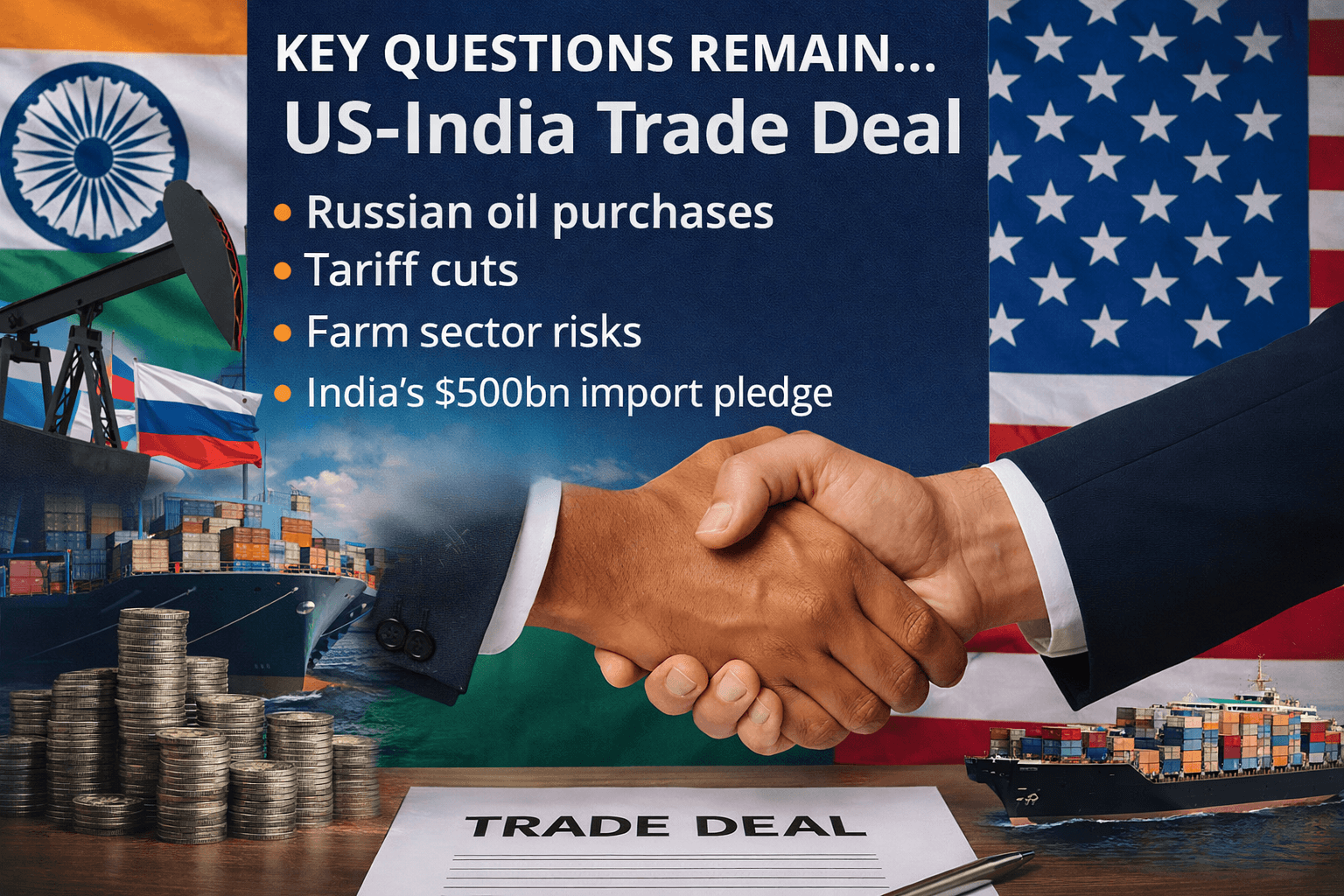
Oil, Tariffs and Farming: What We Still Don’t Know About the US-India Trade Deal
Key details of the interim US-India trade deal remain unresolved, despite fresh disclosures by both governments. Opposition parties, farmer groups and trade experts in India have raised concerns over the scope, balance and long-term impact of the agreement.
A joint statement confirmed that India plans to purchase $500bn (£367bn) worth of US goods over five years. However, it made no reference to a pledge to stop buying Russian oil. That omission has become a major political flashpoint.
The agreement follows an earlier announcement that the United States would cut tariffs on Indian exports to 18% from 50%. Final negotiations are still under way.
Four major questions now dominate the debate.
Is India Giving More Than It Is Getting?
Under the framework, India has agreed to reduce standard tariffs on all US industrial goods and several agricultural products. In contrast, the US will cut reciprocal tariffs on only about 55% of Indian exports.
The Delhi-based Global Trade and Research Initiative described this as an uneven exchange.
Opposition leaders, including former finance minister P ">Chidambaram, say the deal heavily favors Washington.
The government rejects that criticism. Commerce minister Piyush Goyal argues that the 18% tariff rate is among the lowest faced by US trading partners. He says the cut will benefit labor-intensive sectors such as textiles, leather and gems.
Most industry bodies have welcomed the agreement.
Will India Stop Buying Russian Oil?
The question of Russian oil remains unresolved.
While announcing the deal, US President Donald Trump said India had committed to halting Russian oil purchases. The joint statement does not confirm this.
In a separate executive order, Trump said the US would monitor whether India resumes Russian oil imports, directly or indirectly. If it does, a 25% duty could be re-imposed.
Goyal has pushed back. He says oil purchases are commercial decisions taken by individual companies. Russia, meanwhile, says it has received no signal from India that supplies will stop.
Media reports suggest Indian refiners are avoiding new purchases, though some existing deliveries remain scheduled.
The lack of clarity has fueled political criticism in Delhi, with opponents accusing the government of making strategic concessions without parliamentary debate.
Could the Deal Hurt Farmers?
Farmer unions have voiced strong opposition.
The Samyukt Kisan Morcha warns that tariff cuts on US agricultural imports could undercut domestic producers. Items of concern include soybean oil, maize, dried distillers’ grains, sorghum, nuts and fruit.
The group has called for protests and demanded the commerce minister’s resignation.
Analysts warn the inclusion of additional agricultural products could trigger domestic backlash. However, the government insists sensitive sectors remain protected.
Goyal says India has not offered concessions on dairy, genetically modified crops, meat or poultry. He argues that export opportunities will ultimately benefit farmers.
Is the $500bn Purchase Target Realistic?
India has expressed intent to buy $500bn of US goods over five years, including energy, aircraft, technology and coking coal.
Critics question whether this target is achievable. GTRI says it would require imports from the US to more than double every year. Much of the spending would depend on private companies, not government decisions.
Analysts also warn the pledge could inflate India’s import bill and weaken its trade surplus with the US.
The government disagrees. Goyal calls the target conservative, citing strong demand for aircraft, energy and data-centre equipment. He notes that large aircraft orders are already in the pipeline.
Market Reaction and What Comes Next
Despite unanswered questions, Indian stock markets rose sharply after the announcement. Investors appear to be betting on lower tariffs, deeper energy ties and closer economic cooperation.
However, analysts caution that much depends on the final text of the agreement and how it is implemented.
For now, the deal promises opportunity but carries uncertainty. Oil imports, farm protections and trade balance risks remain unresolved, leaving key stakeholders waiting for clarity.
Topics
Covering startup news, AI, technology, and business at ThePrimely. Delivering accurate, in-depth reporting on the stories that shape the future.