
US Calls India Key Partner in New Global Tech Order
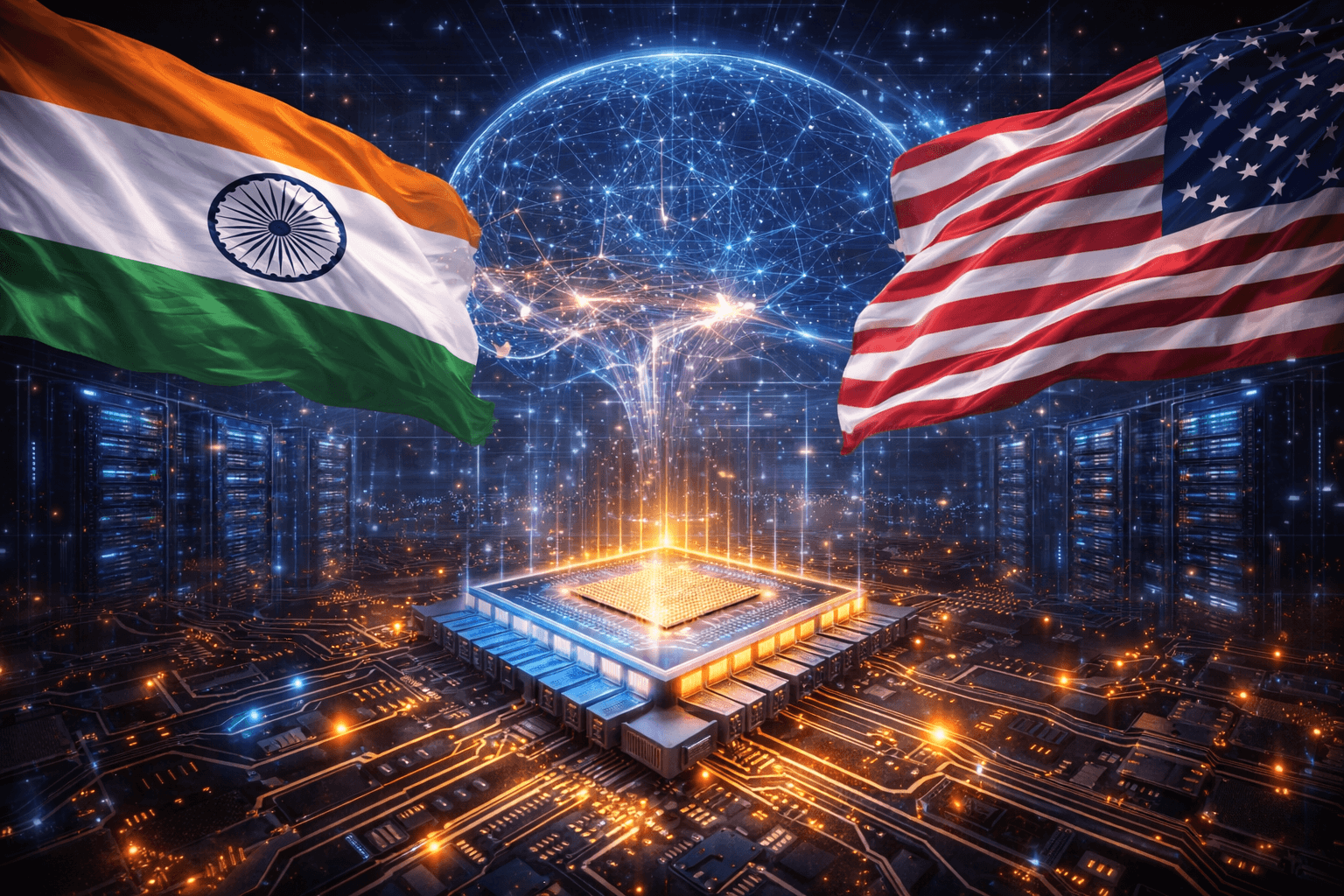
The US India Pax Silica partnership is becoming a central pillar of global technology cooperation.
At a recent policy forum in New Delhi, US Ambassador Sergio Gor emphasized that Washington views India as one of its most trusted partners in shaping the next generation of technology infrastructure.
His remarks reflect a growing strategic alignment between the two democracies. The cooperation now extends beyond trade and defense into advanced technology sectors such as artificial intelligence, semiconductors, and critical minerals.
In an era where technology defines economic and geopolitical power, this partnership carries significant global implications.
Sergio Gor Rejects India–Pakistan “Hyphenation”
A key diplomatic message from the US envoy addressed a long-standing concern in Indian foreign policy.
Gor stressed that Washington treats its relationship with India independently, rejecting the traditional diplomatic framework that linked India with Pakistan in regional policy discussions.
The statement signals a clear shift in strategic thinking. For decades, analysts criticized US policy for “hyphenating” India and Pakistan.
India has consistently opposed that approach. Instead, New Delhi prefers to be viewed as a global strategic partner rather than a regional issue.
Gor’s remarks therefore reinforce Washington’s recognition of India’s growing global role.
Understanding the Pax Silica Initiative
At the center of the conversation is a new technology alliance known as Pax Silica.
Pax Silica is a US-led initiative focused on strengthening trusted supply chains for advanced technologies, including artificial intelligence infrastructure, semiconductors, and critical minerals.
The alliance aims to reduce dependence on unstable supply chains while encouraging collaboration among trusted partners.
Unlike earlier geopolitical frameworks focused on oil or traditional resources, Pax Silica reflects a new reality.
Future economic power will increasingly depend on control of digital infrastructure and semiconductor ecosystems.
Gor highlighted that the global competition for influence now revolves around:
- Artificial intelligence development
- Semiconductor manufacturing
- Secure technology supply chains
- Advanced computing infrastructure
In this environment, India’s technological and engineering capabilities make it a natural partner.
India’s Growing Role in the Global Technology Economy
India has emerged as a critical player in the evolving technology landscape.
The country offers several strategic advantages.
First, India possesses a large pool of engineering talent and software expertise.
Second, it has rapidly expanding digital infrastructure and startup ecosystems.
Third, India is strengthening its semiconductor manufacturing and electronics supply chains.
Because of these factors, the United States sees India as a key partner in building resilient technology networks.
Gor noted that the future global economic system will rely less on energy resources and more on technology stacks built around artificial intelligence and semiconductors.
This shift explains why Washington is prioritizing cooperation with India in emerging technologies.
Critical Minerals Deal Nearing Completion
Another important element of the partnership involves critical minerals cooperation.
These minerals are essential for producing semiconductors, batteries, and advanced electronics.
Reports indicate that India and the United States are close to finalizing an agreement focused on securing supply chains for these materials.
Such agreements aim to ensure stable access to the resources required for the AI and semiconductor industries.
As global demand for chips and computing power grows, control over these materials becomes strategically important
Strategic Impact on Global Geopolitics
The strengthening US–India partnership reflects broader geopolitical trends.
Technology is now at the center of global competition. Nations are racing to secure leadership in artificial intelligence, computing infrastructure, and semiconductor manufacturing.
As a result, alliances are shifting toward technology ecosystems rather than purely military cooperation.
Pax Silica represents one example of this transformation.
Through the initiative, participating countries aim to coordinate investment, research, and supply chains across the full technology stack.
India’s participation signals its emergence as a major actor in this new economic architecture.
Future Outlook for the US–India Partnership
The trajectory of US–India relations appears increasingly focused on innovation and technology collaboration.
Several developments are expected in the coming years:
- deeper AI research partnerships
- semiconductor manufacturing investments
- expanded technology supply chain cooperation
- greater collaboration on digital infrastructure
These initiatives could reshape the global technology ecosystem.
If successful, the partnership may also strengthen economic resilience for both countries.
More importantly, it could influence how technology alliances develop in the broader Indo Pacific region.
Topics
Covering startup news, AI, technology, and business at ThePrimely. Delivering accurate, in-depth reporting on the stories that shape the future.