
Smartphone Market Decline 2026: How Memory Prices and AI Demand Are Reshaping the Industry
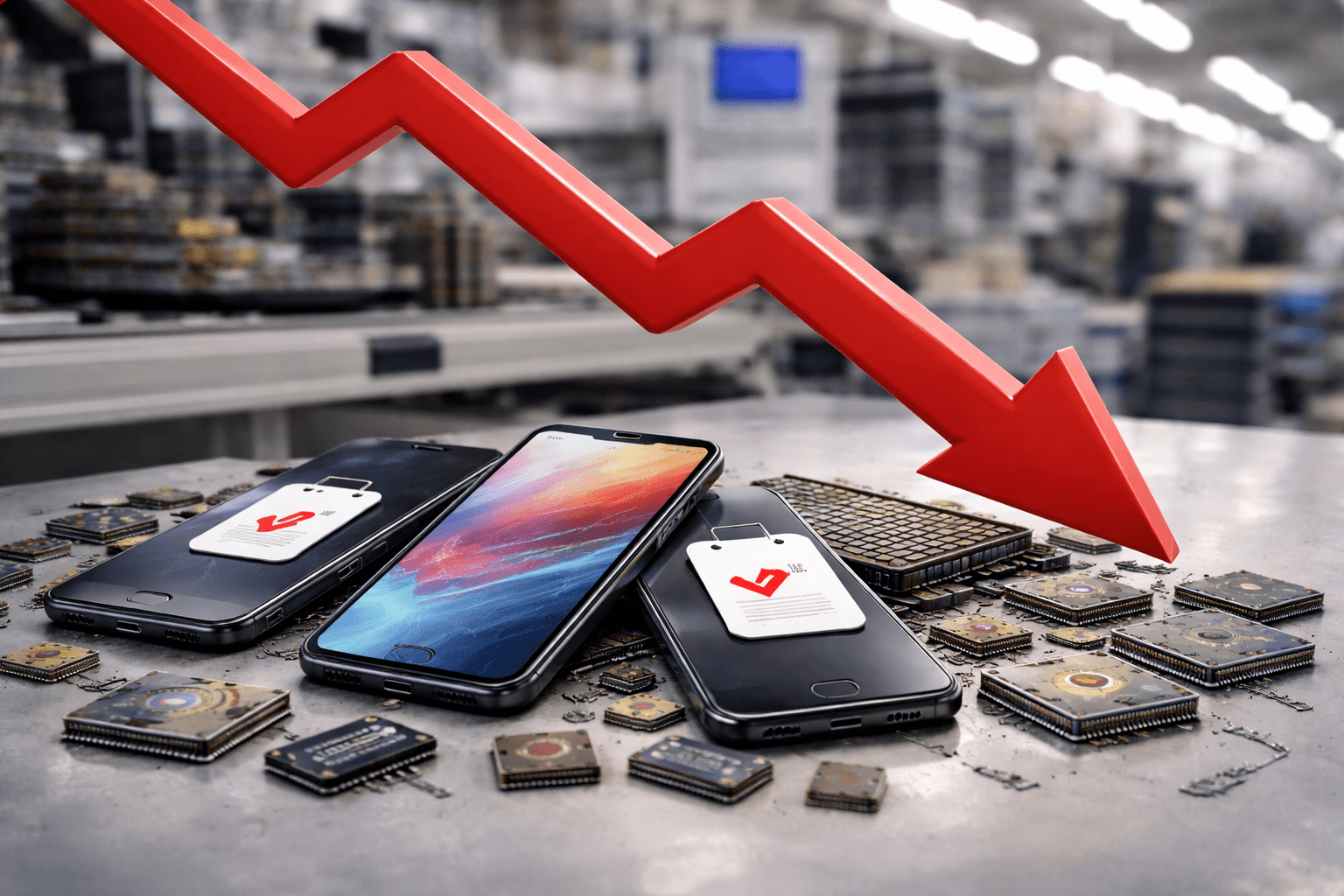
The smartphone market decline in 2026 is set to mark a historic turning point for the global technology industry. According to IDC, worldwide smartphone shipments are projected to fall sharply, driven by an unprecedented surge in memory chip prices.
This is not a cyclical slowdown. It reflects a deeper structural shift caused by the rapid expansion of artificial intelligence infrastructure, which is reshaping the semiconductor supply chain.
The Scale of the Smartphone Market Decline in 2026
The projected decline is significant by historical standards.
Global smartphone shipments are expected to fall by 12.9% in 2026, reaching approximately 1.1 to 1.12 billion units. This represents the lowest level in more than a decade.
The scale of the contraction signals a fundamental disruption rather than a temporary correction.
Industry analysts describe the situation as a structural shift in the market, with long-term implications for manufacturers, pricing, and consumer behavior.
The Core Driver: Memory Price Surge
AI Is Reshaping the Semiconductor Market
The primary cause of the downturn is the sharp increase in memory chip prices.
Artificial intelligence workloads require large amounts of advanced memory. Data centers operated by major technology companies are consuming a growing share of global supply.
This has diverted production away from consumer electronics.
As a result, smartphone manufacturers face:
- Limited access to memory components
- Higher production costs
- Reduced flexibility in pricing
The imbalance between supply and demand is the key driver behind the market decline.
A Structural Supply Shift
The current shortage differs from previous semiconductor cycles.
Memory manufacturers are prioritizing high-margin AI components such as high-bandwidth memory. This reduces the availability of conventional memory used in smartphones.
This shift is not temporary. It represents a reallocation of global manufacturing capacity.
Rising Costs and Consumer Impact
Smartphone Prices Are Increasing
As production costs rise, manufacturers are passing these costs to consumers.
The average selling price of smartphones is expected to increase by 14%, reaching a record $523 in 2026.
This marks a significant departure from the industry’s long-standing trend of delivering more features at lower prices.
End of Ultra-Low-Cost Smartphones
The most affected segment is the budget category.
Devices priced below $100, which account for a large share of global shipments, are becoming economically unsustainable.
This could lead to the gradual disappearance of entry-level smartphones.
For emerging markets, this trend raises concerns about digital inclusion and affordability.
Winners and Losers in the Market
Pressure on Low-End Android Manufacturers
Companies operating in the low-margin segment face the greatest risk.
Rising component costs directly impact profitability. Many may struggle to sustain operations.
Regions that rely heavily on affordable smartphones are expected to see the sharpest declines.
Advantage for Premium Brands
In contrast, premium manufacturers are better positioned.
Companies such as Apple and Samsung benefit from:
- Strong financial reserves
- Long-term supply agreements
- Pricing power
These factors allow them to absorb cost increases and maintain margins.
As a result, market consolidation is likely, with larger players gaining share.
Broader Industry Impact
Beyond Smartphones
The memory shortage is affecting the entire electronics ecosystem.
Other impacted sectors include:
- Personal computers
- Gaming consoles
- Wearables and XR devices
Rising component costs are increasing device prices across categories.
This could slow consumer demand and extend device replacement cycles.
Changing Consumer Behavior
Higher prices are expected to alter purchasing patterns.
Consumers may:
- Delay upgrades
- Extend device usage
- Shift toward refurbished devices
This behavioral change reinforces the decline in shipment volumes.
Strategic Implications for the Industry
Shift from Volume to Value
The industry is moving away from volume-driven growth.
Manufacturers are focusing on higher-margin devices.
This shift could redefine competition, with innovation concentrated in premium segments.
Supply Chain Strategy Becomes Critical
Securing memory supply is now a strategic priority.
Companies with strong supplier relationships will have a competitive advantage.
Others may face disruptions in production and pricing.
Innovation Constraints
Rising costs may also limit hardware upgrades.
Manufacturers could delay improvements in:
- RAM capacity
- Storage
- Advanced features
This may slow the pace of innovation in the short term.
Future Outlook: A Slow Recovery
The outlook suggests a gradual recovery rather than a rapid rebound.
IDC forecasts:
- A modest 2% growth in 2027
- A stronger 5.2% recovery in 2028
However, the market is unlikely to return to its previous structure.
Higher prices and lower volumes may become the new normal.
Topics
Covering startup news, AI, technology, and business at ThePrimely. Delivering accurate, in-depth reporting on the stories that shape the future.