
Baikonur Set for Progress MS-34 Cargo Launch Sunday
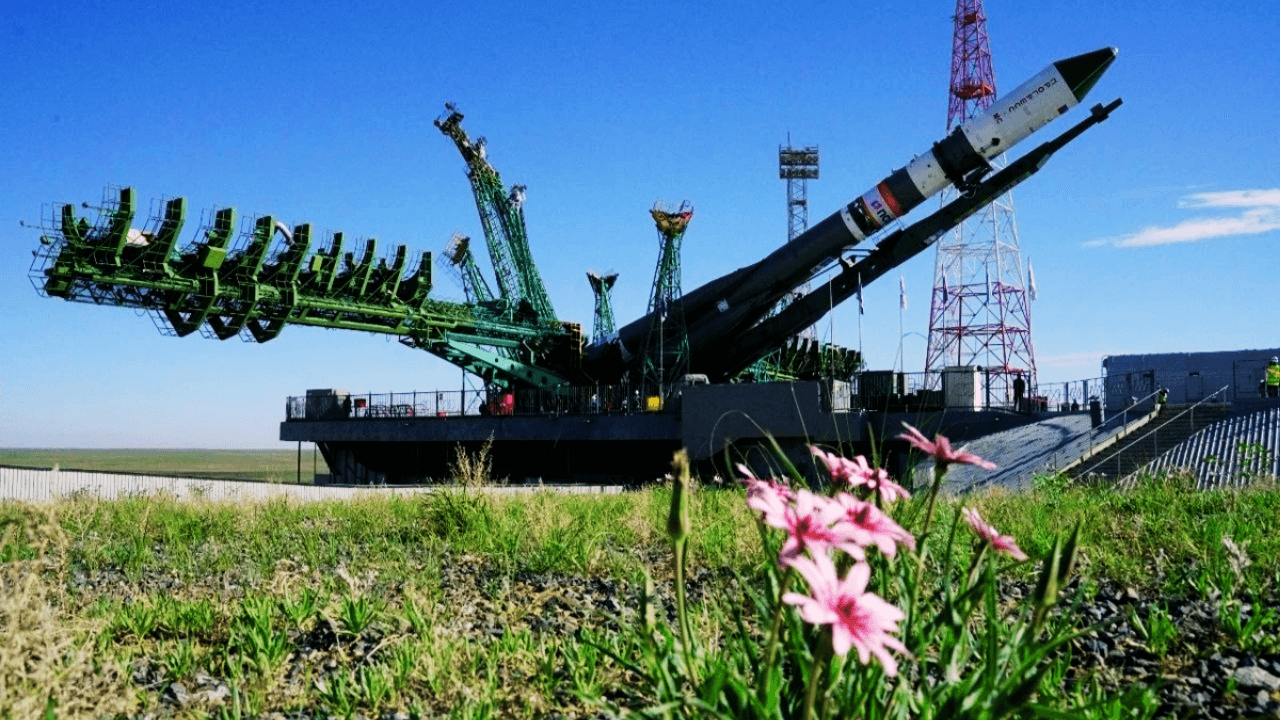
The Progress MS-34 launch is set to mark another critical resupply mission to the International Space Station (ISS), as final preparations conclude at the Baikonur Cosmodrome. The mission highlights the continued importance of cargo spacecraft in sustaining long-term human presence in space.
Engineers have completed key pre-launch procedures, including system checks and infrastructure inspections, signaling readiness for liftoff.
Final Preparations at Baikonur
At Baikonur, the Soyuz-2.1a rocket carrying the Progress MS-34 spacecraft has already been rolled out to the launch pad and positioned vertically.
Teams have been conducting multi-day checks of the launch vehicle, ground systems, and spacecraft to ensure mission safety and reliability.
These final steps are standard for space missions but remain critical, especially for cargo deliveries that support ongoing ISS operations.
Mission Details and Timeline
The Progress MS-34 launch is scheduled for late April 2026 from Baikonur in Kazakhstan using a Soyuz-2.1a rocket.
The spacecraft is expected to dock with the ISS within two days of launch, following an automated orbital rendezvous.
This mission continues a long-running series of Progress flights, which serve as a backbone for ISS resupply operations.
What the Spacecraft Will Deliver
Progress MS-34 will carry more than 2.5 tons of cargo to the ISS.
The payload includes fuel, water, food supplies, and equipment necessary for maintaining station operations. It also carries materials for scientific experiments and a spacesuit for extravehicular activities.
Such missions ensure that astronauts aboard the ISS have continuous access to essential resources and research tools.
Why This Mission Matters
Cargo missions like Progress MS-34 are essential for the sustainability of space stations. Unlike crewed missions, they focus entirely on logistics, enabling scientific research and daily operations in orbit.
The ISS depends on a steady flow of supplies, and each mission plays a role in maintaining life support systems, conducting experiments, and supporting astronauts’ work.
This launch also reflects ongoing international reliance on established spacecraft systems like Progress, even as new commercial options emerge.
Strategic Implication
The Progress MS-34 launch highlights the continued importance of government-led space infrastructure. While private companies are expanding their role in space logistics, traditional systems remain critical for reliability and continuity.
For Roscosmos, this mission reinforces its position in ISS operations and demonstrates its ability to maintain consistent launch schedules despite earlier delays and technical challenges.
Topics
Covering startup news, AI, technology, and business at ThePrimely. Delivering accurate, in-depth reporting on the stories that shape the future.