
PM Modi’s Israel Visit Signals a Strategic Reset in Bilateral Ties
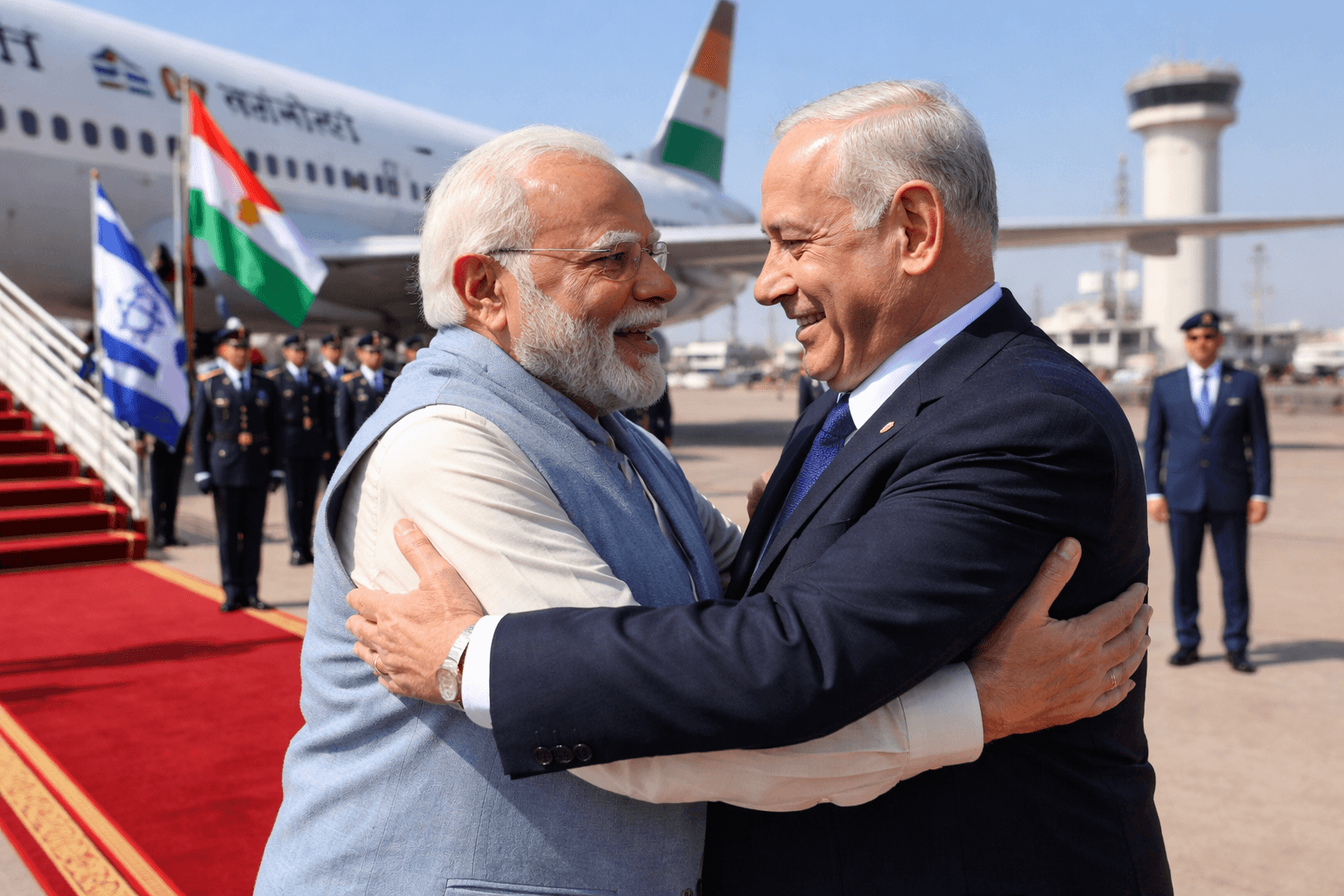
Prime Minister Narendra Modi arrived in Israel to an unusually warm reception.
Israeli Prime Minister Benjamin Netanyahu greeted him personally at the airport.
The embrace between the two leaders was immediate and symbolic.
More importantly, it sent a clear diplomatic message.
India–Israel relations have moved beyond formality.
They now rest on trust, alignment, and strategic intent.
A Welcome That Broke Diplomatic Convention
State visits usually follow protocol.
This one went further.
Prime Minister Netanyahu stepped forward himself.
He greeted Prime Minister Modi with a hug.
Such gestures remain rare in international diplomacy.
However, the moment reflected years of steady engagement.
It also reinforced the personal rapport between both leaders.
Moreover, it highlighted Israel’s importance in India’s foreign policy matrix.
you might like this :- US–Iran Nuclear Talks Enter Critical Phase Amid Rising Tensions
How India-Israel Ties Reached This Point
India formally established full diplomatic relations with Israel in 1992.
Since then, cooperation has expanded steadily.
Over the past decade, momentum accelerated.
High level visits became frequent.
Defence, agriculture, water technology, and cybersecurity emerged as key pillars.
Notably, India is among Israel’s largest defence partners.
Joint projects and technology transfers continue to grow.
At the same time, civilian innovation cooperation has deepened.
Key Developments During the Visit
Leadership Level Engagement
The visit underscored direct leader to leader diplomacy.
This approach reduces friction and speeds decision-making.
Strategic Cooperation Focus
Discussions centred on defence collaboration, security coordination, and technology exchange.
Innovation partnerships also featured prominently.
People-to-People and Innovation Ties
Both sides emphasised startups, research cooperation, and academic exchanges.
These sectors now anchor long term engagement.
Strategic Implications for India
This visit strengthens India’s position in West Asia.
It signals strategic autonomy rather than alignment with any single bloc.
Furthermore, Israel remains a critical source of advanced defence technologies.
Cybersecurity and intelligence cooperation also enhance India’s security posture.
Equally important, the partnership supports India’s innovation ambitions.
Israeli expertise complements India’s scale and talent base.
What This Means for Israel
For Israel, India represents a stable and fast growing partner.
It offers market depth, manufacturing capacity, and diplomatic reach.
India’s rising global influence adds weight to the partnership.
Therefore, deepening ties with New Delhi serves Israel’s long-term strategic interests.
A Partnership Set to Mature
Looking ahead, engagement is expected to intensify.
Joint development projects may expand.
Trade and technology collaboration should accelerate.
Additionally, diplomatic coordination on global platforms will likely increase.
Both countries share democratic values and pragmatic policy approaches.
As a result, the relationship is moving from cooperation to co creation.
More Than Symbolism
PM Modi’s Israel visit was not just ceremonial.
It reflected a confident and mature bilateral relationship.
The personal welcome symbolised trust.
The strategic discussions confirmed direction.
Together, they point to a partnership built for long term impact.
Topics
Covering startup news, AI, technology, and business at ThePrimely. Delivering accurate, in-depth reporting on the stories that shape the future.