
PM Modi Tests Sarvam Kaze First: India’s AI Smart glasses Moment Begins
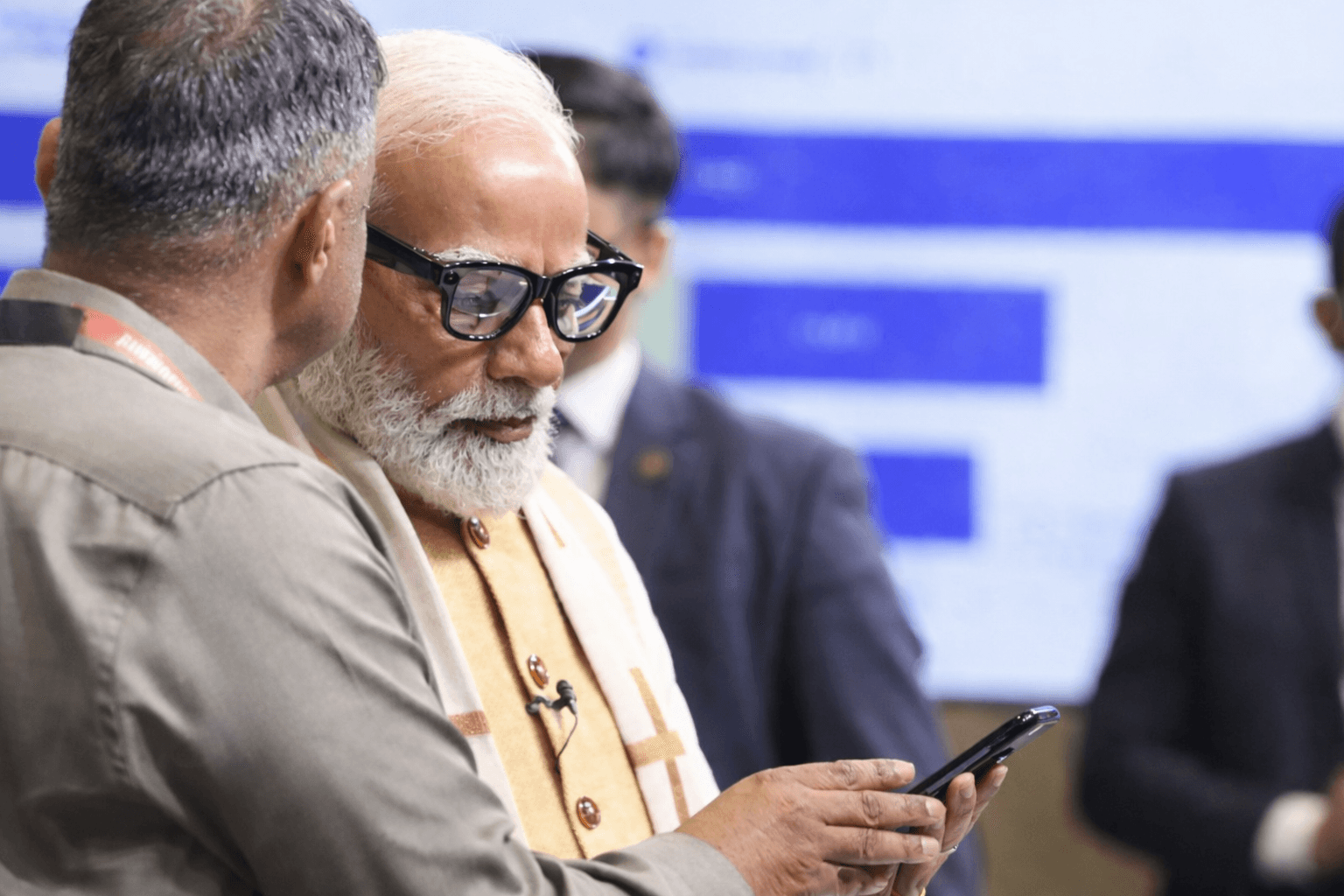
India’s artificial intelligence ambition took a visible step forward when Sarvam Kaze Smartglasses were unveiled at the India AI Impact Summit 2026. The moment gained national attention after Narendra Modi personally tested the device on stage.
This was more than a product demo. It was a signal. India is moving beyond software services and into AI hardware innovation.
The smartglasses, developed by Sarvam AI, position themselves as a Made-in-India alternative to global AI wearable brands.
What Happened at the Summit
At the India AI Impact Summit 2026, Sarvam AI introduced Kaze as India’s first indigenous AI-powered smartglasses platform. The unveiling was not quiet. It was deliberate.
Prime Minister Modi became one of the first public figures to try the device. The optics were strategic. It underscored government backing for domestic AI hardware innovation.
The product has already drawn comparisons to Meta’s Ray-Ban smart glasses. However, Sarvam is positioning Kaze as a localized AI-first platform built specifically for Indian users and languages.
you may like this : India AI Impact Summit 2026: A Defining Moment for India’s AI Strategy | ThePrimely
What Are Sarvam Kaze Smart glasses?
Sarvam Kaze Smart glasses are AI-enabled wearable devices designed to integrate real-time intelligence into everyday use.
Core Capabilities
While full commercial specifications are expected closer to public launch, early demonstrations highlighted:
- Real-time AI assistance
- Context-aware responses
- Voice-driven interaction
- Native support for Indian languages
- Smart camera integration
The emphasis is clear. This is not just a camera wearable. It is an AI interface.
Sarvam AI has focused on building foundational language models tailored for India’s linguistic diversity. Kaze appears to extend that capability into hardware.
Why This Launch Matters
India has long excelled in IT services and software exports. Hardware innovation, however, has lagged behind global leaders.
Sarvam Kaze Smartglasses change that narrative.
1. India’s Shift Toward AI Hardware
Most AI breakthroughs in India have centered on platforms and applications. Kaze represents a vertical integration strategy. It combines AI models with physical devices.
This strengthens India’s position in the global AI value chain.
2. Policy Alignment
The launch aligns with India’s broader push for digital sovereignty and manufacturing expansion. The “Made in India” narrative is no longer symbolic. It is strategic.
Government visibility at the unveiling signals long-term institutional support.
3. Consumer Technology Ambition
The global smart glasses market remains nascent but competitive. International players have invested heavily in AR and AI wearables.
Sarvam is entering early. That timing matters.
Can India Compete Globally?
The smart glasses segment is evolving fast. Global technology firms are racing to define the category.
Sarvam Kaze Smartglasses will compete on three fronts:
- AI capability
- Localization strength
- Price positioning
Localization may become its strongest advantage. India’s linguistic complexity requires region-specific AI models. Sarvam already operates in that space.
If pricing remains competitive, adoption could scale quickly across enterprise, education, and consumer segments.
However, hardware reliability and ecosystem integration will determine long-term viability.
Strategic Implications for India’s AI Ecosystem
The unveiling sends a broader message.
India is no longer content being a backend AI service provider. It aims to build end-to-end AI infrastructure.
Sarvam AI’s move signals:
- Confidence in indigenous AI research
- Growing venture and policy support
- Expansion beyond pure software models
If Kaze succeeds commercially, it could unlock:
- Domestic AI hardware manufacturing
- Export opportunities
- Increased investor confidence in deep tech startups
This also strengthens India’s position in geopolitical technology competition.
What Comes Next?
Sarvam has not yet disclosed final pricing or mass availability timelines. Commercial rollout details are expected in the coming months.
Key questions remain:
- Will the device integrate seamlessly with Android and iOS ecosystems?
- Can battery life match global competitors?
- Will enterprise adoption drive early revenue?
If executed well, Sarvam Kaze Smartglasses could become India’s flagship AI wearable.
Failure, however, would reinforce skepticism about domestic hardware execution.
The next 12 months will be critical.
A Defining Moment for AI Hardware in India
Sarvam Kaze Smartglasses represent more than a new gadget. They symbolize a strategic shift.
By unveiling the device at a national AI summit and securing public endorsement from Prime Minister Narendra Modi, Sarvam AI elevated the conversation from product innovation to national capability.
India’s AI story is evolving.
The country now aims to build intelligence not just in code, but in devices people wear.
Execution will determine success. But the direction is clear.
India wants a seat at the global AI hardware table.
Topics
Covering startup news, AI, technology, and business at ThePrimely. Delivering accurate, in-depth reporting on the stories that shape the future.