
Netflix and Paramount Shares Surge as Warner Bros Deal Ends Months-Long Battle
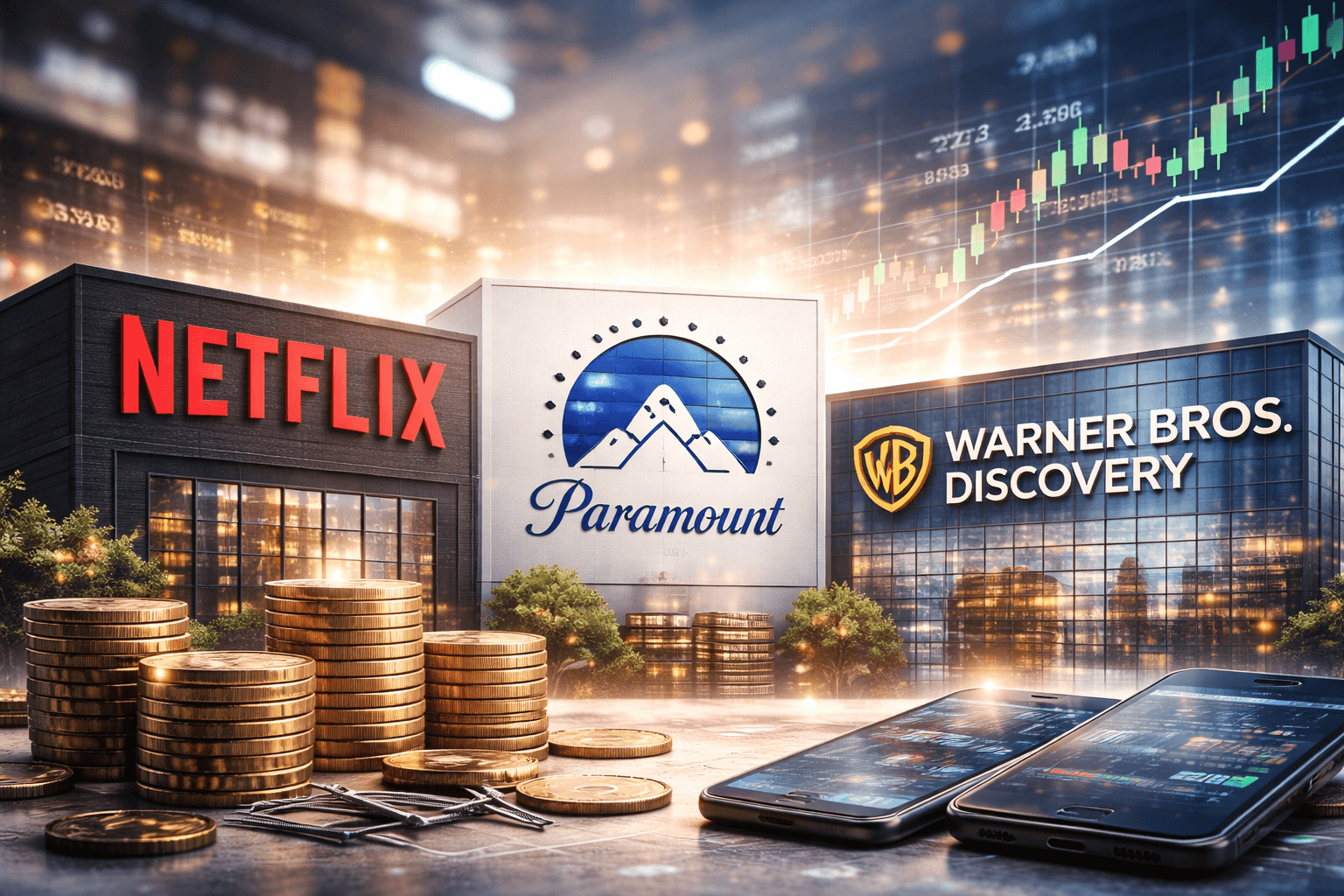
The Netflix Paramount shares Warner Bros deal marks a decisive turning point in the global media and streaming industry. After months of intense bidding, Paramount Skydance secured a landmark agreement to acquire Warner Bros Discovery, while Netflix withdrew from the race.
The outcome has reshaped investor sentiment. Both Netflix and Paramount saw sharp gains in their stock prices, reflecting confidence in their respective strategies.
The battle for Warner Bros Discovery was one of the most significant corporate contests in recent media history.
Paramount Skydance ultimately won with an offer of $31 per share, valuing the deal at approximately $110 billion, including debt.
Netflix had initially agreed to acquire key Warner assets at a lower valuation. However, it chose not to match Paramount’s higher bid.
The decision effectively ended the bidding war.
Paramount’s acquisition will combine major assets, including:
- HBO and HBO Max
- CNN
- Warner Bros film studios
- Popular franchises such as Harry Potter and Game of Thrones
This creates one of the largest integrated content libraries in the industry.
Why Netflix Walked Away
Financial Discipline Over Scale
Netflix’s decision was driven by cost considerations.
The company stated that matching Paramount’s offer was “no longer financially attractive.”
Its bid stood at approximately $27.75 per share, significantly lower than Paramount’s final offer.
Analysts viewed Netflix’s withdrawal as a strategic move to avoid excessive debt and integration risk.
Investor Reaction
The market responded positively.
Netflix shares rose by nearly 14% after the announcement, recovering from earlier declines during the bidding process.
Investors interpreted the decision as a return to disciplined capital allocation.
Additionally, Netflix is set to receive a $2.8 billion termination fee, further strengthening its financial position.
Paramount’s Strategic Bet
Building a Media Powerhouse
Paramount’s acquisition is a bold attempt to scale up in an increasingly competitive streaming environment.
The combined entity will integrate Paramount’s existing assets with Warner Bros Discovery’s portfolio.
This positions the company as a stronger competitor against:
- Netflix
- Disney
- Amazon
The deal is expected to deliver over $6 billion in cost savings through operational efficiencies.
Risks and Challenges
However, the strategy carries significant risk.
Paramount will take on substantial debt to finance the acquisition. Estimates suggest a combined debt burden of around $90 billion.
There are also regulatory hurdles.
Authorities in the U.S. and Europe are expected to review the deal closely due to concerns about competition and potential job losses.
Market Reaction: Why Both Stocks Rose
Netflix: Rewarded for Discipline
Investors favored Netflix’s decision to step back.
By avoiding a costly acquisition, the company can focus on:
- Content investment
- Subscriber growth
- Profitability
Analysts have described Netflix as a “winner” despite losing the bid.
Paramount: Rewarded for Ambition
Paramount shares surged by around 21%, reflecting confidence in the strategic value of the deal.
Investors see potential in:
- Scale advantages
- Content library expansion
- Competitive positioning
However, long-term success will depend on execution.
Industry Impact: A New Phase of Consolidation
The Streaming Wars Intensify
The deal highlights a broader trend.
The streaming industry is entering a consolidation phase, where scale is becoming critical.
Large content libraries and global distribution are key competitive advantages.
The combined Paramount-Warner entity could reach over 200 million subscribers, creating a formidable player in the market.
Pressure on Smaller Players
Smaller streaming services may struggle to compete.
The market is likely to see:
- Further mergers and acquisitions
- Strategic partnerships
- Increased content investment
This could reshape the competitive landscape over the next decade.
Strategic Implications
1. Scale vs Discipline
The deal highlights two contrasting strategies:
- Paramount: Growth through acquisition
- Netflix: Focus on profitability
Both approaches have merit, but their outcomes will differ over time.
2. Content as the Core Asset
Ownership of intellectual property is becoming central.
Franchises like Harry Potter and Mission Impossible are not just entertainment assets. They are long-term revenue drivers.
3. Regulatory Scrutiny
Large media mergers are likely to face increasing regulatory attention.
Concerns include:
- Market concentration
- Job losses
- Consumer choice
These factors could influence future deals.
Future Outlook
The transaction is expected to close in 2026, subject to regulatory and shareholder approval.
The outcome will shape the next phase of the media industry.
Key questions include:
- Can Paramount manage its debt effectively?
- Will integration deliver projected synergies?
- How will Netflix leverage its financial flexibility?
The answers will determine the balance of power in streaming.
Topics
Covering startup news, AI, technology, and business at ThePrimely. Delivering accurate, in-depth reporting on the stories that shape the future.