
NASA Artemis II Launch Delayed to April After Helium System Fault
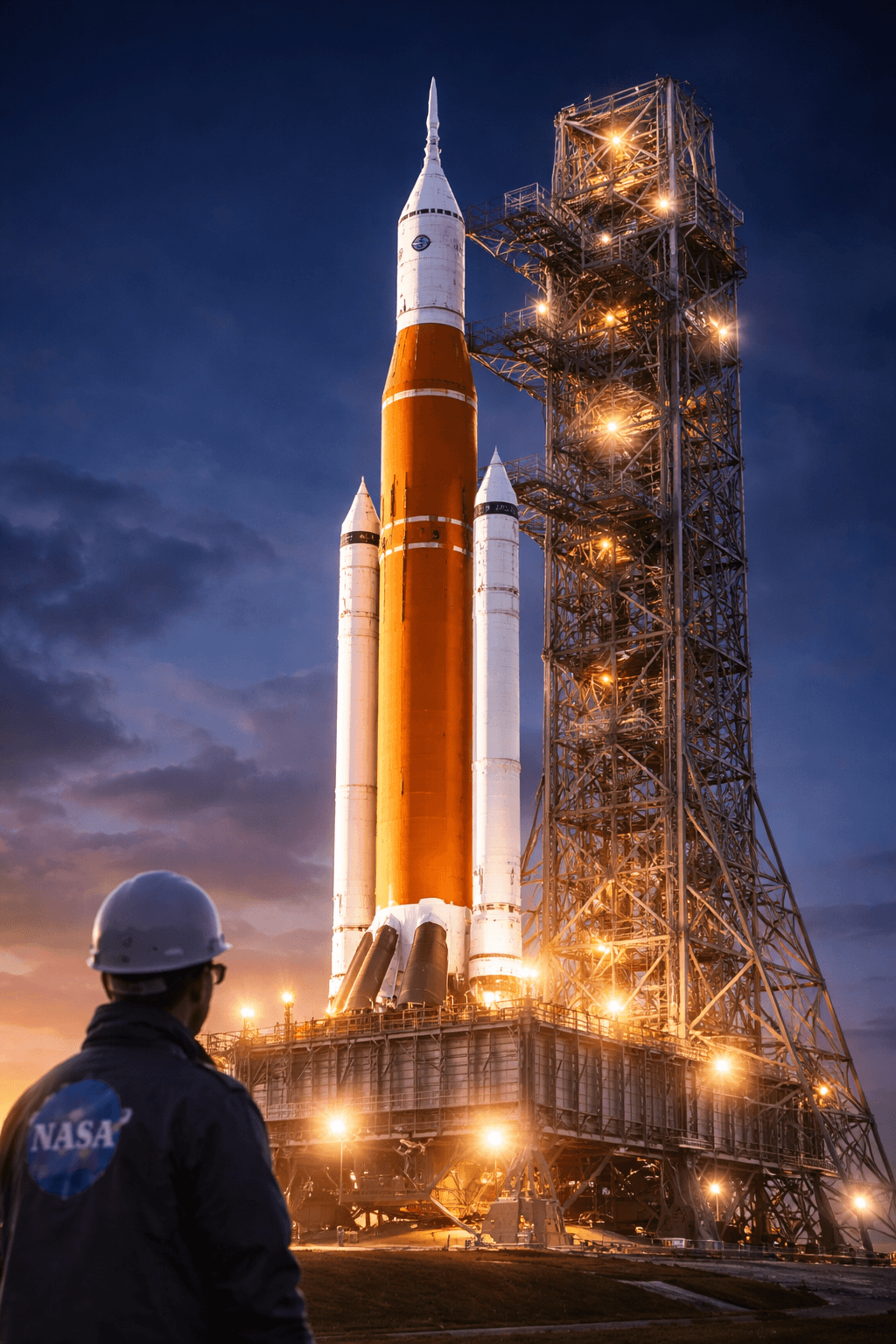
NASA’s Artemis II launch delayed again due to a technical issue in the Space Launch System (SLS) rocket. Originally set for early March 2026, this prestigious lunar mission has now been pushed to no earlier than April 1 2026, after engineers detected a problem with the rocket’s helium pressurisation system. This latest development marks another hurdle in NASA’s Artemis program, which aims to return humans to deep space and ultimately the Moon’s surface.
The Helium Flow Issue
In late February 2026, NASA engineers observed an interruption in helium flow within the SLS rocket’s Interim Cryogenic Propulsion Stage (ICPS). Helium plays a critical role in spaceflight preparation it helps pressurize propellant tanks and purge engines before launch.
Although earlier rehearsals, including two full wet dress rehearsals, reported successful performance of the helium system, the fault occurred during routine operations following testing. The team was unable to verify proper helium flow through the rocket, prompting NASA to halt further launch preparations.
NASA Administrator Jared Isaacman confirmed the problem and indicated potential causes including a faulty valve, filter, or connection interface in the helium supply system.
Rollback and Repair
To investigate and address the issue, NASA made the precautionary decision to roll the Artemis II rocket back from Launch Pad 39B to the Vehicle Assembly Building (VAB) at Kennedy Space Center.
Rollback allows technicians safe, controlled access to the rocket for a thorough inspection and repair. This step though costly in time is essential for crew safety on a mission that will carry four astronauts on a 10-day journey around the Moon and back.
Revised Launch Timeline
- Original Target: March 6, 2026
- March Window Ruled Out: Due to unresolved helium system fault
- New Earliest Target: April 1, 2026 (contingent on repair and testing success)
NASA has not yet announced an exact date beyond April 1. The final schedule will depend on technical progress, remaining flight readiness tests, and orbital mechanics.
Artemis II’s Mission
Artemis II is a cornerstone of NASA’s lunar strategy:
- It will be the first crewed deep space mission since Apollo 17 in 1972.
- The mission will send three American astronauts and one Canadian on a lunar flyby and return trajectory.
- Although not involving a lunar landing, it tests key systems for future Artemis missions, especially Artemis III which plans a Moon landing by 2028.
- Earlier delays stemmed from separate issues, including a liquid hydrogen leak detected during wet dress rehearsals, and previous technical challenges in ground systems and capsule readiness.
Industry Impact and Strategic Implications
The delay of Artemis II carries significance across multiple fronts:
Safety Priority
NASA’s decision reinforces the agency’s long standing emphasis on crew safety over adherence to launch schedules. Identifying and fixing propulsion system issues before flight reflects mature risk management for human spaceflight.
Program Scheduling
Shifts in the Artemis II timeline may cascade into later missions, influencing:
- Ground support resource allocation
- Launch manifest planning
- International partnerships and payload integration
Adjustments in the schedule could impact NASA’s broader Artemis cadence, including Artemis III’s lunar landing objective.
Technical Readiness
Resolution of propellant pressurization and helium flow faults is vital not just for Artemis II, but for system reliability across future SLS and Orion flights.
Future Outlook
NASA remains committed to launching Artemis II as soon as it is safe and technically sound. The move to investigate the helium system thoroughly may shorten future risk exposure and prevent mission critical failures.
As repairs proceed at the VAB, the next steps include:
- Component level diagnostics
- Repairs or replacements of affected valves or interfaces
- Ground testing and verification
- Return to Launch Pad 39B for final launch preparations
Topics
Covering startup news, AI, technology, and business at ThePrimely. Delivering accurate, in-depth reporting on the stories that shape the future.