
NASA Lets Astronauts Bring Smartphones on Crew-12 and Artemis II Missions
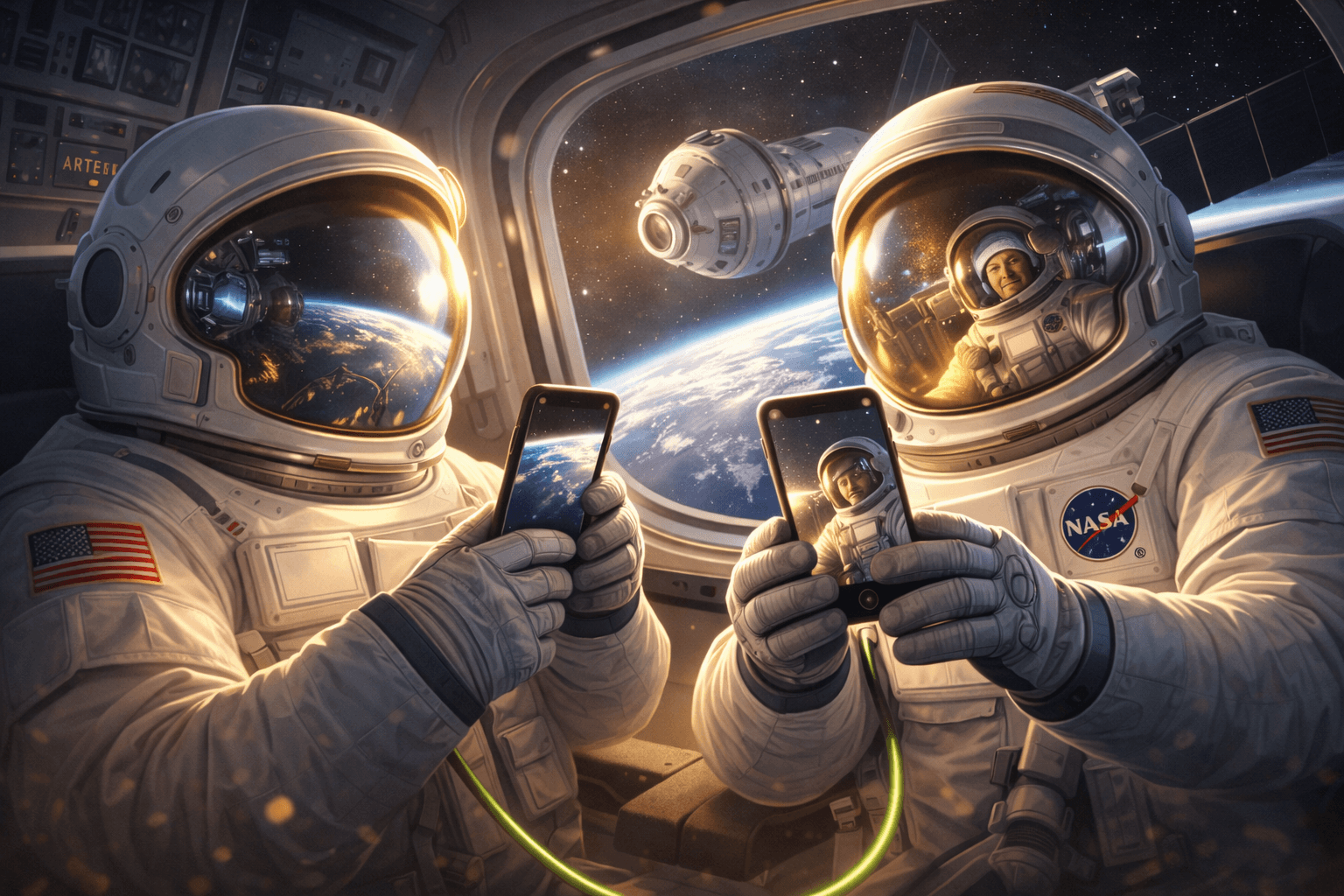
NASA will allow astronauts to carry personal smartphones on upcoming missions, marking a clear shift in how spaceflight is documented. The policy applies to both the Crew-12 mission to the International Space Station and the Artemis II lunar mission.
Until now, NASA restricted personal devices in space. Astronauts relied on agency-approved cameras and equipment. However, advances in consumer technology have prompted the agency to rethink that approach.
Why NASA Changed Its Policy
NASA leaders say modern smartphones now meet strict safety and performance standards. As a result, the agency believes astronauts can safely use them without risking mission systems.
Moreover, smartphones offer high-quality cameras and video tools. These features allow crews to capture moments quickly and naturally. In turn, this could improve how missions are shared with the public.
NASA Administrator Jared Isaacman ">said the change reflects progress in testing consumer technology for space use. He added that the update helps crews document missions in a more personal way.
Which Missions Are Included
The new rule will begin with two major missions:
- Crew-12, a routine astronaut rotation to the International Space Station
- Artemis II, the first crewed lunar mission since 1972
Artemis II will send astronauts around the Moon and back to Earth. Because of this, the mission is expected to draw global attention. Allowing smartphones could result in more spontaneous images from deep space.
How Smartphones Will Be Used in Space
NASA stresses that astronauts will not use phones freely at all times. Instead, crews will follow clear usage guidelines. These rules ensure devices do not interfere with spacecraft systems.
Before flight, engineers test smartphones for radiation, battery safety, and heat control. Crews also receive training on how and when to use them safely.
As a result, mission safety remains unchanged.
Why This Matters for Space Exploration
Smartphones now outperform many older space-approved cameras. They offer better image processing, improved low-light performance, and faster sharing options.
Because of this, NASA sees smartphones as practical tools, not distractions. The agency also believes the change will help connect the public to space missions in a more direct way.
At the same time, the move reflects a broader shift at NASA. The agency increasingly adopts commercial technology instead of relying only on custom hardware.
A More Human View of Space
For decades, space missions felt distant to many people. Photos often arrived days or weeks later. Smartphones could change that.
With faster and more personal imagery, audiences may experience missions in real time. This approach aligns with NASA’s goal of making space exploration more relatable.
As Artemis missions progress, small changes like this may shape how people see humanity’s return to the Moon.
Topics
Covering startup news, AI, technology, and business at ThePrimely. Delivering accurate, in-depth reporting on the stories that shape the future.