
Kolkata Earthquake: Strong Tremors from Bangladesh Shake City
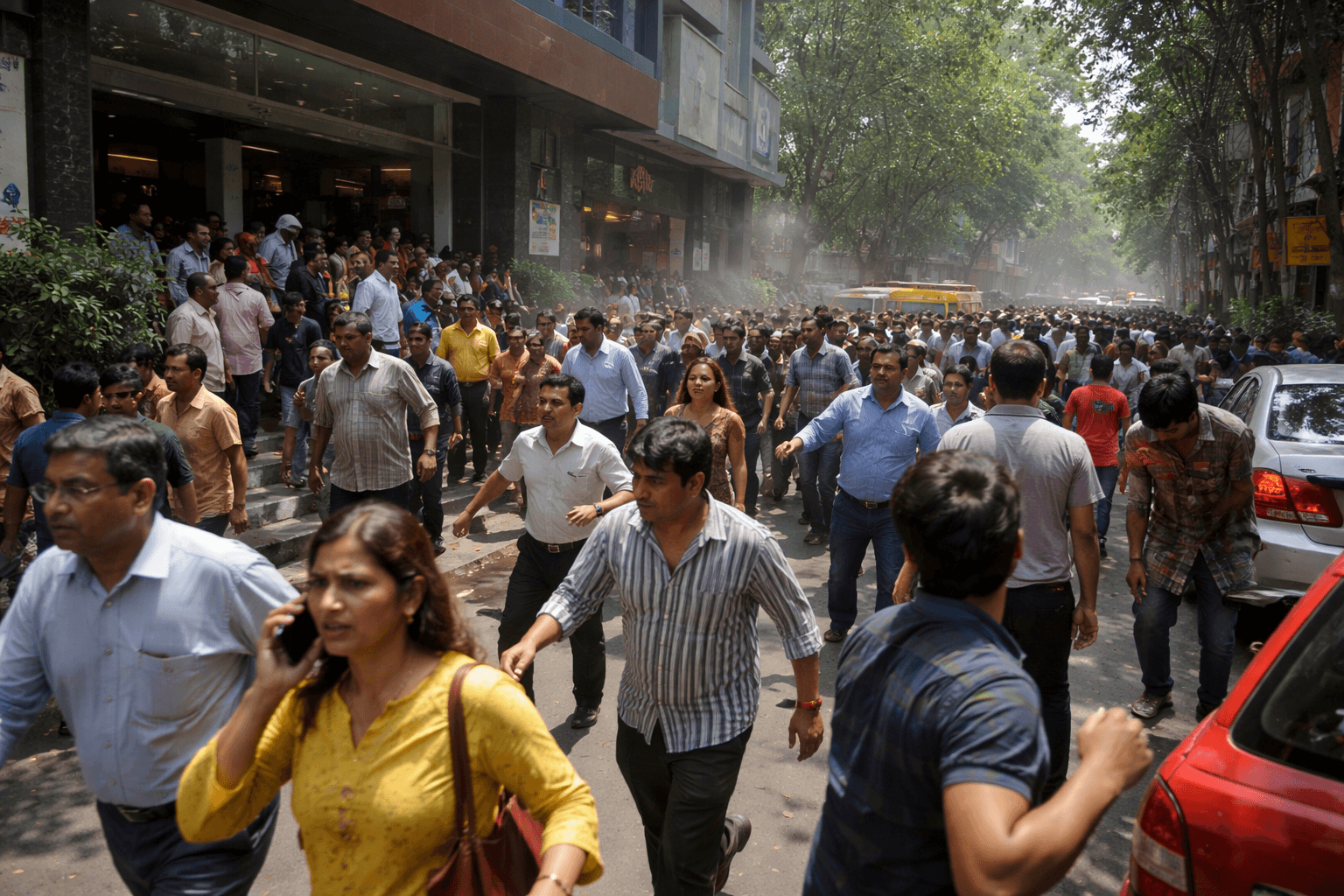
On Friday afternoon, a Kolkata earthquake sent strong tremors across the city and adjoining areas, prompting panicked residents and office workers to evacuate buildings and gather in open spaces. The seismic activity was confirmed by multiple news outlets, and while there are no verified reports of casualties or major structural damage, the event has reignited concerns about regional seismic vulnerability.
Tremors Felt Across Kolkata
At around 1:20–1:30 pm IST, residents across Kolkata felt distinct shaking that lasted several seconds, with furniture and ceiling fans visibly swaying in homes and offices. Many people rushed out of buildings as a precaution, especially in commercial hubs and high rise apartments. Authorities have yet to confirm detailed impact assessments, but early reports indicate widespread evacuation and heightened public alertness.
Videos and images circulating online showed residents in Kolkata hurriedly leaving their homes and offices as a safety precaution.
Magnitude and Epicentre: Seismic Data
Preliminary seismic data from credible observatories suggest that the quake that triggered the tremors measured around magnitude 5 to 5.5 on the Richter scale. According to seismological monitoring:
- The United States Geological Survey (USGS) placed the magnitude at approximately 5.3, with an epicentre near Taki in West Bengal at a shallow depth of about 9.8 km.
- Other reports and early estimates link the event to an earthquake striking in neighbouring Bangladesh, with magnitudes cited between 5.4 and 5.5 and an epicentre in the Khulna or southwestern Bangladesh region.
The data indicates that the tremors felt in Kolkata were likely the result of this offshore or cross border seismic activity rather than a major quake centred directly beneath the city.
Immediate Reactions: Public and Authorities
Across residential and commercial districts of Kolkata, the shaking led workers and residents to exit buildings quickly. Reports describe the tremors as noticeable but brief, and there have been no verified reports of injuries or significant damage as of the latest official updates. Authorities are conducting inspections and monitoring seismic activity to provide clarity on the situation.
Why Kolkata Feels Earthquakes
Kolkata and much of eastern India, though not located on major plate boundaries like the Himalayas, can still experience tremors due to seismic events in the broader South Asian region. Significant historical earthquakes such as the 1897 Assam earthquake have previously caused widespread shaking across eastern India, including Kolkata.
Seismic activity in nearby Bangladesh and the Bay of Bengal region can also propagate through the crust and be felt in urban centres. These events underscore the importance of preparedness even in areas considered to have moderate earthquake risk.
Urban Safety and Preparedness
The recent Kolkata earthquake tremors highlight persistent challenges for urban preparedness:
- Infrastructure Resilience: Ensuring buildings and public spaces meet seismic design standards can reduce risk during future events.
- Public Awareness: Clear communication from disaster management authorities can reduce panic and guide safe responses.
- Monitoring and Data Sharing: Timely seismic data from regional observatories helps officials and residents understand events as they occur.
These measures are critical as urban populations grow and the consequences of seismic events even moderate ones can be amplified in dense cities.
Earthquake Monitoring and Public Health
While the immediate effects of this quake appear limited, ongoing monitoring will determine whether aftershocks occur or if structural assessments reveal any hidden damage. Public health and disaster management agencies remain on alert and are expected to issue guidance as needed.
In the long term, continued collaboration between Indian and regional seismic monitoring networks will improve early warning capabilities and enhance urban resilience across the region.
Topics
Covering startup news, AI, technology, and business at ThePrimely. Delivering accurate, in-depth reporting on the stories that shape the future.