
Jaishankar at G7: What It Means for Global Security and Trade
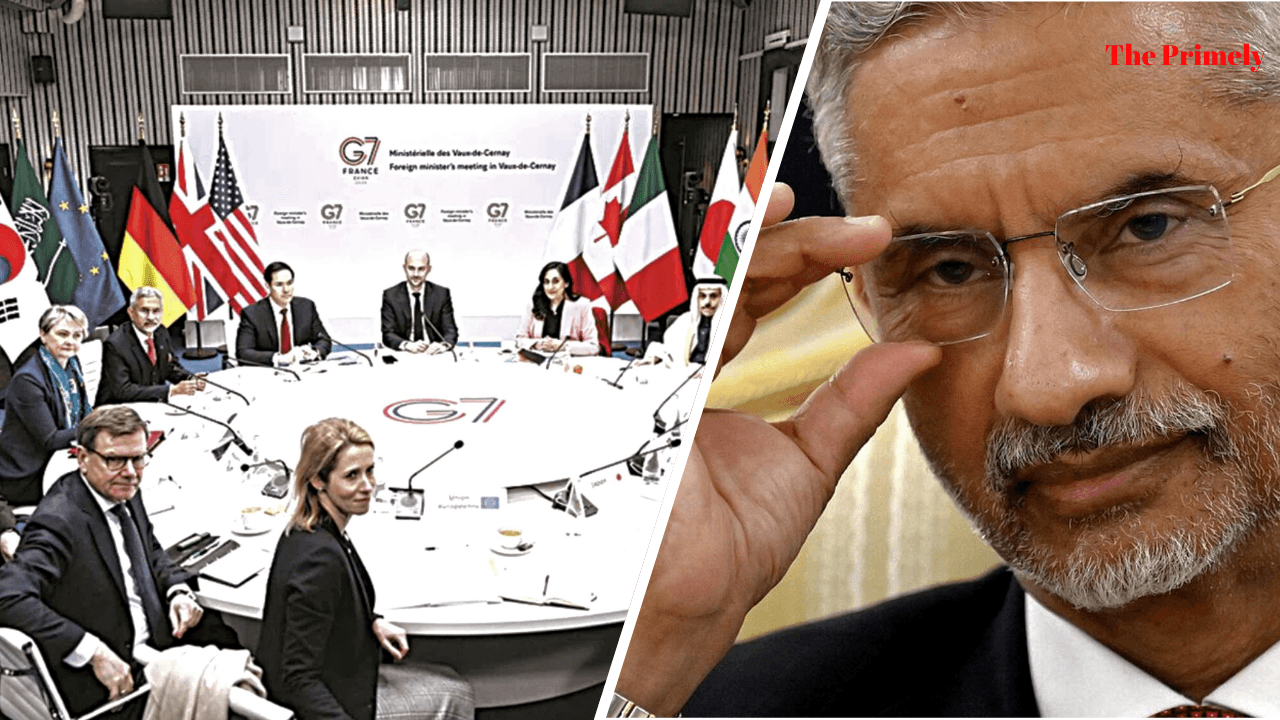
India’s External Affairs Minister S. Jaishankar highlighted key global concerns during the G7 Foreign Ministers’ Meeting, focusing on security threats, economic stability, and international cooperation. His remarks reflect India’s growing role in shaping global discussions on trade routes, emerging risks, and strategic resources.
Understanding the Key Message from the G7 Meeting
At the G7 Foreign Ministers’ Meeting, Jaishankar addressed what he described as “cross-cutting threats” that affect both national sovereignty and global stability. His statement indicates that modern security challenges are no longer limited to traditional warfare but include interconnected risks such as economic disruption, transnational crime, and geopolitical tensions.
He emphasized that sovereignty remains a central concern for nations, especially at a time when global conflicts and strategic competition are increasing. This reflects a broader shift in international diplomacy, where countries are balancing cooperation with the need to protect national interests.
Why Freedom of Navigation Is a Global Priority
A key focus of Jaishankar’s remarks was the importance of freedom of navigation, which he described as essential for global economic security. This issue has gained urgency due to recent disruptions in major maritime routes, including regions like the Strait of Hormuz and other critical trade corridors.

Freedom of navigation ensures that global trade flows remain uninterrupted, allowing energy supplies, goods, and raw materials to move efficiently across borders. Any restriction in these routes can lead to supply shortages, rising costs, and economic instability across multiple regions.
Jaishankar’s emphasis on this issue signals India’s concern about maintaining open and secure sea lanes, especially as global trade increasingly depends on maritime logistics.
Emerging Threats: Narco-Terror Linkages
Another important aspect of Jaishankar’s statement was the reference to narco-terror linkages, which represent a growing challenge in global security. These linkages involve the connection between drug trafficking networks and terrorist organizations, creating complex threats that cross national boundaries.
Such networks not only finance illegal activities but also destabilize regions by weakening governance and increasing violence. By raising this issue at the G7 platform, India is highlighting the need for coordinated international action to address these non-traditional security threats.
Focus on Critical Minerals and Supply Chains
Jaishankar also addressed the importance of critical minerals, emphasizing ongoing efforts to expand cooperation across their value chains. These minerals, which include resources essential for technology, energy transition, and manufacturing, have become central to global economic competition.
The focus on supply chain cooperation reflects concerns about concentration risks and geopolitical dependencies. Countries are increasingly looking to diversify sources and strengthen partnerships to ensure stable access to these resources.
India’s position indicates its intention to play a larger role in global supply chains, particularly in sectors linked to clean energy and advanced technologies.
Strategic Implications of India’s Position
Jaishankar’s statements at the G7 meeting highlight India’s evolving diplomatic approach, which combines economic priorities with security considerations. By addressing issues such as navigation freedom, emerging threats, and resource cooperation, India is positioning itself as a key stakeholder in global governance.
This approach reflects a broader strategy where India seeks to balance its national interests with active participation in multilateral platforms. It also signals a shift towards more assertive engagement in shaping global rules and frameworks.
Topics
Covering startup news, AI, technology, and business at ThePrimely. Delivering accurate, in-depth reporting on the stories that shape the future.