
Iran Israel War Escalates: Global Crisis Deepens
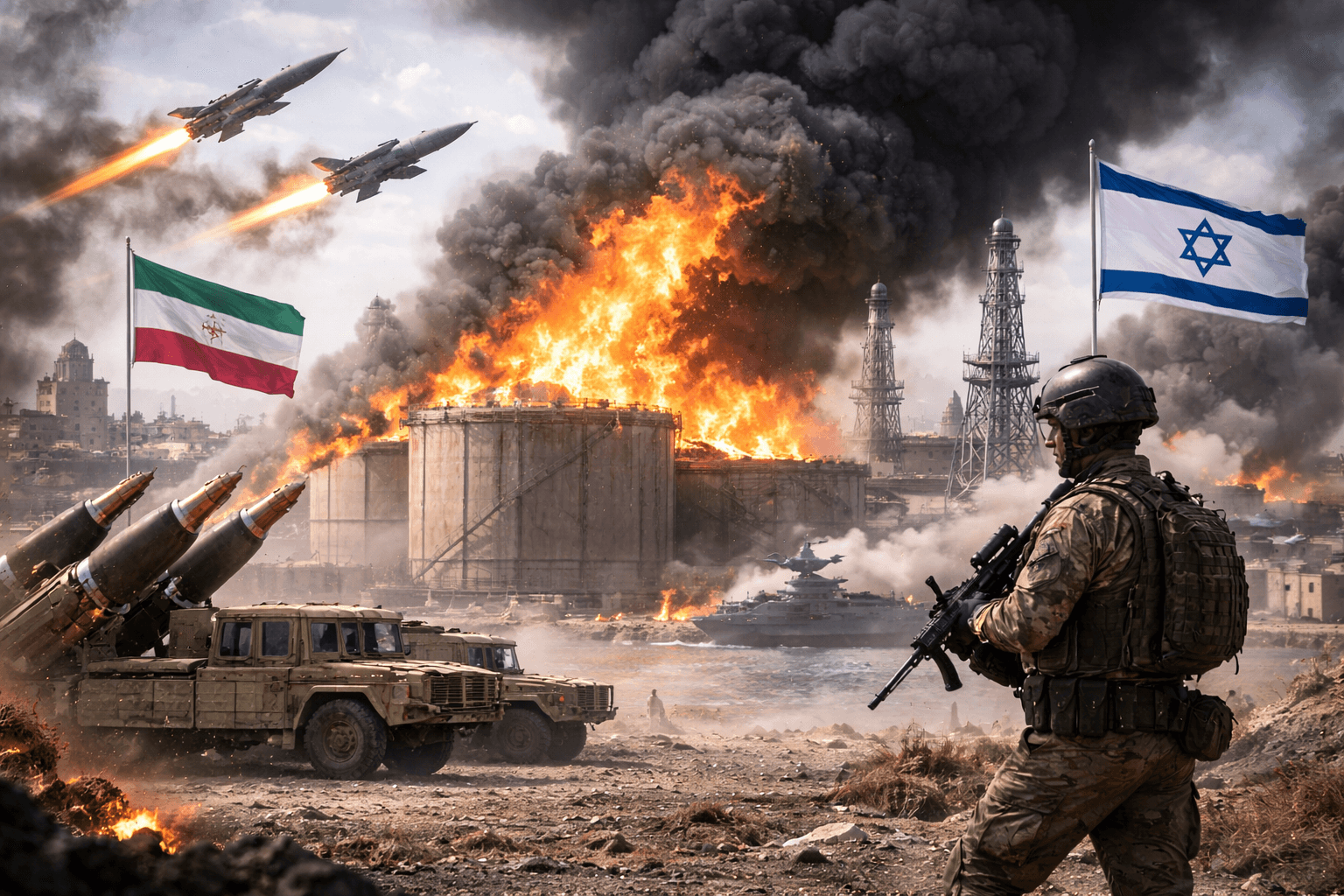
The Iran Israel war has entered a critical phase, with escalating military actions and expanding regional involvement raising concerns of a prolonged global crisis. What began as targeted strikes has now evolved into a multi-front conflict affecting energy systems, global markets, and geopolitical stability.
Recent developments show a clear shift toward broader confrontation, with both sides intensifying attacks and expanding their strategic objectives.
Rapid Military Escalation Across the Region
The conflict has intensified through sustained missile and airstrike exchanges between Iran, Israel, and allied forces. Iran has launched multiple waves of advanced missile attacks targeting Israeli territory and US military bases across West Asia.
At the same time, US and Israeli forces have continued coordinated strikes on Iranian military infrastructure, including key leadership and strategic targets. Recent reports confirm the killing of senior Iranian military officials, further escalating tensions.
These developments highlight a shift from isolated operations to sustained military engagement across multiple fronts.
Energy Infrastructure Becomes a Central Target
One of the most significant shifts in the Iran Israel war is the direct targeting of energy infrastructure. Israeli strikes on Iran’s South Pars gas field disrupted a critical energy source, affecting a substantial portion of Iran’s gas production.
In response, Iran has expanded its retaliation to include attacks on oil and gas facilities across the Gulf region. These strikes have impacted infrastructure in countries such as Saudi Arabia, Qatar, and the UAE, signaling a broader economic dimension to the conflict.
This escalation has transformed the war into both a military and energy crisis.
Global Economic Impact and Oil Market Volatility
The immediate impact of the Iran Israel war is visible in global energy markets. Oil prices have surged significantly, with Brent crude crossing $110 per barrel during peak disruption.
The Strait of Hormuz, a critical global shipping route, has faced severe disruptions, halting oil and gas flows and increasing supply uncertainty.
For economies dependent on energy imports, this creates inflationary pressure and increases the cost of essential goods. The economic ripple effects are already visible across multiple regions.
Expanding Geographic Scope and Strategic Tensions
The conflict is no longer confined to Iran and Israel. It has expanded across the Gulf, with missile strikes and military activity reported in multiple countries. Infrastructure, airports, and industrial zones have become targets, increasing civilian and economic risks.
At the same time, the United States is increasing its military presence in the region, deploying additional troops and considering further strategic actions.
Political tensions are also rising, with disagreements among global allies and growing pressure on international institutions to intervene.
Shifting Power Dynamics and Strategic Objectives
The Iran Israel war is now shaping broader geopolitical dynamics. Israeli leadership has indicated plans to reshape regional energy routes and reduce reliance on vulnerable maritime pathways.
Meanwhile, Iran continues to demonstrate its ability to sustain military operations despite heavy strikes, maintaining pressure through missile and drone attacks.
The conflict reflects a deeper strategic contest, where control over energy, territory, and influence plays a central role.
Topics
Covering startup news, AI, technology, and business at ThePrimely. Delivering accurate, in-depth reporting on the stories that shape the future.