
Israel–Iran War Intensifies as West Asia Conflict Expands
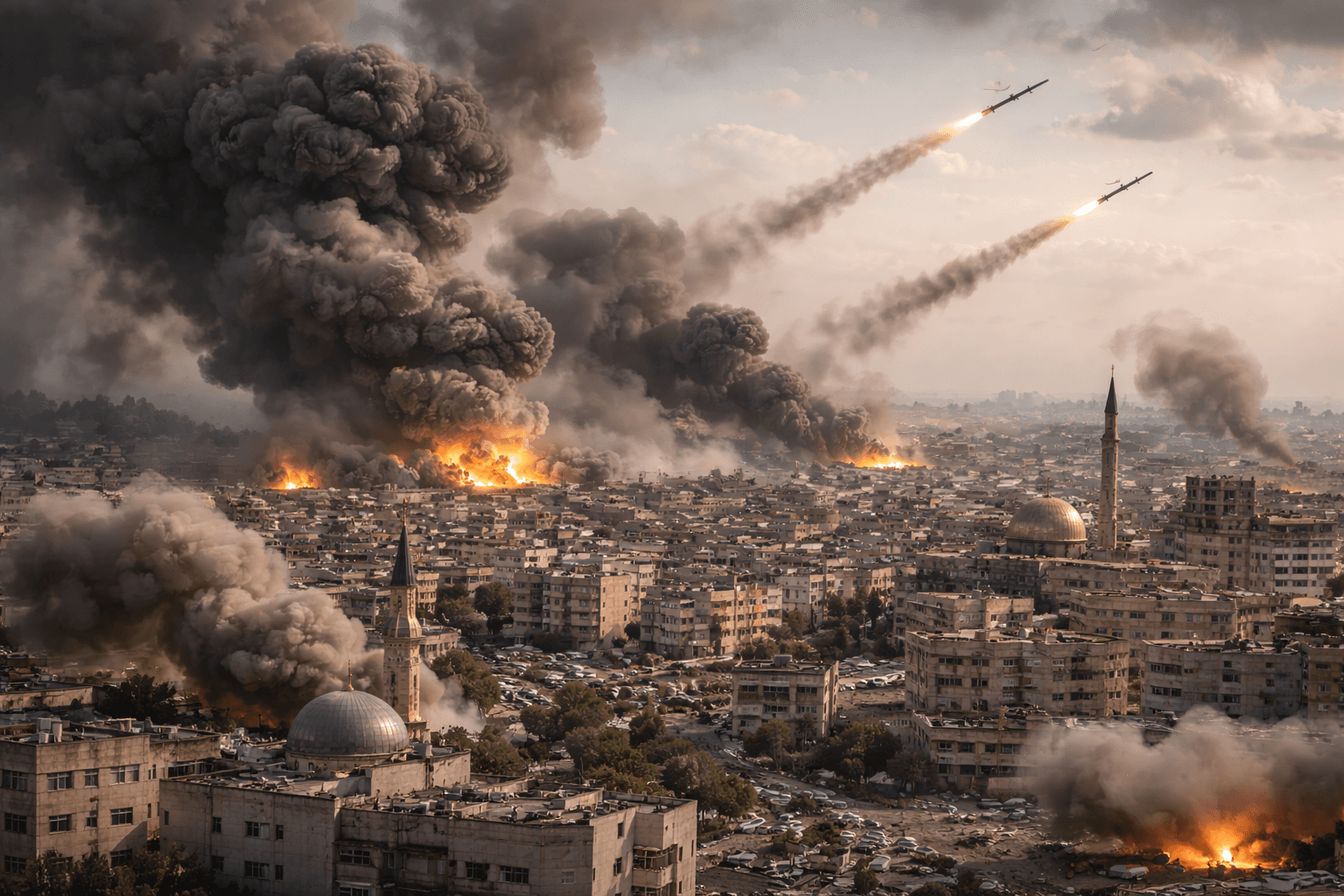
The ongoing Israel Iran war West Asia conflict has entered a dangerous new phase as military strikes intensify across the region. Israel, Iran, and the United States have expanded operations while diplomatic efforts remain limited.
What began as targeted strikes has evolved into a wider confrontation involving multiple countries and proxy groups. The conflict now affects global energy markets, regional security, and international diplomacy.
As of March 10, 2026, the war continues with missile attacks, airstrikes, and mounting humanitarian concerns.
Israel Iran War West Asia Conflict: Latest Developments
Recent developments show a rapid escalation in the Israel Iran war West Asia conflict.
Israeli and U.S. forces have carried out repeated airstrikes on Iranian military and energy infrastructure. Some of these attacks targeted oil depots and refineries near Tehran, creating large clouds of toxic smoke across the city.
At the same time, Iran has launched missile and drone attacks against Israeli territory and U.S. military assets across the region. The conflict has now spread beyond Iran and Israel to include strikes in neighboring countries.
According to defense officials, thousands of military strikes have already taken place during the conflict, making it one of the most intense confrontations in the region in years.
The scale of operations continues to grow as both sides expand their military campaigns.
Key Trigger: Killing of Iran’s Supreme Leader
One of the most significant events that escalated the conflict was the killing of Iran’s Supreme Leader, Ayatollah Ali Khamenei.
He was killed during Israeli airstrikes in Tehran that targeted senior Iranian leadership positions.
The operation was reportedly supported by intelligence coordination between Israel and the United States.
Following his death, Iran established an interim leadership structure and later named Mojtaba Khamenei, his son, as the new Supreme Leader.
This event dramatically intensified the conflict and triggered a wave of retaliatory attacks from Iran.
Missile Attacks and Regional Expansion
Iran has responded with large-scale missile and drone strikes.
Targets have included:
- Israeli cities
- U.S. military bases in the Gulf region
- Strategic infrastructure across West Asia
Iranian forces also launched attacks against the United Arab Emirates and other regional locations hosting U.S. military installations.
In Israel, missile strikes have caused civilian casualties and damage to residential areas. Some attacks used advanced ballistic missiles with cluster munitions.
The conflict has also spread into Lebanon through clashes involving Hezbollah and Israeli forces.
Strategic Battleground: The Strait of Hormuz
One of the most critical developments in the conflict involves the Strait of Hormuz, a major global energy transit route.
Iran has threatened or disrupted shipping through the strait in response to the strikes. As a result:
- Oil tanker traffic dropped sharply
- Shipping companies suspended operations
- Energy prices surged globally
The Strait of Hormuz carries roughly 20% of global oil trade, making it one of the most important maritime routes in the world.
Any prolonged disruption could have major consequences for global energy markets.
Humanitarian and Environmental Concerns
The war has also raised serious humanitarian and environmental concerns.
Airstrikes on oil facilities in Iran have released toxic smoke and pollutants into the atmosphere. Experts warn the environmental damage could affect air quality, soil, and water supplies in surrounding regions.
Civilian casualties are also under scrutiny after reports of strikes hitting residential or public areas during military operations.
International organizations and governments have called for restraint, warning that further escalation could destabilize the entire Middle East.
Global Political and Economic Impact
The conflict is already affecting global politics and economic stability.
Major global powers, including Russia and European governments, have called for diplomatic negotiations to prevent a wider war.
Financial markets have reacted strongly to the conflict. Oil prices have surged and global energy supplies face uncertainty due to disruptions in the Gulf region.
Countries dependent on Middle Eastern energy exports are closely monitoring the situation.
For many governments, the war represents one of the most serious geopolitical crises in recent years.
Topics
Covering startup news, AI, technology, and business at ThePrimely. Delivering accurate, in-depth reporting on the stories that shape the future.