
Iran Israel US War Escalates: Global Impact Intensifies
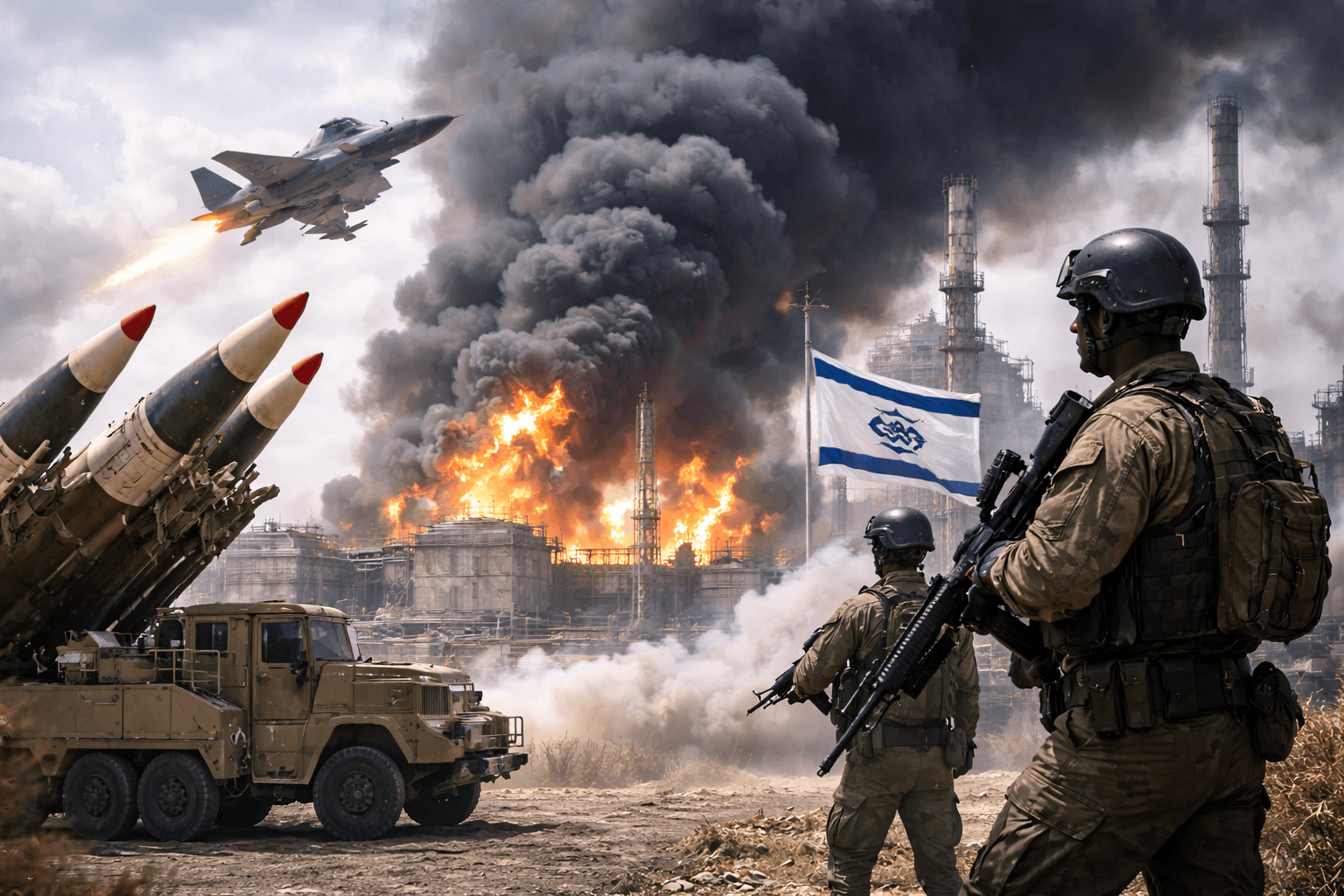
The Iran Israel US war has entered a more dangerous phase, with rapid escalation across multiple regions and critical infrastructure now under direct threat. What began as targeted military strikes has evolved into a broader conflict affecting energy systems, global markets, and geopolitical stability.
Recent developments show a clear shift from isolated attacks to coordinated and retaliatory strikes that are widening the scope of the war.
Escalation Across Military and Energy Targets
The conflict has intensified with direct attacks on high-value energy infrastructure. Israeli strikes on Iran’s South Pars gas field, one of the world’s largest natural gas reserves, marked a significant escalation in strategy.
In response, Iran has expanded its retaliation beyond Israel, targeting energy facilities across the Gulf region, including sites in the UAE, Saudi Arabia, and Qatar.
These developments indicate that the war is no longer confined to military assets. Energy infrastructure has become a central battleground, raising the stakes significantly.
Rising Oil Prices and Economic Shockwaves
The immediate impact of the Iran Israel US war is visible in global energy markets. Oil prices have surged sharply, crossing $115 per barrel amid fears of supply disruption.
This increase reflects deeper concerns about the security of the Strait of Hormuz, a critical route through which a significant portion of the world’s oil supply passes.
For economies dependent on energy imports, including India, this creates inflationary pressure. Rising fuel costs are expected to increase prices of essential goods such as food and textiles, affecting everyday household budgets.
Expanding Geographic Scope of the Conflict
The war is no longer limited to Iran and Israel. It has expanded across multiple regions, including Lebanon, Iraq, and key Gulf nations. Missile and drone attacks have targeted airports, oil fields, and military bases, indicating a broader regional involvement.
Civilian and infrastructure damage continues to rise, while global aviation routes and supply chains face disruptions. Several countries have reported attacks or threats to strategic assets, increasing uncertainty across the region.
This widening scope suggests that the conflict is evolving into a multi-front confrontation with significant global implications.
Strategic Positioning and Power Dynamics
The involvement of the United States alongside Israel has reshaped the strategic balance. The war began with coordinated strikes targeting Iranian military and leadership structures, signaling a decisive attempt to weaken Iran’s capabilities.
Iran, however, continues to demonstrate its ability to retaliate effectively through missile and drone attacks. This indicates that despite significant losses, its operational capacity remains intact.
The conflict is now defined by a cycle of escalation, where each side responds with greater intensity, increasing the risk of prolonged confrontation.
Implications for Global Stability
The Iran Israel US war is not a regional issue alone. Its effects are now global.
Energy markets are under pressure, supply chains face disruption, and geopolitical alliances are being tested. Countries are reassessing security strategies, particularly around critical infrastructure and trade routes.
The conflict also introduces long-term uncertainty. Investors, governments, and industries must now account for sustained instability in one of the world’s most critical regions for energy supply.
Topics
Covering startup news, AI, technology, and business at ThePrimely. Delivering accurate, in-depth reporting on the stories that shape the future.