
US Strike on Iran’s Kharg Island Escalates Conflict but Oil Infrastructure Survives
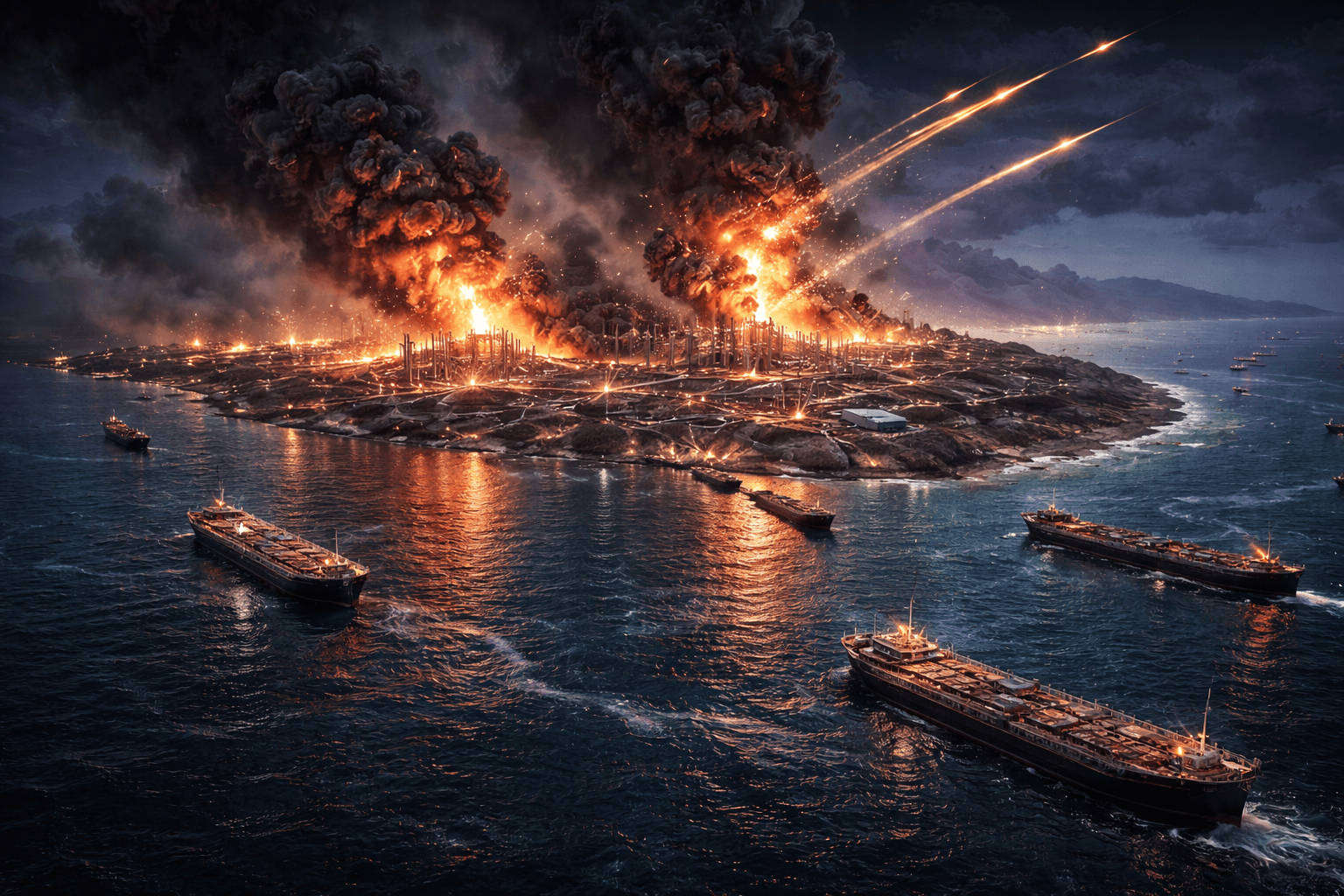
The Kharg Island US strike has intensified tensions in the Middle East while raising concerns about global oil supply stability.
United States forces launched airstrikes on Iran’s strategic Kharg Island, targeting military installations linked to the country’s defense network. However, Iranian media reports claim the island’s oil export infrastructure remains intact despite the attacks.
The development marks a major escalation in the ongoing confrontation involving the United States, Israel, and Iran. At the same time, it highlights the fragile balance between military pressure and the need to protect global energy supply routes.
Why Kharg Island Matters in Global Oil Markets
Kharg Island holds enormous strategic value in the global energy system.
The island functions as Iran’s main oil export terminal, handling the vast majority of the country’s crude shipments to international markets.
Several critical facts underline its importance:
- Around 90 percent of Iran’s oil exports pass through the terminal.
- The island stores millions of barrels of crude oil in large tank facilities.
- Its deep water port allows supertankers to load crude efficiently.
Because of this concentration of infrastructure, any damage to Kharg Island could severely disrupt Iran’s oil exports and affect global energy prices.
What the US Airstrike Targeted
Reports indicate the American strike focused on military facilities rather than energy infrastructure.
Iranian sources say the attacks hit several strategic locations including:
- air defense systems
- a naval base
- airport control facilities
- helicopter infrastructure linked to offshore oil operations
Witnesses reported multiple explosions across the island, with thick smoke rising after the strikes.
Despite the scale of the attack, Iranian authorities stated that oil facilities were not damaged.
Washington’s Strategic Warning
US leadership framed the strike as a warning rather than a full scale attack on Iran’s energy infrastructure.
President Donald Trump stated that American forces had destroyed military targets on Kharg Island but deliberately avoided hitting oil facilities for now.
However, he warned that the United States could reconsider that decision if shipping routes in the Strait of Hormuz were threatened.
This warning carries major implications. The Strait of Hormuz handles roughly 20 percent of global oil shipments, making it one of the world’s most critical energy chokepoints.
Iran Responds With Threats Against Energy Infrastructure
Iran responded quickly to the developments.
Officials warned that any attack on Iranian oil infrastructure would trigger retaliation against energy facilities linked to the United States and its regional partners.
Such threats raise the possibility of a broader energy conflict across the Gulf region.
Energy facilities in neighboring countries such as Saudi Arabia, Iraq, and the United Arab Emirates could become potential targets if the conflict escalates.
Market Reaction and Oil Price Risks
Energy analysts are watching the situation closely.
The war has already created volatility in oil markets. Some analysts warn that crude prices could surge sharply if Kharg Island or shipping routes through the Persian Gulf are disrupted.
Several factors amplify the risk:
- Kharg Island’s dominance in Iran’s export system
- heavy reliance on Gulf shipping lanes
- the fragile security environment in the region
Even limited disruptions could tighten global supply and push prices higher.
Strategic Implications for the Middle East
The Kharg Island strike reflects a broader shift in the conflict.
First, it shows the United States is willing to target high value military infrastructure linked to Iran’s energy network.
Second, it demonstrates a deliberate effort to avoid immediate damage to oil exports, likely to prevent global market panic.
Finally, it underscores how energy infrastructure has become a central pressure point in modern geopolitical conflicts.
Control over oil routes, export terminals, and shipping lanes now shapes strategic calculations across the region.
Topics
Covering startup news, AI, technology, and business at ThePrimely. Delivering accurate, in-depth reporting on the stories that shape the future.