
Deepinder Goyal’s Temple Hiring Criteria Raises a New Question for Tech Jobs
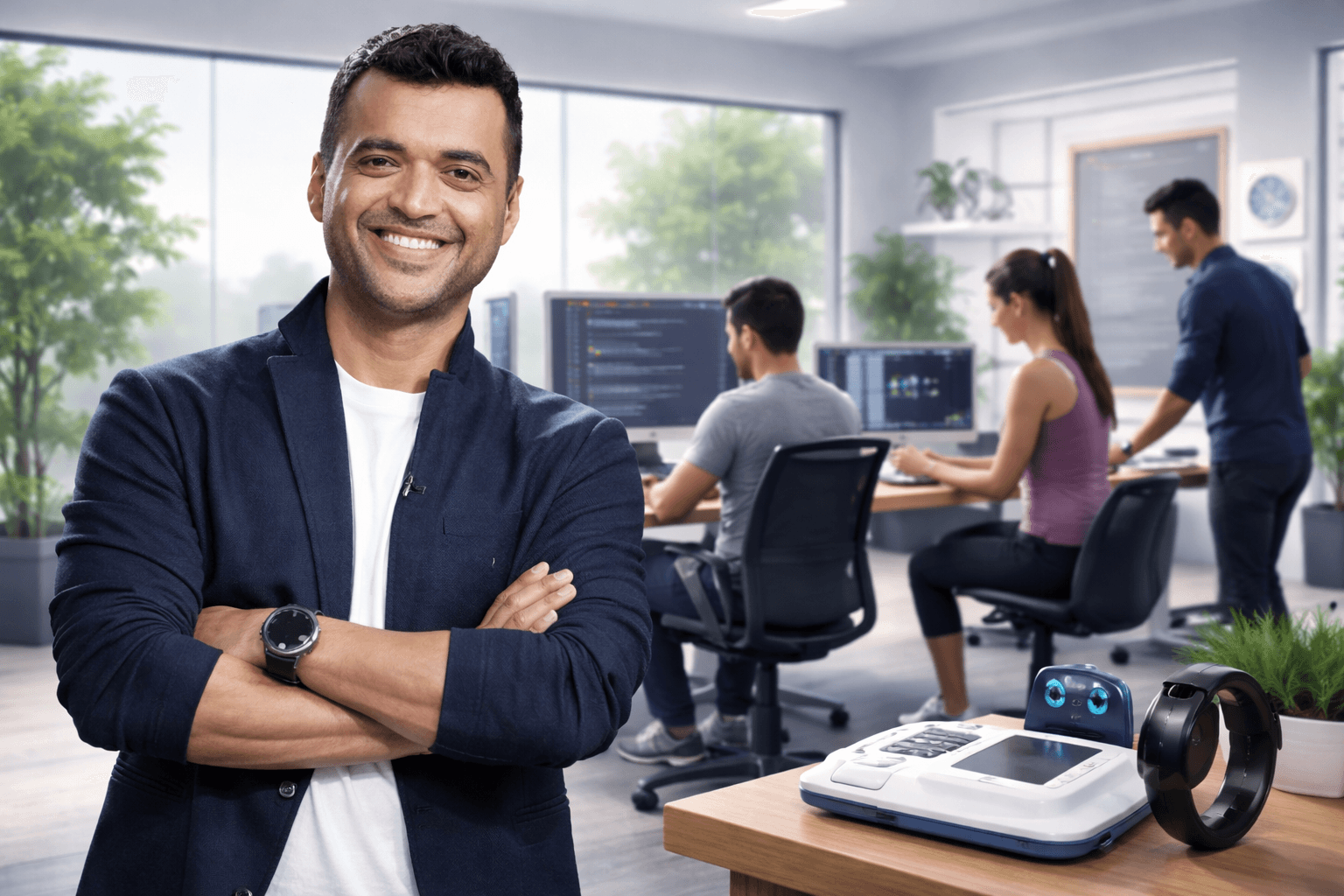
The Indian startup ecosystem is no stranger to bold experiments.
However, a recent hiring announcement by Deepinder Goyal has moved the debate in a new direction.
Goyal, the founder of Zomato, is hiring engineers for his new venture, Temple.
This time, coding skills alone are not enough.
Applicants must also meet specific body fat benchmarks.
As a result, the move has sparked widespread discussion across the technology and startup community.
What Is Temple and Why Is It in Focus
Temple is a health focused startup backed by Deepinder Goyal.
The company operates in the wearable and preventive health space.
Its core idea is to build technology that encourages better lifestyle discipline.
Accordingly, Temple’s hiring reflects its internal philosophy.
The company wants employees who align with its fitness first culture.
This approach, however, has drawn attention beyond the startup circle.
The New Hiring Criteria Explained
Temple’s job posts outline two clear requirements.
Technical Capability Comes First
Candidates must demonstrate strong engineering skills.
The roles are meant for experienced tech professionals.
Coding competence remains a non negotiable requirement.
Fitness Benchmark as a Filter
Alongside skills, candidates must meet defined body fat percentage limits.
The benchmark differs for men and women.
Applicants exceeding the limit are not considered, regardless of technical merit.
According to the stated rationale, this filter reflects discipline, self control, and consistency.
Why Deepinder Goyal Defends the Approach
Deepinder Goyal has been direct about his reasoning.
He argues that building a health company requires internal alignment.
From his perspective, fitness signals long term discipline.
He also suggests that personal habits influence professional output.
Therefore, Temple wants a team that lives the product vision daily.
This logic mirrors founder driven cultures seen in early stage startups.
The Industry Reaction So Far
The response has been sharply divided.
Support from Founder Led Circles
Some startup leaders view this as founder prerogative.
They argue that early teams often reflect personal values.
Moreover, they note that candidates remain free to opt out.
Criticism from HR and Legal Experts
On the other hand, HR professionals have raised concerns.
They warn that physical metrics can border on discrimination.
Additionally, they question whether fitness truly predicts job performance.
As a result, the debate has expanded beyond Temple itself.
Ethical and Legal Questions Emerging
While no law explicitly bans such criteria in private startups, risks remain.
First, body fat percentage is influenced by genetics and health conditions.
Second, it may exclude capable candidates unfairly.
Third, it blurs the line between wellness advocacy and body policing.
Consequently, many experts urge caution in formalizing such filters.
Strategic Implications for Indian Startups
This episode signals a broader shift in startup culture.
Founders are increasingly shaping companies around personal philosophy.
Culture fit is now extending beyond values into lifestyle choices.
However, this also raises reputational risks.
Startups that push boundaries may attract attention.
At the same time, they may narrow their talent pool significantly.
Thus, the trade off is clear.
What This Means for Tech Talent
For engineers, the message is mixed.
Skills still matter the most.
Yet, personal habits are entering hiring conversations.
This trend may grow in wellness, health tech, and performance driven sectors.
Nevertheless, mainstream tech hiring remains skill centric for now.
Future Outlook
Temple’s hiring approach may not become an industry standard.
However, it will influence discussions on culture driven recruitment.
If the model succeeds, similar startups may experiment.
If it fails, it may serve as a cautionary tale.
Either way, it has already reshaped the conversation.
Deepinder Goyal’s Temple hiring criteria highlights a new tension in tech recruitment.
It sits at the intersection of performance, culture, and ethics.
While founders have the right to define their vision, execution matters.
Ultimately, sustainable startups balance values with inclusivity.
The industry will be watching closely.
Topics
Covering startup news, AI, technology, and business at ThePrimely. Delivering accurate, in-depth reporting on the stories that shape the future.