
South Korea Allows Google Maps Data Export Under Strict Conditions
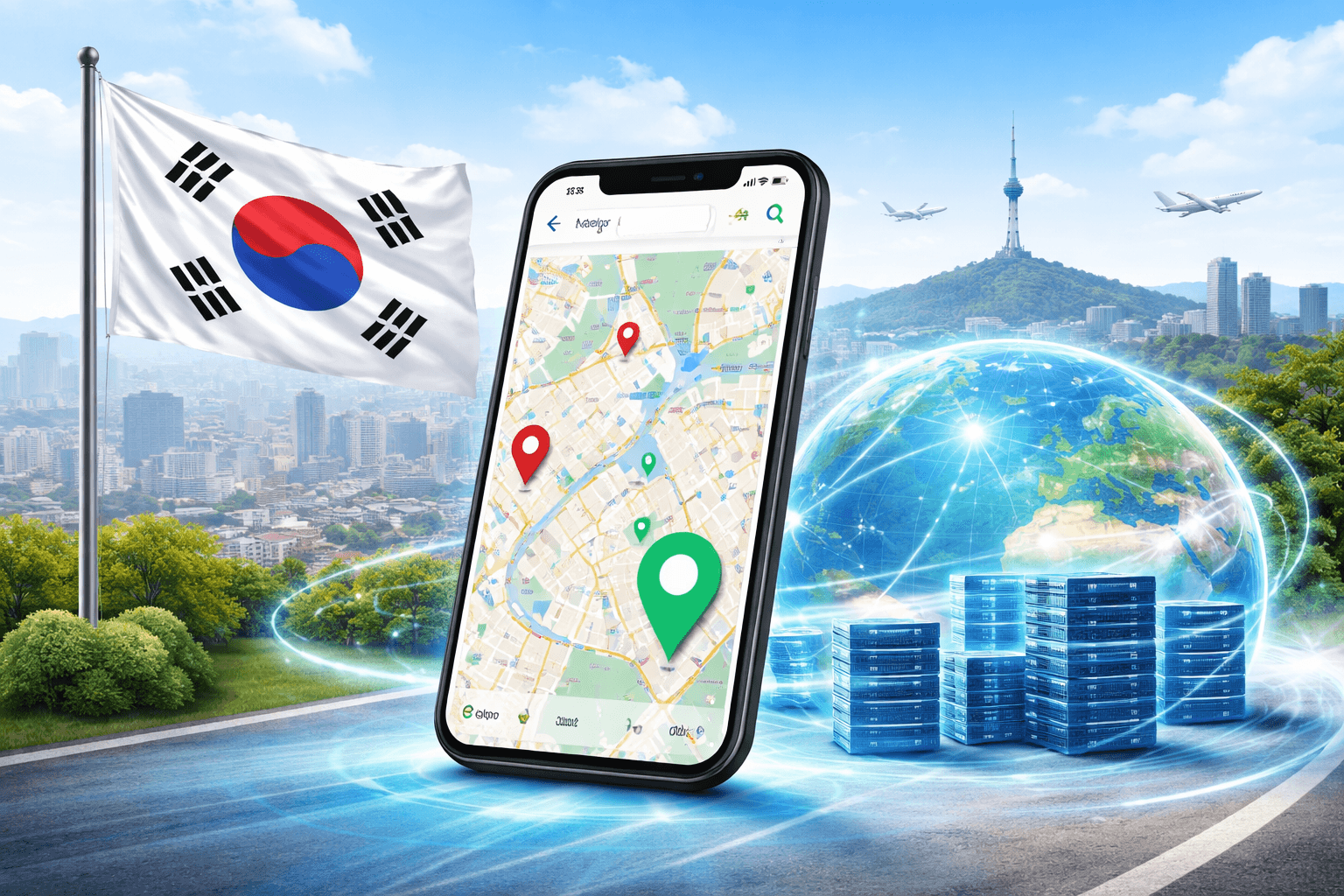
South Korea has taken a decisive step in its digital policy framework.
For the first time, the government has conditionally approved overseas transfers of high precision map data for Google Maps.
The move ends years of regulatory resistance. However, it does not remove security oversight.
Instead, it signals a controlled opening. One that balances global integration with national security priorities.
What Changed in South Korea’s Mapping Policy
For over a decade, South Korea restricted the export of high resolution map data. The reason was simple and firm. National security.
Detailed geographic data includes sensitive military and infrastructure locations.
Authorities feared exposure if such data moved outside the country. Now, regulators have granted conditional approval.
Google can export map data to overseas servers.
But only after meeting strict safeguards defined by Korean authorities.
Why Google Maps Faced Long Standing Restrictions
South Korea operates under unique security considerations.
The country remains technically at war with North Korea.
Because of this, precise geographic data is tightly controlled.
Foreign firms faced stricter rules than domestic players. Local platforms already dominate the market.
Naver Map and Kakao Map control most navigation usage.
They comply with local storage and security rules.
Google Maps, by contrast, relied on global data infrastructure.
That mismatch blocked full service functionality in Korea.
Key Conditions Attached to the Approval
The approval is not unconditional.
Authorities outlined clear operational requirements.
Mandatory Security Measures
Sensitive locations must be masked or blurred.
This includes military bases and strategic facilities.
Google must follow Korean government review processes.
Map updates remain subject to regulatory oversight.
Data Handling Controls
Authorities require safeguards on overseas servers.
The data cannot be freely redistributed.
The government retains the right to revoke approval.
Non compliance will trigger immediate restrictions.
These conditions aim to prevent security leakage.
At the same time, they allow limited global integration.
What This Means for Users in South Korea
For consumers, the impact is tangible.
Google Maps will offer improved navigation accuracy.
Turn by turn directions and real time routing will improve.
Tourists and foreign residents benefit the most.
They rely heavily on Google’s global ecosystem.
However, local apps still hold an advantage. They offer deeper local data and services.
The approval narrows the gap. It does not eliminate competition.
Impact on Korea’s Navigation Market
This decision reshapes competitive dynamics.
Local platforms retain structural advantages.
They already comply with national data rules. Google gains functional parity. But not dominance.
The government’s approach is deliberate. It allows competition without surrendering control.
As a result, innovation pressure will rise. Both domestic and global firms must improve services.
Strategic Implications for Global Tech Firms
The approval sends a broader signal.
South Korea is open to global platforms. But only under sovereign data governance.
Other technology firms should take note. Market access now depends on compliance, not scale. This approach mirrors global trends.
Countries want digital openness with local authority.
South Korea has drawn that line clearly.
Future Outlook for Google Maps in South Korea
The path forward remains cautious.
Google must maintain continuous compliance.
Any lapse risks suspension.
Over time, success may lead to relaxed controls.
But that depends on trust and execution.
For now, this is a milestone. Not a free pass. It marks evolution, not deregulation. South Korea’s decision reflects strategic maturity.
The country protected its security interests without isolating itself.
Google gains access. But only on Korea’s terms.
This balanced framework may become a global model.
One where digital openness and sovereignty coexist.
Topics
Covering startup news, AI, technology, and business at ThePrimely. Delivering accurate, in-depth reporting on the stories that shape the future.