
India Expands Startup Definition to Boost Deep Tech Innovation and Scale Growth
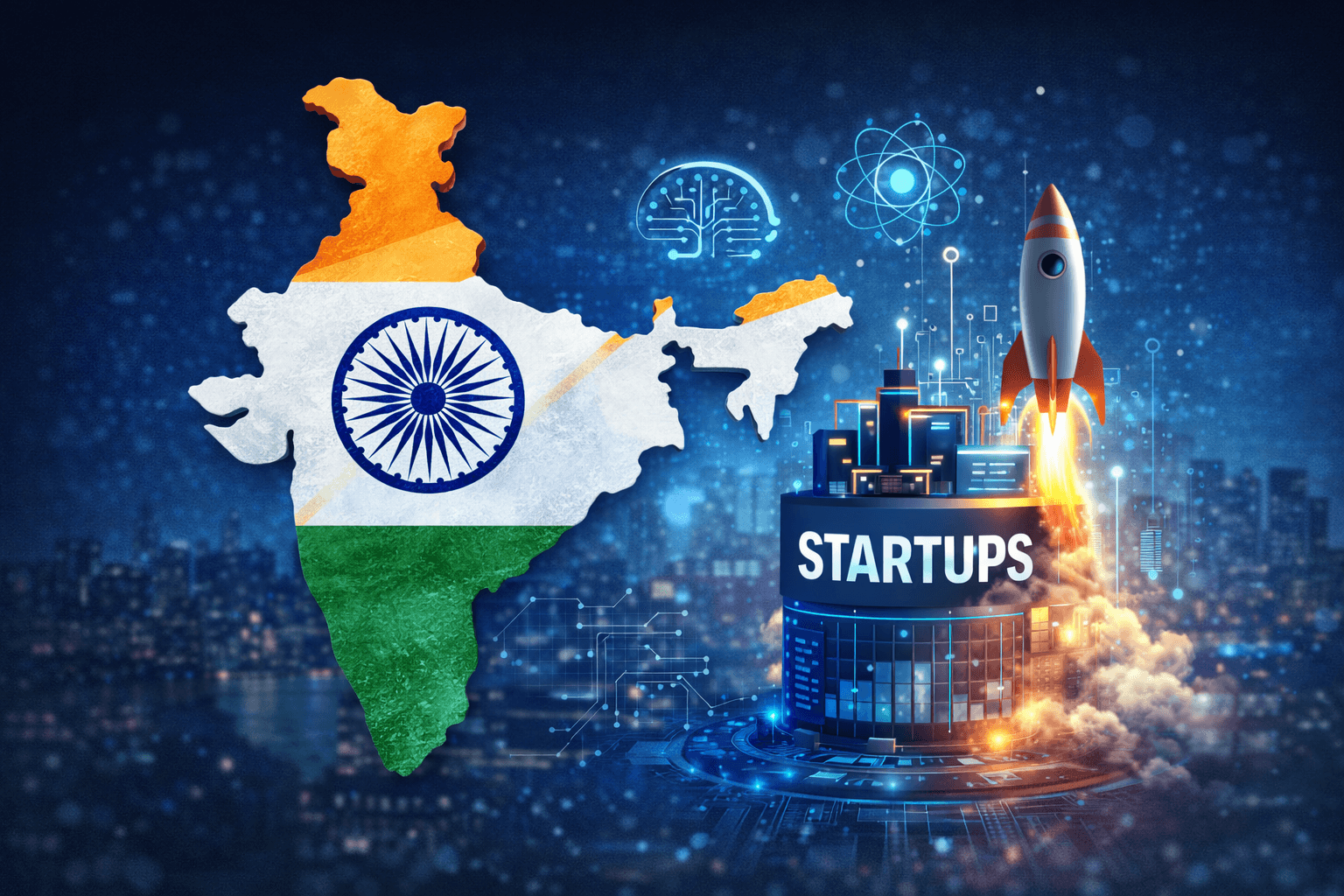
In a move that could reshape India’s innovation landscape, the government has revised how it defines startups. The new framework formally includes deep tech companies, extends their recognition period, and raises annual turnover limits. This change is intended to help startups that build complex, research driven technologies grow without losing eligibility for key benefits too early.
The updated definition aims to strengthen India’s global competitiveness by nurturing experimentation, long term research and breakthrough innovation — especially in areas like artificial intelligence, semiconductors, clean energy, biotechnology and quantum computing.
What Is Changing in Startup India Rules
The Department for Promotion of Industry and Internal Trade (DPIIT) issued a notification that expands the Startup India framework in three major ways:
1. Deep Tech Startups Get a New Category
Businesses that are based on advanced scientific research or engineering innovation are now recognised as deep tech startups. These are ventures that require substantial time and capital before they reach market and may not fit traditional startup timelines.
The new rules acknowledge that deep tech innovation cannot be rushed and deserves longer support.
2. Recognition Period Extended Up to 20 Years
Under the earlier rules, a startup could receive recognition for up to 10 years from the date of incorporation. With the revision:
- Deep tech startups can now be recognised for up to 20 years
- Regular startups continue to qualify up to 10 years
This extension is designed to help deep tech founders pursue long term goals without losing policy support prematurely.
3. Higher Turnover Limits for Scalability
To reflect the scale of innovation oriented companies, the government has significantly raised the turnover thresholds:
- Regular startups can now earn up to ₹200 crore in annual turnover
- Deep tech startups can earn up to ₹300 crore annually
These higher caps bring more fast growing companies under the startup umbrella and help them stay eligible for benefits even as revenue increases.
Why This Matters for Deep Tech Innovation
Deep tech companies are usually built on science and engineering breakthroughs rather than quick digital solutions. Research cycles, prototyping, testing and product development often take years and require sustained investment.
Before the update, many of these startups lost their recognition status before they could scale enough to be commercially viable. The revised framework now gives them more time and space to build products, secure funding and compete globally.
Positive Impact on India’s Startup Ecosystem
This policy change is expected to accelerate growth and investment in deep tech sectors by:
- Encouraging experienced researchers to launch commercial ventures
- Attracting global capital to India’s deep tech startups
- Supporting longer innovation journeys that go beyond consumer apps
- Strengthening collaborations between academia, industry and government
- Increasing access to government backed benefits such as tax exemptions, faster patent processing and research support
Investors have welcomed the move with optimism, noting that India is signaling a long term commitment to cutting edge technology.
What Startups Should Know
If you are a founder or investor in a technology startup:
- Review whether your business qualifies as a deep tech startup under the new norms
- Check DPIIT guidelines for updated recognition criteria
- Explore how the expanded turnover limits help maintain benefits as your business grows
- Prepare documentation to apply for extended recognition before earlier expiry dates
- Leverage enhanced policy support to plan longer roadmaps and deeper research investment
Early action can help ventures secure maximum advantage from the policy changes.
How This Aligns With India’s Innovation Goals
The revised startup rules align with broader national goals including:
- Making India a global hub for cutting edge technology and research
- Supporting jobs, high skill talent and technical expertise
- Reducing dependence on imported technology through domestic innovation
- Encouraging sustainable growth through science based entrepreneurship
This is also consistent with India’s increasing focus on strategic sectors like AI, quantum, space tech and climate tech that demand time, depth and capital.
Topics
Covering startup news, AI, technology, and business at ThePrimely. Delivering accurate, in-depth reporting on the stories that shape the future.