
Hormuz Supply Shock: India Diversifies Oil Sources Amid Gulf Conflict
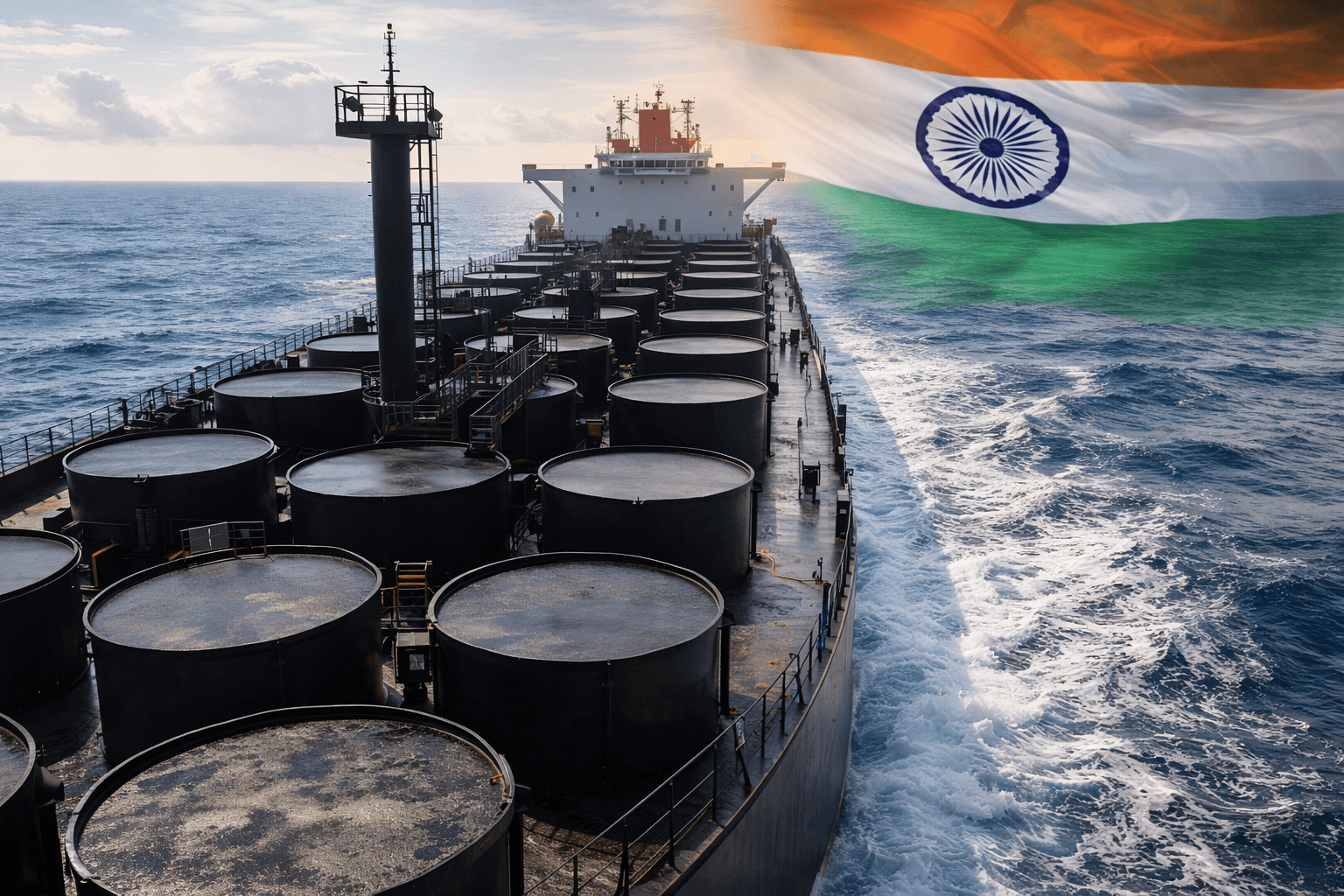
Hormuz Supply Shock: India Diversifies Oil Basket as Middle East Conflict Drags On
As conflict in the Middle East continues to disrupt global energy markets, India is quietly reshaping its oil import strategy.
Indian refiners are increasingly sourcing crude from countries such as the United States, Russia and parts of West Africa. The move reflects growing concerns that shipments from the Persian Gulf could face disruptions if tensions escalate around the Strait of Hormuz, one of the world’s most sensitive energy chokepoints.
Officials say the shift is precautionary rather than a sign of immediate shortage. Refineries have postponed maintenance schedules and are operating at regular capacity to build reserves and ensure steady domestic fuel supply.
Still, the underlying concern is clear: the narrow waterway linking the Persian Gulf to the open ocean has become a focal point of global energy anxiety.
Why the Strait of Hormuz Matters
The Strait of Hormuz is a narrow maritime corridor connecting the Persian Gulf with the Gulf of Oman and the Arabian Sea. Iran lies on its northern coast, while Oman and the United Arab Emirates sit on the southern side.
Despite its modest size, the passage is one of the most important trade routes on Earth.
Around 20–25% of the world’s seaborne oil and large volumes of liquefied natural gas pass through this channel every day, making it a vital artery for global energy flows.
Tankers carrying crude from major producers such as Saudi Arabia, Iraq, Kuwait, Iran and Qatar must pass through this route before reaching international markets.
Much of that oil ultimately ends up in Asia. Countries including India, China, Japan and South Korea are among the largest consumers of energy shipped through the strait.
If the waterway were disrupted, the consequences could ripple through global fuel markets almost immediately.
Why the Route Is Critical for India
For India, the Strait of Hormuz is more than just a distant geopolitical flashpoint. It is a key link in the country’s energy supply chain.
India imports the majority of its crude oil, and a large portion of those imports comes from Gulf producers.
Estimates suggest around 35–50% of India’s crude oil imports pass through the Strait of Hormuz, while a significant share of liquefied natural gas shipments from Qatar also travels through the same route.
That means any disruption to tanker traffic could affect fuel availability, transportation costs and inflation in India.
In extreme scenarios, analysts warn that a prolonged closure of the strait could trigger a global oil supply crisis and drive prices sharply higher.
India Expands Its Oil Basket
To reduce these risks, India has gradually diversified its crude oil sources in recent years.
Russian crude has become a major part of India’s import mix following shifts in global trade after the Ukraine war. At the same time, refiners have increased purchases from the United States, Brazil and West African producers.
This diversified supply network allows India to respond more flexibly when geopolitical tensions threaten traditional supply routes.
Industry experts say the strategy is designed to prevent excessive dependence on any single region.
Building Buffers Against Supply Disruptions
Alongside diversification, India has also strengthened its strategic petroleum reserves.
These emergency stockpiles can provide temporary protection if global supplies are disrupted.
Refineries are also maintaining higher operational levels and adjusting logistics to ensure stable deliveries of petrol, diesel and aviation fuel across the country.
Such steps are particularly important at a time when the Middle East conflict shows little sign of easing.
Global Energy Markets Watching Closely
The Strait of Hormuz has long been a flashpoint in international politics.
Although threats to close the route have occurred several times over the past decades, shipping through the strait has rarely been interrupted for long periods.
However, the current geopolitical tensions have revived fears of a potential supply shock.
Energy analysts warn that even limited disruptions can push oil prices sharply higher because the strait handles such a large share of global energy trade.
For major importing nations like India, the stakes are especially high.
A Strategic Balancing Act
India’s effort to diversify its oil basket reflects a broader strategy to shield its economy from geopolitical shocks.
By sourcing crude from a wider range of countries and building larger reserves, policymakers hope to reduce vulnerability to sudden supply disruptions.
Yet the Strait of Hormuz remains an unavoidable part of the global energy system.
As long as the world depends on Gulf oil exports, the narrow passage will continue to shape energy security for countries far beyond the Middle East.
For India, the challenge is clear: prepare for uncertainty while keeping the engines of its growing economy running.
Topics
Covering startup news, AI, technology, and business at ThePrimely. Delivering accurate, in-depth reporting on the stories that shape the future.