
India’s first “Algae Tree” in Bhopal claims to work like 25 trees — But is it actually a tree?
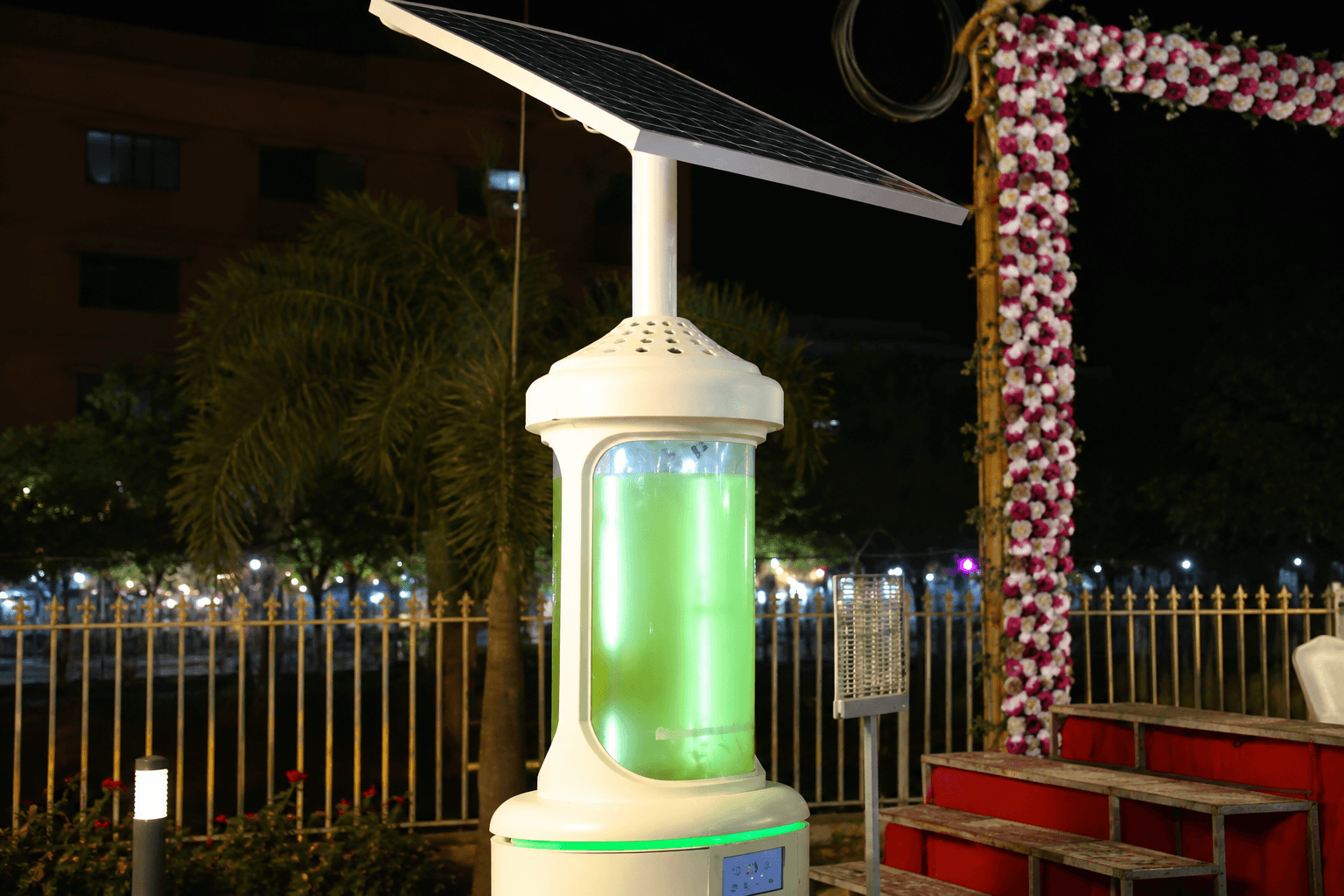
Bhopal has introduced India’s first algae tree as part of its push to tackle rising urban pollution. The installation immediately attracted national attention because officials claimed the system can work like 25 natural trees in absorbing carbon dioxide.
However, the project is not a traditional tree. It is a biotechnology based carbon capturing structure designed to clean polluted urban air through algae cultivation. That distinction matters because the initiative represents a shift in how Indian cities may approach environmental infrastructure in dense urban areas.
What Exactly Is the Bhopal Algae Tree?
The Bhopal algae tree is a compact vertical structure filled with microalgae suspended in water. These algae absorb carbon dioxide through photosynthesis and release oxygen into the atmosphere. Unlike conventional trees, the system uses pumps, controlled circulation, and artificial monitoring mechanisms. Authorities installed the structure in a high traffic area to test its ability to improve localized air quality.
According to project details, the algae based unit can absorb significant carbon emissions while occupying far less space than traditional green cover.
Why Cities Are Exploring Algae Based Carbon Capture
Indian cities face severe pressure from traffic emissions, construction dust, and industrial pollution. Yet urban expansion continues to reduce open spaces for plantation drives.
As a result, governments are increasingly exploring compact environmental technologies that can operate in crowded public zones. The Bhopal algae tree reflects this shift. Instead of replacing forests, the system aims to supplement existing environmental efforts where land availability remains limited.
Moreover, algae grow faster than most terrestrial plants. That efficiency makes them attractive for carbon capture experiments worldwide.
Can One Algae Tree Really Match 25 Trees?
The comparison created strong public debate. Experts note that the claim depends on how carbon absorption is measured and over what period. Natural trees provide broader ecological value. They support biodiversity, reduce heat, improve soil quality, and enhance long term environmental stability.
An algae tree mainly focuses on carbon capture and oxygen generation within a controlled setup. Therefore, scientists caution against treating it as a replacement for urban forests. Still, environmental researchers agree that algae systems can contribute meaningfully in locations where large scale plantation is difficult.
The Bigger Urban Infrastructure Signal
The installation also highlights how environmental policy is changing in Indian cities. Governments are now experimenting with visible technology driven climate solutions rather than relying only on conventional methods.
This approach may attract private investment in green infrastructure, climate technology, and smart city projects. If the Bhopal experiment delivers measurable results, other municipalities could adopt similar systems near traffic corridors, metro stations, and industrial zones. Consequently, the project carries significance beyond symbolism.
What Will Decide the Project’s Success
The real test lies in long term performance. Authorities must measure whether the algae tree consistently reduces carbon concentration and improves air quality over time. Maintenance will also remain critical. Unlike natural trees, algae systems require electricity, water circulation, monitoring, and regular operational support.
More importantly, the project signals how Indian cities are beginning to combine biotechnology with public infrastructure to address climate challenges. Whether the model expands nationwide will depend on measurable environmental results rather than headline claims.
FAQ
What is the Bhopal algae tree?
It is a carbon capturing structure that uses microalgae to absorb carbon dioxide and release oxygen in urban areas.
Where was India’s first algae tree installed?
The project was installed in Bhopal as part of an urban pollution reduction initiative.
Does the algae tree replace natural trees?
No. Experts say it complements environmental efforts but cannot replace the broader ecological role of forests and natural trees.
How does an algae tree work?
Microalgae inside the structure absorb carbon dioxide through photosynthesis while generating oxygen.
Why is the project important?
The initiative reflects growing interest in technology driven climate solutions for crowded urban environments across India.
Topics
Covering startup news, AI, technology, and business at ThePrimely. Delivering accurate, in-depth reporting on the stories that shape the future.