
Fuel prices: Why pressure is growing for a petrol and diesel hike
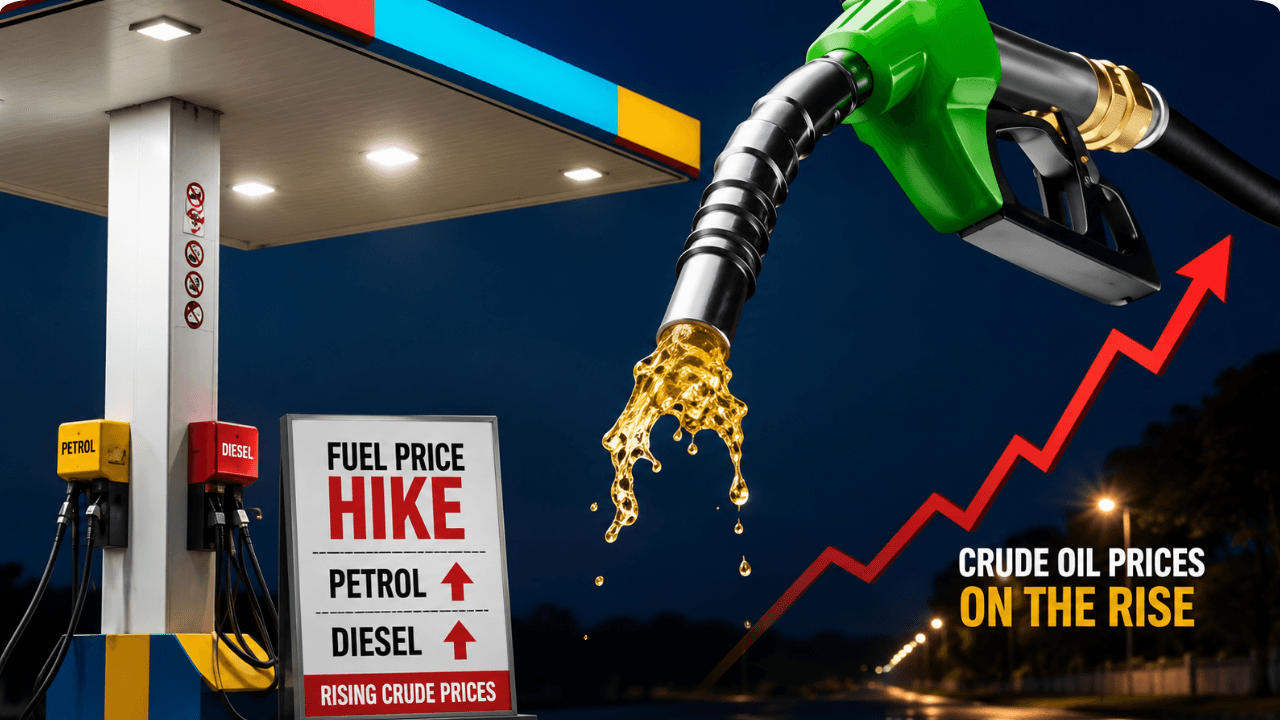
The fuel price hike debate has intensified after India’s state-run oil marketing companies reportedly suffered losses of more than ₹1 lakh crore over the last 10 weeks while absorbing the impact of rising global crude oil prices. The losses have increased concerns that petrol and diesel prices may eventually need to be revised if international market pressures continue.
The financial strain comes amid continuing tensions in the Middle East, which have disrupted global energy markets and pushed crude oil prices sharply higher. Despite these increases, retail fuel prices in India have remained largely unchanged for nearly two years.
Oil firms under financial pressure
The fuel price hike discussion has gained momentum because Indian Oil, Bharat Petroleum, and Hindustan Petroleum are reportedly facing daily under-recoveries of ₹1,600 crore to ₹1,700 crore. Officials say these losses are becoming increasingly difficult for the companies to sustain over a prolonged period.
Reports indicate that the government has so far chosen to shield consumers from global fuel volatility by keeping domestic prices stable. This strategy, however, has placed a heavy burden on public sector oil firms and increased their borrowing requirements.
Middle East tensions driving crude prices higher
The fuel price hike pressure is closely linked to the ongoing geopolitical crisis in West Asia, which has disrupted supply chains and increased uncertainty in global oil markets. Analysts say crude prices have crossed the $100-per-barrel mark multiple times during recent weeks.
India remains highly dependent on imported crude oil and liquefied petroleum gas, making it vulnerable to international price shocks. Any prolonged disruption in energy supplies could therefore increase inflationary pressure on the domestic economy.
Why prices have remained stable so far
The fuel price hike has been delayed partly because the government reduced excise duties earlier to limit the burden on consumers. Officials say these tax reductions helped prevent a sudden rise in petrol and diesel prices despite increasing global costs.
Domestic LPG prices were revised earlier this year, but petrol and diesel rates have largely remained unchanged across major cities. Analysts believe the government may continue balancing inflation concerns with the financial health of oil companies before taking any pricing decision.
Topics
Covering startup news, AI, technology, and business at ThePrimely. Delivering accurate, in-depth reporting on the stories that shape the future.