
Galgotias Robodog Row: AI Summit Controversy Explained
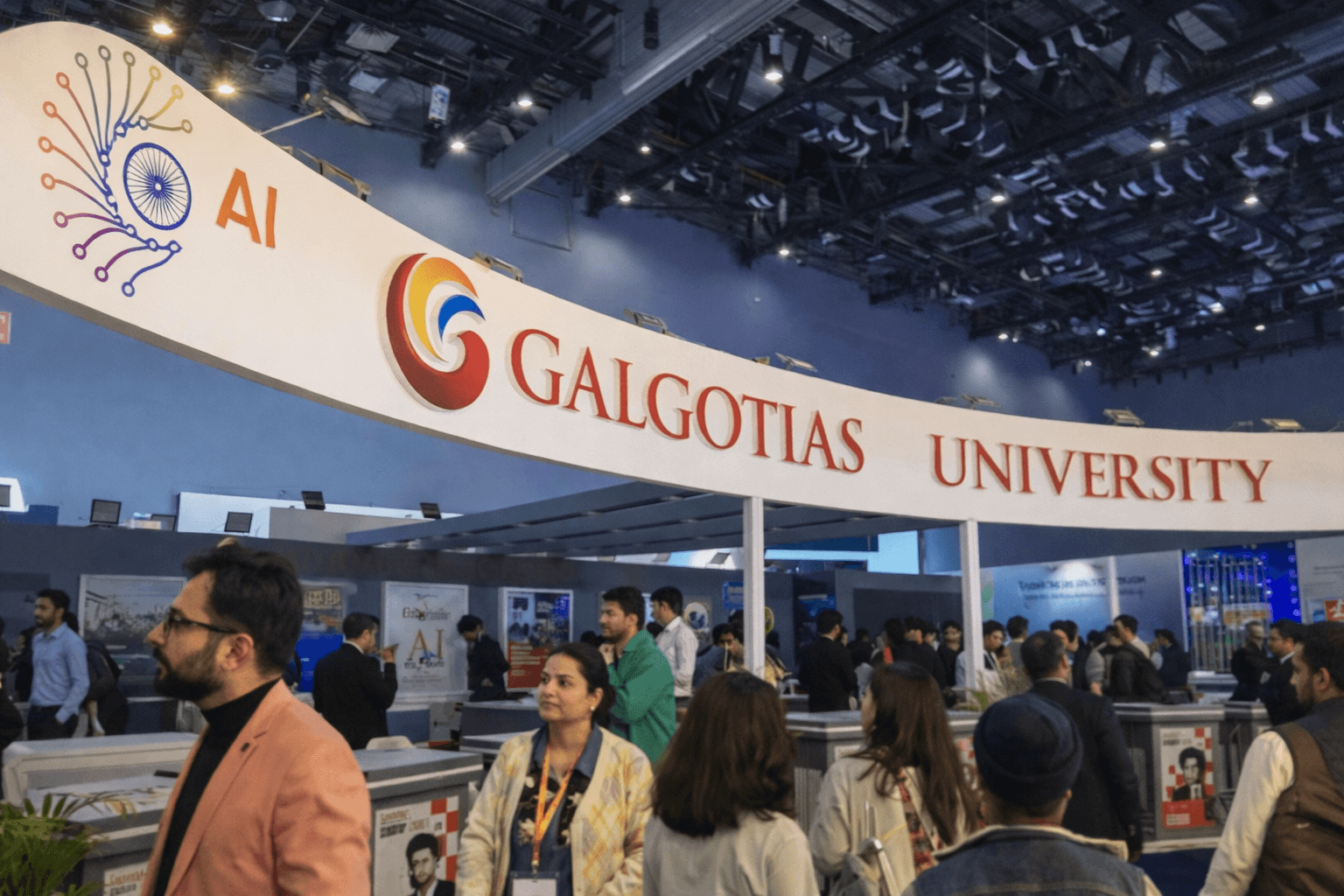
The Galgotias Robodog Row has quickly moved from a campus issue to a national conversation on accountability in academia. What began as a demonstration at an AI summit escalated into a reputational challenge for Galgotias University.
The controversy centers on a robotic dog showcased during the AI Impact Summit 2026. The device was later identified online as being of Chinese origin, triggering criticism and political sensitivity.
The university has now issued a formal clarification. It has also distanced itself from a faculty member’s public apology. The issue has raised serious questions about oversight, communication, and due diligence.
What Triggered the Galgotias Robodog Row
During the AI summit, a robotic dog was presented as part of a technology showcase. Social media users soon alleged that the device was a Chinese-made product, not an indigenous innovation.
Given ongoing geopolitical sensitivities, this claim gained traction quickly. Critics questioned whether the product had been misrepresented.
Soon after, Professor Neha Singh issued a public apology video. In it, she expressed regret over the incident.
Her apology intensified the situation instead of calming it.
you might like this :- PM Modi Tests Sarvam Kaze First: India’s AI Smart glasses Moment Begins
University Clarification: “Representative Was Ill-Informed”
In its formal statement, Galgotias University said the professor was “ill-informed” about the technical and sourcing details of the robotic dog.
The university emphasized:
- The device was displayed by an external representative.
- Internal teams had not presented it as an indigenous product.
- The professor’s comments were not authorized by the administration.
Reports indicate that the institution described her apology as driven by “enthusiasm of being on camera.” This phrasing drew further scrutiny online.
The university also issued a “profuse apology” to stakeholders, reinforcing that there was no intent to mislead.

The Role of Professor Neha Singh
Professor Neha Singh had initially defended the demonstration. Later, she issued an apology over the confusion surrounding the robodog’s origin.
However, the university clarified that she was not fully aware of procurement and sourcing details. It framed the matter as an internal communication gap rather than deliberate misrepresentation.
This distinction matters.
In institutional crises, clarity of authority is critical. When faculty members speak without full information, reputational risks escalate.
Why the Chinese Origin Became a Flashpoint
India’s technology narrative increasingly emphasizes indigenous innovation. Government messaging strongly supports domestic manufacturing under initiatives like Atmanirbhar Bharat.
Against that backdrop, showcasing a Chinese-origin robotic product at a major AI summit created political sensitivity.
Even if there was no formal claim of indigenous manufacturing, perception shaped the narrative.
In today’s environment, perception often moves faster than verification.
Governance and Institutional Risk
The Galgotias Robodog Row highlights deeper governance questions:
1. Due Diligence Protocols
Universities hosting national events must verify product sourcing before public demonstrations.
2. Communication Control
Only authorized spokespersons should address controversies. Crisis communication must be centralized.
3. Reputation Management
Public apologies without coordinated messaging can amplify issues.
This incident demonstrates how a technical showcase can turn into a credibility test within hours.
More Than a Campus Issue
The controversy arrives at a time when India’s AI ecosystem is expanding rapidly. Academic institutions are positioning themselves as innovation hubs.
Events like the AI Impact Summit 2026 attract policymakers, investors, and global partners.
When a sourcing dispute dominates headlines, it shifts attention from innovation to oversight failures.
That shift carries costs:
- Investor confidence can weaken.
- Institutional credibility can erode.
- Partnerships may face additional scrutiny.
The broader tech ecosystem watches such incidents closely.
Strategic Implications for Universities
The Galgotias Robodog Row offers clear lessons:
- Transparency must precede publicity.
- Procurement audits should be mandatory for showcase technologies.
- Faculty media training is essential.
- Crisis simulations should be institutionalized.
In high-visibility sectors like AI, governance maturity determines long-term brand strength.
Will the Issue Subside?
The university has issued clarifications and apologies. The immediate cycle may cool.
However, digital records remain. The incident will likely be referenced in future discussions about institutional credibility.
If Galgotias University strengthens compliance and communication frameworks, the episode could become a case study in corrective governance.
If not, it risks being remembered as a preventable reputational setback.
A Governance Test in the AI Era
The Galgotias Robodog Row is not just about a robotic dog. It is about institutional discipline in a high-stakes technology environment.
In today’s AI-driven ecosystem, credibility is capital.
Universities must align innovation with verification. They must match ambition with oversight.
This episode underscores a simple principle: in public technology forums, clarity is non-negotiable.
Institutions that internalize this lesson will lead. Those that ignore it will repeat it.
Topics
Covering startup news, AI, technology, and business at ThePrimely. Delivering accurate, in-depth reporting on the stories that shape the future.