
Collide Capital Closes $95M Fund II to Back Fintech and Future of Work Startups
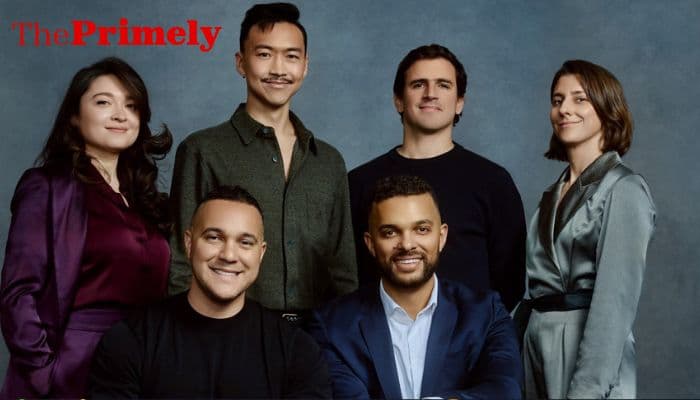
A $95 Million Bet on the Founders Traditional VC Has Long Overlooked
Raising a venture fund in 2026 is not easy. Raising one that is oversubscribed backed by Goldman Sachs, JPMorgan, and a major university endowment is a statement.
Collide Capital, founded by Brian Hollins and Aaron Samuels, announced the close of a $95 million Fund II. The firm, founded in 2021, backs early stage companies in fintech, supply chain, and the future of work. It has backed 75 companies to date after closing its inaugural $66 million Fund I in 2022.
The close brings Collide Capital's total assets under management to over $170 million.
This is not simply a fund announcement. It is evidence that a differentiated thesis backing underrepresented founders with hands on operational support can attract the most institutional capital in the venture ecosystem.
From $66M to $95M: What the Growth Signals
The jump from Fund I to Fund II tells a specific story about performance and confidence.
Hollins said it took them around 13 months to raise this latest fund, which they hope to deploy over the next 3.5 years. The landscape for many emerging fund managers is tough.
Collide Capital's Fund II is oversubscribed, signifying a quickened step from the original $66 million Fund I. With over 75 companies in the portfolio and top quartile Total Value to Paid In capital performance, Fund II allows the firm to deepen support for founders building enterprise solutions.
Top quartile TVPI is the metric every LP screens for. It is the single hardest number to argue with in venture capital it means the fund returned more value than at least 75% of comparable funds. That track record is why Goldman Sachs and JPMorgan are sitting at the LP table for a five year old emerging manager.
Who Is Backing Collide Capital's Second Fund?
Limited partners in Fund II include the University of California Endowment which anchored their last fund Accolade Partners, Fairview Capital, Goldman Sachs, and JPMorgan.
The UC Regents anchoring a second time is the most important data point in that list. Re ups from sophisticated institutional LPs do not happen automatically. They happen when performance justifies continued conviction. The UC Endowment coming back and Goldman Sachs and JPMorgan joining signals that Collide's Fund I returns have been compelling enough to draw two of the most selective allocators in institutional finance.
For an emerging manager operating in a difficult fundraising environment, this LP roster is exceptional.
The Founders Behind the Firm: Networks That Open Doors
Collide's institutional credibility starts with its founders' professional pedigrees.
Hollins spent a decade at Goldman Sachs, Lightspeed, and Slow Ventures. Samuels worked at Bain and Lightspeed, and co founded AfroTech, one of the largest tech conferences in the world.
Samuels and Hollins started in 2019 with a $1.3 million proof of concept fund, built on the idea that the communities, universities, and institutions that shaped their careers could work together to identify and support the next generation of founders.
Collide Capital founders Aaron Samuels and Brian Hollins also built two of the largest Black tech ecosystems AfroTech and BLCK VC to connect under networked and overlooked communities to institutional resources.
That combination Goldman level deal flow access paired with community rooted sourcing is structurally unusual in venture. Most firms have one or the other. Collide has built both deliberately, over years.
What Portfolio Companies Actually Get: Beyond the Check
The Collide model is explicitly about more than capital deployment. It is ecosystem infrastructure.
Portfolio companies get direct entry into procurement and revenue teams at Fortune 500 companies, compute credits from Amazon, Microsoft, Alphabet, and Anthropic, and financing introductions through institutional lenders. For an early stage company trying to close its first enterprise contract, that infrastructure compresses the timeline from product to revenue.
That last line is the one that matters most to founders. The gap between building a product and generating enterprise revenue can take years without the right introductions. Collide is compressing that gap through warm relationships built over a decade in institutional finance and enterprise networks.
Samuels described the approach directly: "We're activating a network around our founders, partners, and a community of operators and investors that continue to support one another."
Fund II's First Five Investments: A Diverse Portfolio Takes Shape
Fund II has already deployed into five companies: Art Lab, Jelou, Ocho, Prefix, and Sytrex.
The broader portfolio includes more than 75 companies with five exits. More than 80% of the portfolio is led by Black, Latine, or female founders.
Five exits from 75 companies is a young but meaningful liquidity track for a fund that has only been operating since 2021. More significant is the portfolio composition 80% underrepresented founders is not a diversity checkbox. It is a sourcing advantage. Collide is accessing founder pipelines that most Sand Hill Road firms are not reaching, which means less competition for the best deals within those communities.
Collide Campus: Building the Next Generation of Investors and Founders
The most distinctive element of Collide's model is not the fund it is the pipeline beneath it.
The Collide Campus program, launched in 2022, encompasses an undergraduate initiative that trains students in VC and entrepreneurship, and a graduate fellowship program that sees students working alongside the Collide team as investors and apprentices. The undergraduate campus program is on more than 20 campuses, including Harvard and Johns Hopkins. More than 50 students have passed through the program so far and landed top jobs at places like General Catalyst and Collide itself.
The firm has expanded the programme to include Breakthrough Ventures, an accelerator launched at Stanford University. Past participants have been accepted into Y Combinator, while others have become full time employees at Collide.
Collide's second fund will expand Collide Campus, which has provided 50 undergraduate engineering and MBA students with real experience identifying promising companies, deal sourcing, and diligence. Two of Collide's MBA fellows have joined the firm as full time employees, with others joining BEA Venture Fund and General Catalyst.
This is a compounding asset. Every student who moves through Collide Campus and builds a company becomes a potential portfolio company. Every student who goes to General Catalyst or another top firm becomes a co investor referral source. The campus program is simultaneously a talent pipeline, a deal sourcing engine, and a long term brand amplifier.
Why This Raise Matters in the Broader VC Context
Collide's Fund II arrives at a time when the emerging manager landscape is under genuine pressure. LP capital is concentrating toward larger, established managers. First time and second time fund closes are taking longer and often coming in below target.
Brian Hollins and Aaron Samuels are working to redirect capital towards founders often overlooked by traditional venture capital not for lack of merit, but lack of access.
Samuels, who recently moved from New York to San Francisco to open a new Collide office, noted: "The energy out here is real, and our team is here to deepen our presence, connect with founders and keep building.
The San Francisco office expansion is strategically timed. As AI driven enterprise tooling reshapes the future of work landscape Collide's core investment thesis being embedded in the Bay Area innovation ecosystem directly accelerates deal flow and co investor relationships.
FAQ: Collide Capital Fund II
Q1. What is Collide Capital and what does it invest in? Collide Capital, founded by Brian Hollins and Aaron Samuels in 2021, backs early stage companies in fintech, supply chain, and the future of work. It has backed 75 companies to date.
Q2. How large is Collide Capital's Fund II? Collide Capital has fully closed its Fund II at $95 million, bringing total assets under management to over $170 million.
Q3. Who are the limited partners in Fund II? Limited partners in Fund II include the University of California Endowment, Accolade Partners, Fairview Capital, Goldman Sachs, and JPMorgan.
Q4. What check sizes does Collide Capital write? Average check sizes range between $1 million and $3 million, with Collide targeting at least 30 companies over the next three and a half years.
Q5. What is Collide Campus? Collide Campus is a program launched in 2022 to mentor the next generation of founders and venture capitalists. The undergraduate campus program is active on more than 20 campuses, including Harvard and Johns Hopkins, and more than 50 students have passed through it so far.
Q6. What makes Collide Capital different from other VC firms? Portfolio companies get direct entry into procurement and revenue teams at Fortune 500 companies, compute credits from Amazon, Microsoft, Alphabet, and Anthropic, and financing introductions through institutional lenders. More than 80% of the portfolio is led by Black, Latine, or female founders.
Looking Ahead: A Model Built to Compound
Collide Capital is not a typical venture firm running a typical playbook. It is a community rooted institution that has made capital access, talent development, and ecosystem building the core of its strategy and is now proving at $170 million in AUM that the approach generates returns institutional LPs want to fund again.
Samuels summarized the firm's core belief: "Those successes showed that when we combine early stage operational support with underrepresented perspectives, we unlock solutions that scale commercially and socially.
The next three to four years will test whether Collide's Fund II portfolio can deliver the same top quartile TVPI that attracted Goldman Sachs and JPMorgan in the first place. Given the sectors fintech, supply chain, and future of work are all being structurally transformed by AI and automation right now the timing of the capital deployment window is as favorable as it has been since the firm launched.
The most important question is not whether Collide's thesis is right. The record says it is. The question is whether a $95 million fund is big enough to take full advantage of the opportunity in front of it.
Topics
Covering startup news, AI, technology, and business at ThePrimely. Delivering accurate, in-depth reporting on the stories that shape the future.