
Trump Iran military deployment continues despite ceasefire as tensions persist
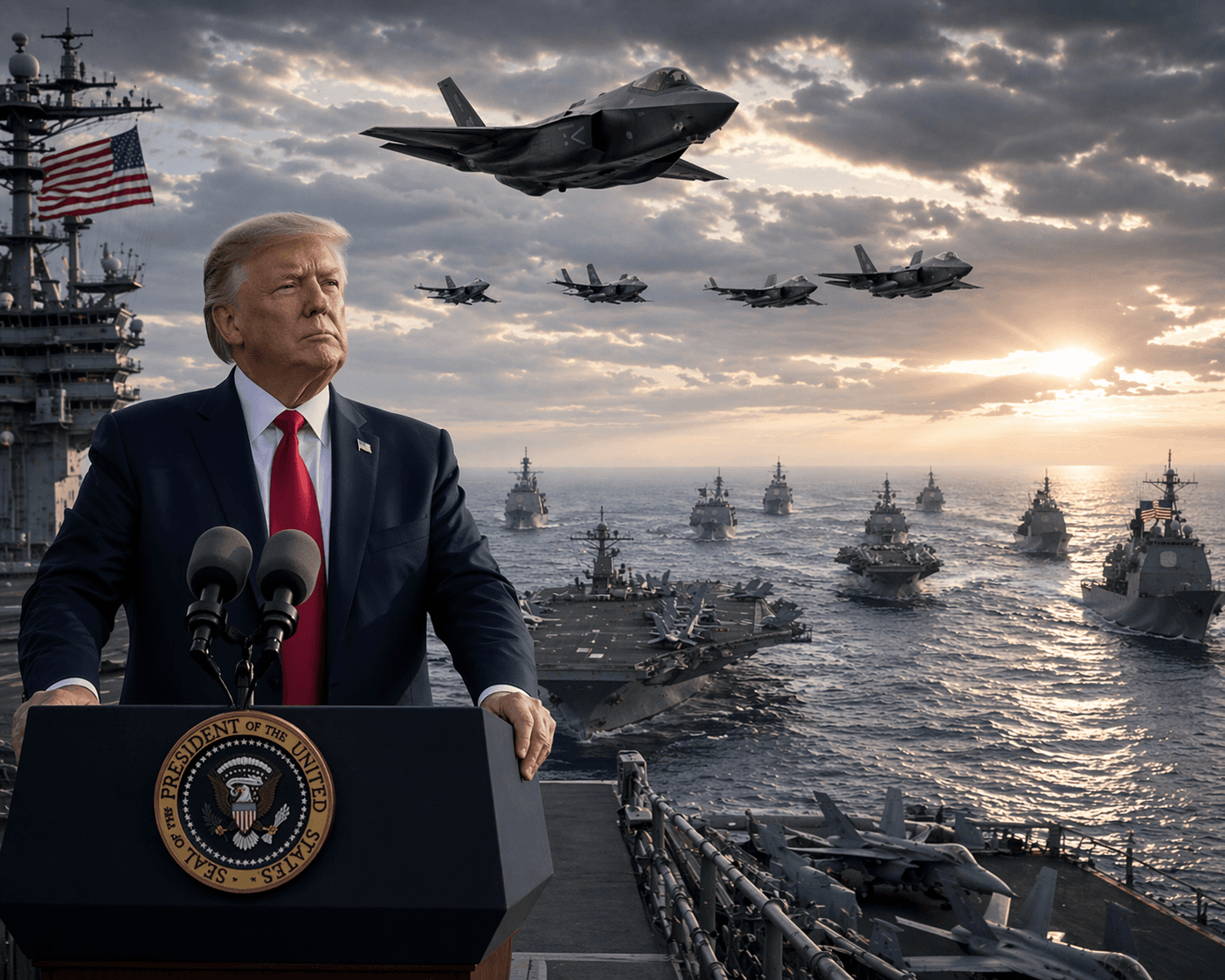
US forces remain positioned near Strait of Hormuz while negotiations continue over long-term agreement
Trump Iran military deployment remains in place despite the recently announced ceasefire, reflecting ongoing strategic caution amid negotiations between Washington and Tehran.
US President Donald Trump stated that American ships, aircraft, and military personnel would remain deployed in and around Iran until a final agreement is fully implemented.
The announcement indicates that the temporary ceasefire does not represent a complete resolution of the conflict.
Officials emphasised that military readiness will continue while diplomatic discussions progress.
The continued presence of forces highlights the strategic importance of maintaining operational preparedness in the region.
Strait of Hormuz security remains central to negotiations
Trump reiterated that the Strait of Hormuz would remain open and secure under the framework of ongoing discussions.
The waterway is one of the most important global maritime routes, carrying a significant share of international oil and gas shipments.
Ensuring continued access to the route has been a key objective for global energy markets affected by supply disruption.
Restrictions on passage through the strait had previously contributed to rising oil prices and supply chain uncertainty.
Maintaining open navigation routes is considered important for global economic stability.
Energy-importing countries have closely monitored developments affecting maritime access.
Nuclear policy remains a core issue in negotiations
Trump stated that Iran would not be permitted to possess nuclear weapons as part of broader security arrangements.
Nuclear policy has been a central point of discussion in negotiations between the United States and Iran.
International agreements related to nuclear programmes often involve verification measures conducted by global regulatory agencies.
Policy analysts say nuclear negotiations can influence diplomatic relations and regional security dynamics.
Security experts note that verification mechanisms are typically included in agreements involving nuclear capability restrictions.
Diplomatic engagement continues regarding compliance frameworks linked to long-term agreements.
Statements indicate continued uncertainty despite ceasefire
Trump stated that military forces would remain prepared to respond if the terms of the agreement are not followed.
Officials said the continued deployment aims to ensure compliance with commitments linked to maritime security and regional stability.
Statements from the White House emphasised that negotiations remain ongoing and details of the final agreement are still under discussion.
White House Press Secretary Karoline Leavitt said reports regarding negotiation proposals should be interpreted cautiously due to misinformation concerns.
Officials indicated that earlier proposals attributed to Iran were not accepted by US negotiators.
Policy observers say conflicting statements highlight the complexity of diplomatic negotiations.
Geopolitical implications for regional stability
Continued deployment of military forces may influence strategic calculations across the Middle East.
Allied countries in the region are monitoring developments affecting security cooperation and defence coordination.
Military readiness can affect diplomatic leverage during negotiations involving security commitments.
Analysts say ceasefires often involve confidence-building measures while negotiations continue.
Regional stability remains closely linked to outcomes related to maritime security and nuclear policy.
Global markets remain sensitive to developments affecting geopolitical risk.
Economic impact linked to continued military presence
Energy markets continue to monitor developments affecting shipping routes in the Gulf region.
Changes in security conditions can influence oil prices and transportation costs.
Supply chain disruptions linked to geopolitical tensions can affect production costs globally.
Financial markets often respond to signals related to stability in energy supply routes.
Economists say geopolitical uncertainty can influence inflation expectations and investment decisions.
Developments related to the Strait of Hormuz remain closely tracked by commodity markets.
Outlook as negotiations continue between US and Iran
Diplomatic discussions continue regarding conditions linked to long-term agreements between Washington and Tehran.
Policy analysts say continued military presence may act as a deterrent while negotiations progress.
The Trump Iran military deployment reflects ongoing uncertainty regarding final terms of agreement.
Global stakeholders remain focused on developments affecting maritime security, nuclear policy, and regional stability.
Further diplomatic engagement may influence geopolitical conditions affecting global trade and energy markets.
Topics
Covering startup news, AI, technology, and business at ThePrimely. Delivering accurate, in-depth reporting on the stories that shape the future.