
Elon Musk’s Terafab: The Future of AI Chip Power
A Defining Move in the AI Race
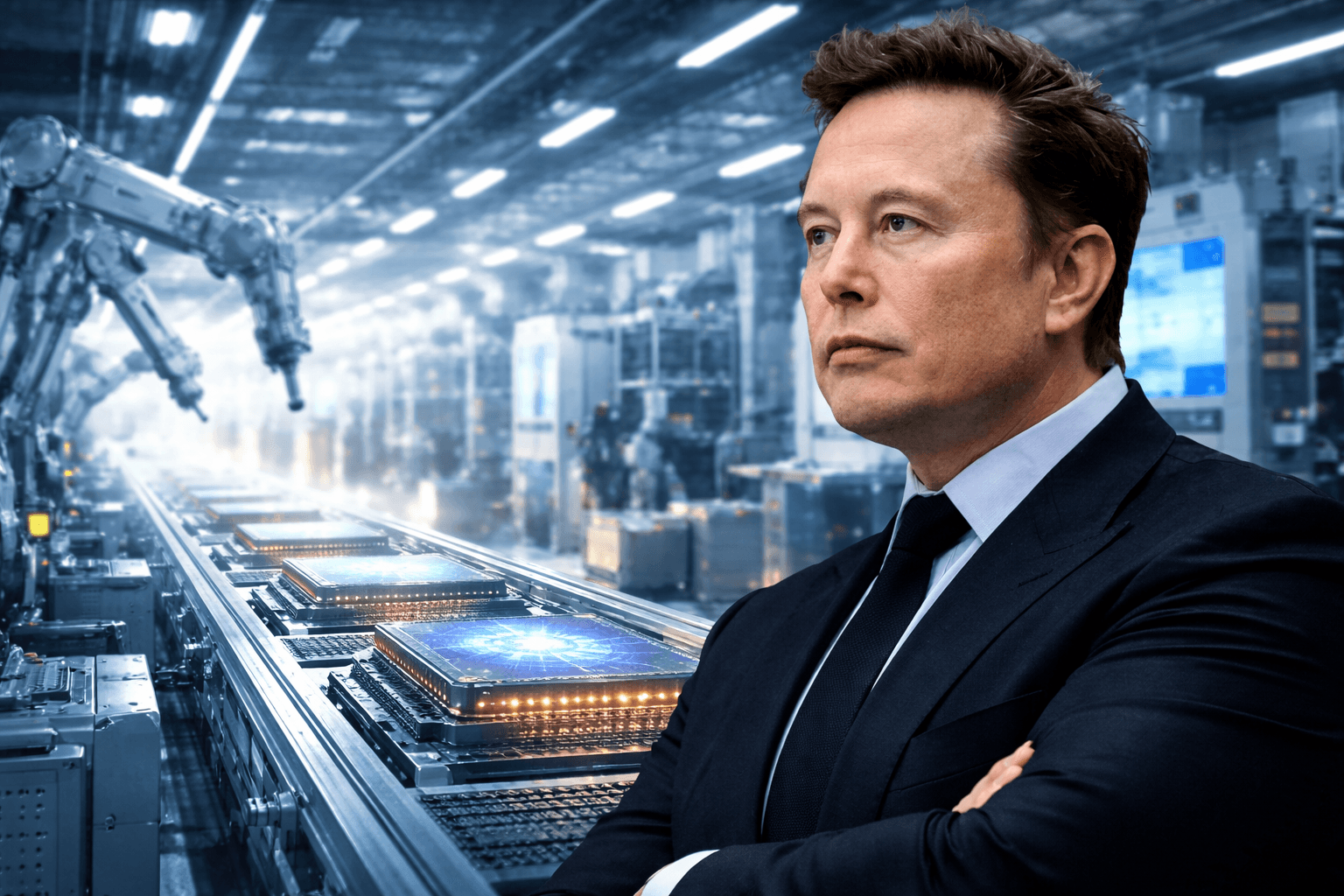
The Terafab AI chip factory marks one of the most ambitious technology bets by Elon Musk. The project aims to build a massive semiconductor facility in Texas. It will support Tesla, SpaceX, and xAI.
This is not just another factory. It is a strategic move to control the future of artificial intelligence infrastructure.
As demand for AI computing rises sharply, Musk is moving to secure supply at scale.
What Is Terafab
Terafab is a large scale semiconductor manufacturing project. It is designed to produce advanced AI chips for multiple applications.
Key facts confirmed so far:
- The facility will be built in Austin, Texas
- It is a joint effort between Tesla, SpaceX, and xAI
- The goal is to produce massive AI computing capacity, potentially up to one terawatt
- It will support robotics, autonomous vehicles, and space based systems
Unlike traditional chip plants, Terafab aims for full vertical integration. This includes design, manufacturing, and testing in one ecosystem.
Why Musk Is Building His Own Chip Factory
Rising AI Demand
AI systems now require enormous computing power. Existing suppliers cannot meet future demand.
Musk has clearly stated that relying on external chipmakers is not enough.
Supply Chain Constraints
Even top manufacturers like TSMC and Samsung face capacity limits. This creates a bottleneck for scaling AI systems.
Strategic Independence
Building Terafab reduces dependency on external vendors. It ensures faster innovation cycles and better cost control.
Key Developments and Scale of the Project
Massive Production Vision
Musk aims to produce chips at unprecedented scale. The project could support up to one trillion watts of computing capacity annually.
Multi Industry Integration
The chips will power:
- Tesla’s autonomous vehicles
- Humanoid robots like Optimus
- SpaceX satellite networks and data centers
Investment and Timeline Challenges
Analysts estimate the project could cost over 20 to 40 billion dollars.
However, no clear production timeline has been confirmed yet.
Reshaping the Semiconductor Landscape
Disruption of Traditional Foundries
Terafab challenges existing chip giants. It signals a shift toward in house manufacturing by tech companies.
Acceleration of AI Infrastructure
The project could significantly expand global AI compute capacity. This will support rapid innovation across industries.
Competitive Pressure
Companies like Nvidia and Intel may face stronger competition. However, Musk has also confirmed continued reliance on existing suppliers in the near term.
Strategic Implications for the Tech Industry
Vertical Integration Becomes Critical
Tech companies may follow Musk’s approach. Owning the full stack offers better control and scalability.
AI Becomes Infrastructure
AI is no longer just software. It now depends on massive hardware ecosystems.
Capital Intensity Will Rise
Building such facilities requires billions in investment. Only a few companies can compete at this level.
High Risk, High Impact
Terafab is still in early stages. Execution will be complex and time consuming. Experts believe initial production may take years to materialize.
However, if successful, the project could redefine global AI infrastructure. It may also accelerate the path toward space based computing systems.
A Strategic Leap Toward AI Dominance
The Terafab AI chip factory represents a bold and calculated move. Musk is not just building chips. He is building the foundation for future intelligence systems.
The risks are high. The investment is massive. Yet, the potential impact is transformational.
If executed well, Terafab could reshape how the world builds and uses artificial intelligence.
Topics
Covering startup news, AI, technology, and business at ThePrimely. Delivering accurate, in-depth reporting on the stories that shape the future.