
NASA Artemis II Rocket Moves Toward Launch
A Critical Step Toward Human Lunar Return
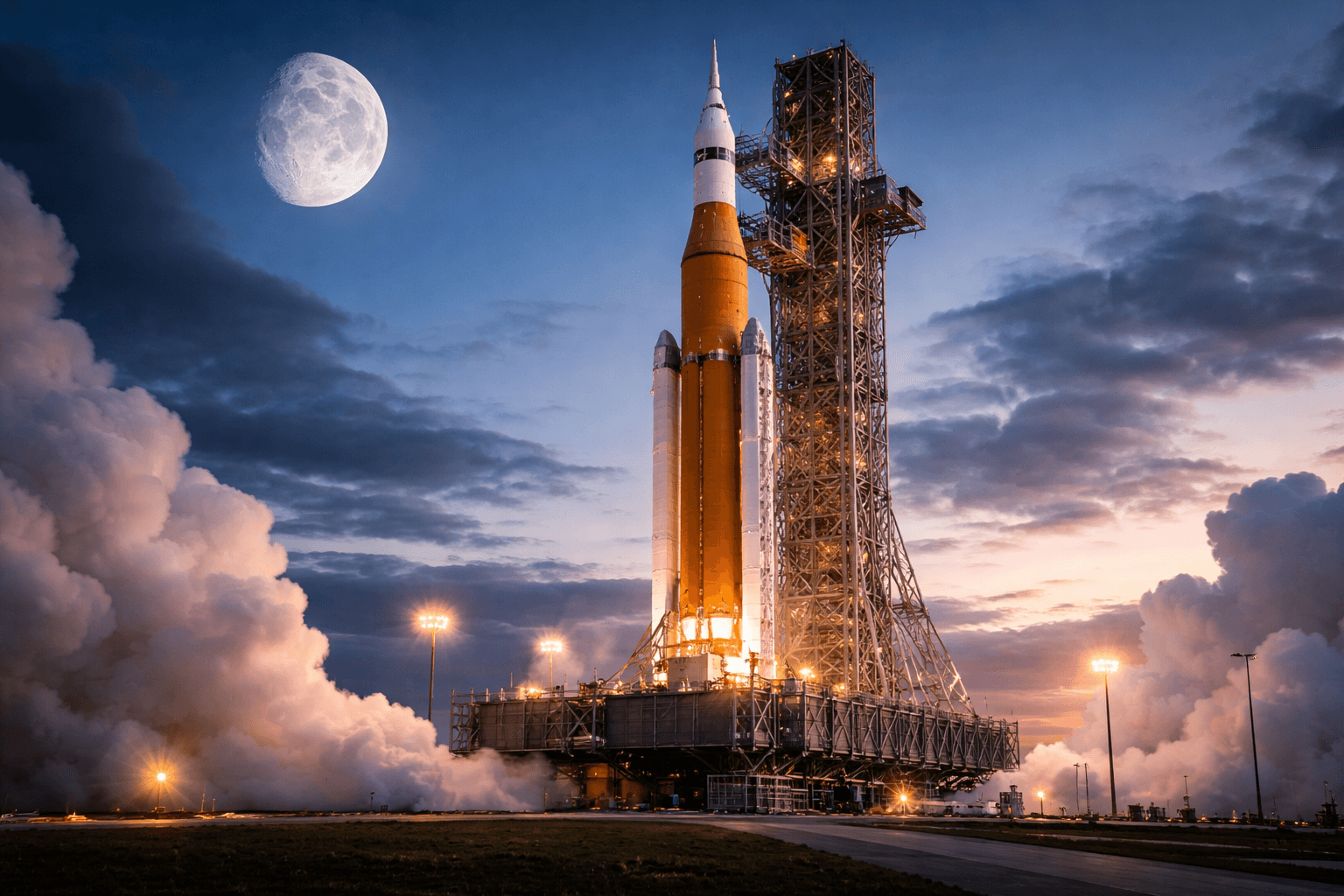
The NASA Artemis II mission has reached a key milestone. NASA has moved its moon rocket back to the launch pad.
This move signals progress. It also reflects the complexity of modern space missions. The Artemis program aims to return humans to the Moon after decades.
However, the journey remains carefully controlled and highly technical.
Understanding the Current Situation
The rocket, part of the Artemis program, was previously moved back for additional checks.
Now, it has returned to the launch site at Kennedy Space Center. This step prepares the system for upcoming mission phases.
The mission will use the Orion spacecraft and the Space Launch System.
Together, they form the backbone of NASA’s next phase of human space exploration.
Why Artemis II Matters
The Artemis program marks a strategic shift in space exploration.
Key Objectives
- Return humans to lunar orbit
- Test systems for future Moon landings
- Prepare for long-term missions, including Mars
Unlike earlier missions, Artemis focuses on sustainability. It aims to build a long-term presence beyond Earth.
Artemis II is especially important. It will carry astronauts around the Moon, though it will not land.
Key Developments in the Mission Timeline
Rocket Movement and Testing
NASA rolled the rocket back to the launch pad after completing technical reviews. Engineers needed to validate systems and ensure safety.
This step confirms readiness for further testing.
Delays and Adjustments
The mission has faced delays. These stem from technical checks, safety protocols, and system upgrades.
Additionally, crew-related preparations, including quarantine protocols, have added to timelines.
System Integration Progress
Despite delays, integration between the Orion spacecraft and Space Launch System continues to improve.
This progress strengthens mission reliability.
Industry and Global Impact
The Artemis program has broader implications.
Space Industry Momentum
The mission supports a growing global space economy. It drives demand for advanced engineering, materials, and innovation.
International Collaboration
NASA is working with multiple global partners. This strengthens cooperation in space exploration.
Commercial Opportunities
Private companies benefit from contracts and partnerships. This expands the role of the commercial space sector.
Strategic Implications for Space Exploration
The NASA Artemis II mission reflects long-term strategy.
Focus on Reliability Over Speed
NASA prioritizes safety and system validation. This approach reduces risk in human missions.
Building a Lunar Ecosystem
Artemis aims to establish infrastructure around the Moon. This includes future space stations and landing systems.
Preparing for Mars Missions
Each Artemis mission builds capability. These steps will support future Mars exploration.
Progress with Caution
The mission remains on track, but timelines are flexible.
Further testing will determine the final launch window. NASA will continue system checks and crew preparations.
While delays may persist, they reflect a careful approach.
The overall direction remains clear. Human return to deep space is advancing steadily.
A Defining Moment for Modern Space Exploration
The return of the rocket to the launch pad marks real progress. It confirms that the NASA Artemis II mission is moving forward.
This mission is not just about reaching the Moon. It is about building the future of space exploration.
NASA’s measured approach ensures long-term success. The stakes are high, and execution must be precise.
The next phase will define how quickly humanity expands beyond Earth.
Topics
Covering startup news, AI, technology, and business at ThePrimely. Delivering accurate, in-depth reporting on the stories that shape the future.