
How Google’s AI Drive Is Transforming Classrooms, Labs and Career Pathways Across India
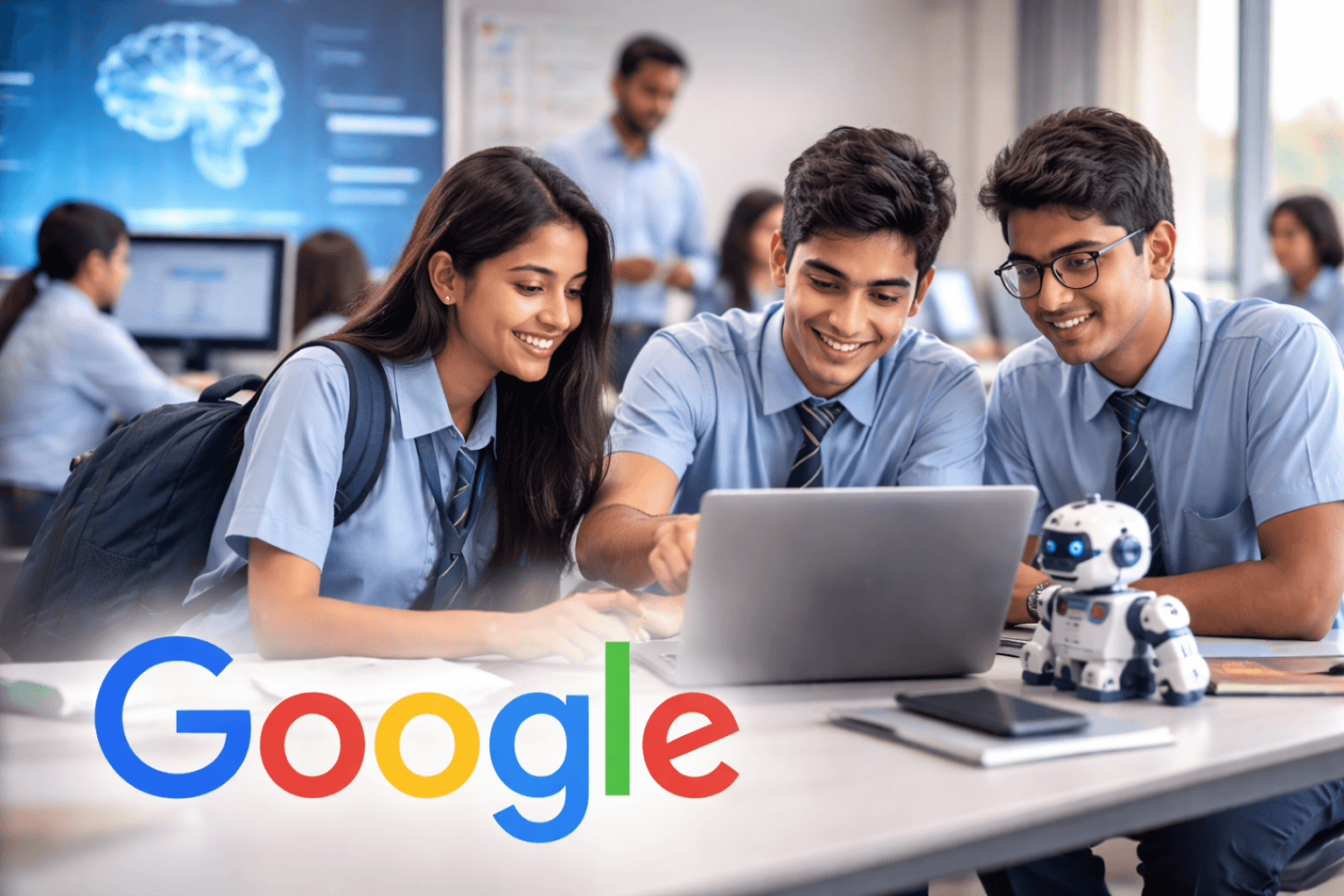
Artificial intelligence is no longer a distant future concept. It is becoming part of the learning environment for students in classrooms, laboratories and field projects across India. A major force behind this transformation is Google’s expanding investment in AI education, which aims to equip students with the skills and experience they need to thrive in the digital economy of 2026 and beyond.
As AI changes how industries operate and what skills are most valuable, educational institutions, students and employers are adapting. Google’s efforts are helping schools and universities integrate AI into core learning, hands on experimentation and real world problem solving. These initiatives are opening new career pathways for students and strengthening the talent pipeline for India’s technology ecosystem.
Google’s Role in Bringing AI Into Indian Education
Google has been actively working with educational partners across India to bring AI into the learning experience. Its programs combine classroom instruction with practical exposure to AI tools, data based reasoning and collaborative projects that reflect real industry problems. This approach moves beyond textbooks and into active skill building.
At many universities, students now access curated AI curriculum that introduces machine learning concepts, responsible AI practices and applied case studies. These courses are supported by online learning resources, cloud based experimentation platforms and local mentorship. Students collaborate in teams to build AI solutions that align with sectors like health, agriculture and sustainability.
This level of integration is particularly important because employers today are seeking graduates who can not only understand AI theory but also apply intelligence driven tools to real challenges. Instead of learning AI in isolation, students are exposed early to how it works in practice.
Classroom Transformation With Real World Relevance
One of the most important shifts in India’s education landscape is the blending of core academic learning with tools that industries use every day. Students are no longer limited to theoretical knowledge. They are learning to use cloud platforms, run analytics on large data sets, and build machine learning models that answer real questions.
For example, students in engineering departments are using AI frameworks to solve engineering design problems, optimise production lines or model traffic flows. Social science students are exploring how AI can help with language preservation, community mapping or economic analysis. These diverse applications help students see AI as a tool that can enhance their chosen field, not as a separate niche skill.
By embedding AI tools into regular coursework, educators are helping students think computationally while staying grounded in domain knowledge. This prepares them for rapidly evolving job requirements where hybrid skills are valued.
Labs and Field Projects That Bridge Theory With Practice
Google’s initiatives also emphasise lab experiences and field projects that connect students with real world challenges. In partnership with universities, students work on problems from local businesses, government programmes and community organisations. These projects make learning tangible and build professional confidence.
Lab based projects often involve collaborative work where students test machine learning pipelines, gather environmental or social data, and iterate on their models with guidance from instructors and industry mentors. Field work introduces the added complexity of user contexts, infrastructure constraints and socio economic diversity. Students learn to design solutions that are practical, equitable and scalable.
This combination of theory, experimentation and real world testing gives students a competitive edge. It allows them to build portfolios of work that demonstrate not just knowledge but impact — a key differentiator in job and internship evaluations.
New Career Pathways From AI Skills
The impact of AI education is most visible in the widening career pathways that students now consider. Where earlier career options were often tied to traditional disciplines, students with AI experience can explore roles in:
- Data science and analytics
- AI application design and implementation
- Cloud engineering and infrastructure
- Machine learning operations
- AI ethics and policy
- Innovation strategy roles within businesses
Google’s involvement goes beyond curriculum creation. The company collaborates with tech partners and industry players to support internships, hackathons and mentorship programmes. These opportunities help students get practical exposure that employers value and make them more competitive in the job market.
Students reported increased confidence in pursuing roles that blend technology with business, design or domain specific expertise. This aligns with broader trends where employers are looking for hybrid talent — professionals who understand both the technical and human impact of AI.
You might like this: Best Online Courses for Working Professionals to Balance Career and Learning
Why Responsible and Inclusive AI Matters
As AI becomes part of education and career pathways, Google emphasises responsible and inclusive AI practices. Teaching students to consider ethical implications, data privacy and fairness is essential. AI is powerful, but if used without care, it can reinforce bias or widen inequalities.
Language technology has been a particular focus because India’s linguistic diversity presents both challenges and opportunities. Students working on language AI are building tools that can support regional languages, improve access to information and create inclusive digital experiences. These efforts help bridge the gap between global AI models and local needs.
Responsible AI education equips students with not just skills but also a mindset. They learn to ask questions about how and why technology is used, not just what it can do. This prepares them for leadership roles where ethical judgement is as important as technical capability.
Broader Impacts on India’s Workforce and Economy
India’s focus on AI in education comes at a time when many industries are transitioning to intelligent systems. From healthcare to agriculture, manufacturing to finance, organisations are seeking professionals who can work with data, interpret insights, and build AI enabled solutions.
By embedding AI into education from the classroom to real world labs, India is nurturing a workforce that is both capable and adaptable. Students who enter the job market with hands on AI experience are better prepared to support innovation, drive digital transformation and create value in dynamic environments.
This alignment between education and industry need strengthens India’s position as a global hub for AI talent. It also supports economic growth by helping businesses access skilled professionals without excessive retraining costs.
Topics
Covering startup news, AI, technology, and business at ThePrimely. Delivering accurate, in-depth reporting on the stories that shape the future.