
Why Silicon Valley Is Paying Attention to the No-Shoes Office Policy
Silicon Valley has seen countless workplace experiments.
However, a simple cultural rule is now sparking serious discussion.
A US based AI startup with an Indian origin co founder has introduced a no shoes office policy.
What started as a cultural preference is now influencing how modern offices think about comfort, focus, and leadership.
More importantly, the idea is gaining traction across Silicon Valley.
That shift reflects a deeper change in how startups design work environments.
The Startup Behind the Policy
The company at the center of the discussion is Temple Energy.
Based in San Francisco, the startup focuses on artificial intelligence and clean energy optimization.
It has raised approximately ₹26.5 crore ($3.2 million) in early-stage funding.
One of its co founders is of Indian origin.
That background directly influenced the company’s workplace design choices.
you might like this :- Punch the Viral Monkey Who Made the World Cry Without Saying a Word
What the No Shoes Office Rule Means
A Simple Policy With Clear Boundaries
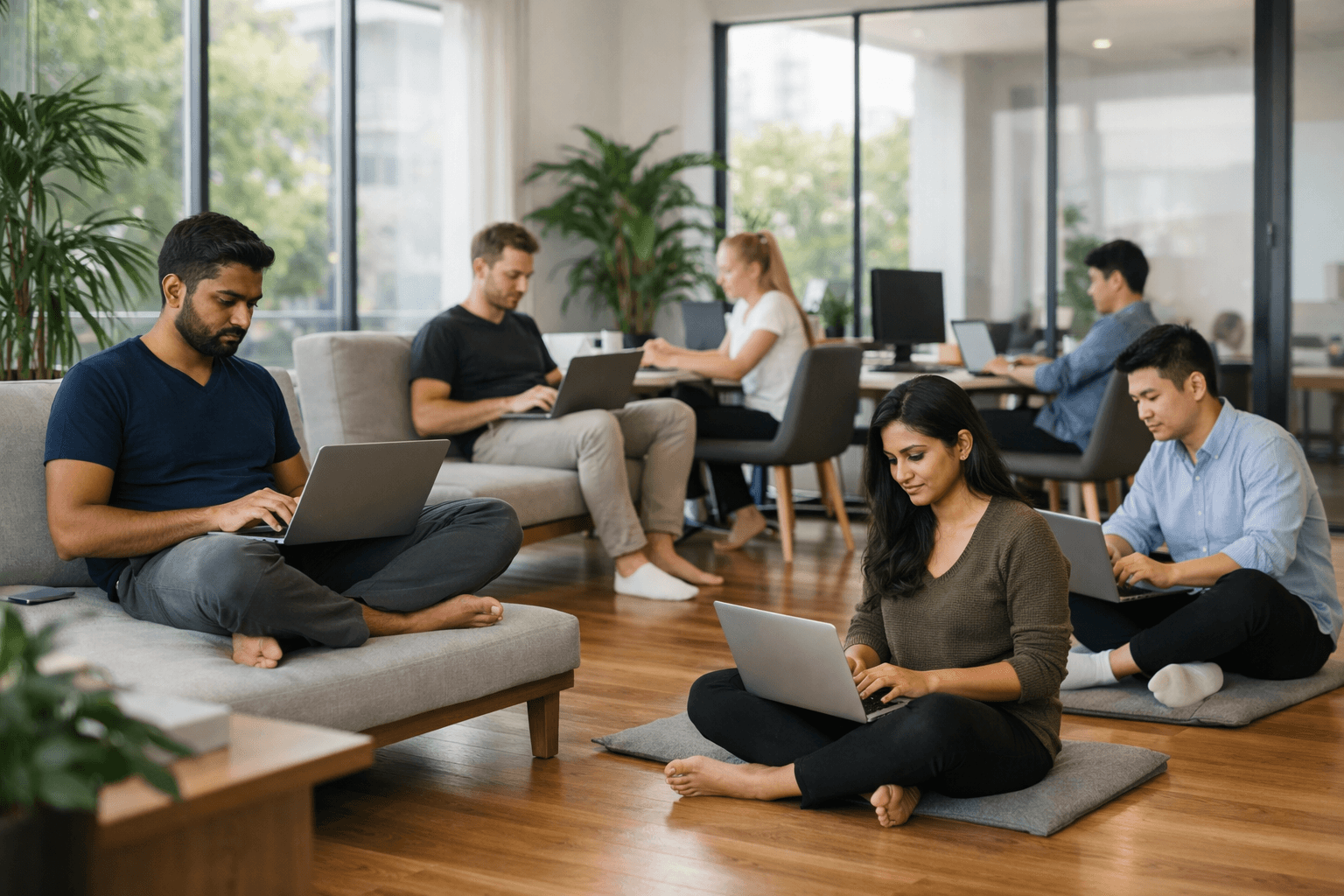
Employees remove footwear before entering work areas.
The office provides clean flooring and dedicated shoe storage.
This is not a symbolic gesture.
It is a clearly enforced internal policy.
Why the Founders Introduced It
According to leadership, the rule aims to:
- Increase physical comfort during long work hours
- Create a calmer, home like atmosphere
- Reduce stress and hierarchy inside the office
As a result, the office feels less transactional and more intentional.
Cultural Influence, Not Corporate Gimmick
The practice draws from Indian household traditions.
In many Indian homes, removing shoes signals respect and mindfulness.
However, the founders did not frame it as a cultural export.
Instead, they positioned it as a productivity and wellness decision.
That framing matters in Silicon Valley.
Ideas succeed there when they solve real workplace problems.
Why Silicon Valley Is Receptive
1. Workplace Culture Is Under Re Evaluation
Remote work changed employee expectations.
Startups now compete on culture, not just compensation.
Comfort and mental focus are becoming strategic assets.
2. Founders Are Redefining Authority
Modern founders avoid rigid corporate norms.
They favor environments that reduce psychological distance.
A no shoes policy subtly removes hierarchy.
Everyone follows the same rule.
3. Global Leadership Is Reshaping Norms
Indian origin founders now lead several billion-dollar US startups.
Their leadership styles increasingly influence Valley culture.
This policy reflects that broader shift
Online Reactions and Industry Response
The policy triggered strong reactions online.
Some praised it as thoughtful and progressive.
Others questioned hygiene and professionalism.
However, most industry leaders viewed it as optional, not prescriptive.
Importantly, no major backlash emerged.
That alone signals cultural openness.
Strategic Implications for Startups
Not About Shoes, But About Control
The policy highlights who defines workplace norms.
Founders are reclaiming that authority.
Cultural Authenticity Is Becoming Valuable
Startups no longer hide founder identity.
They integrate it into operations.
This creates stronger internal alignment.
Expect More Personalized Office Rules
As competition for talent intensifies, offices will diversify.
Uniform culture is losing relevance.
What This Means for the Future of Work
The no shoes office policy is unlikely to become universal.
However, it marks a turning point.
Silicon Valley is no longer culturally rigid.
It now absorbs global influences when they improve performance.
That flexibility may define the next decade of startup leadership.
The rise of the no shoes office policy is not a trend about footwear.
It is a signal about power, comfort, and cultural confidence.
Startups like Temple Energy are proving that leadership authenticity can coexist with high performance.
Silicon Valley is listening because the results speak clearly.
Topics
Covering startup news, AI, technology, and business at ThePrimely. Delivering accurate, in-depth reporting on the stories that shape the future.