
Goldman CEO David Solomon Owns ‘Very Little’ Bitcoin
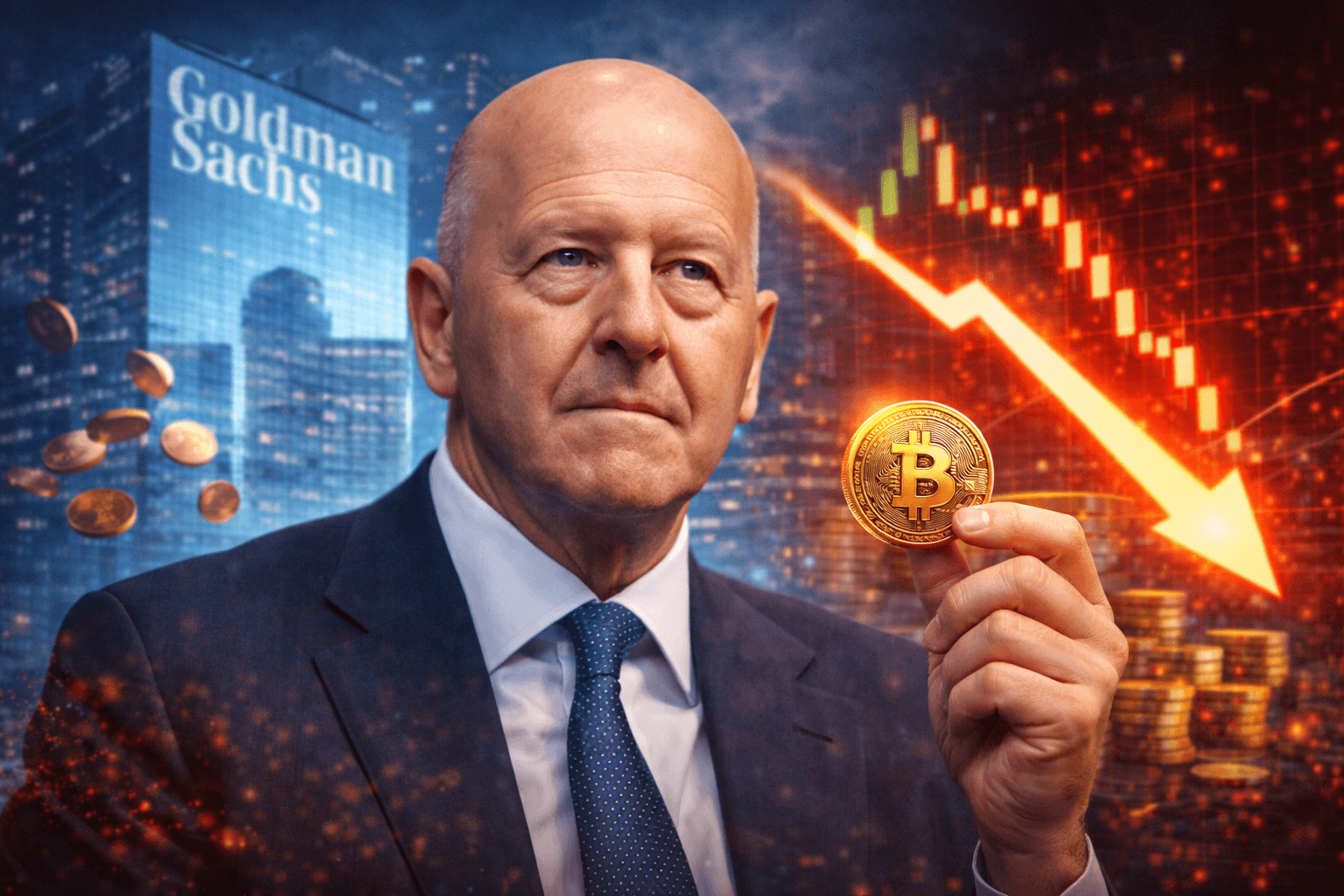
Goldman Sachs CEO David Solomon says he owns “very little, but some” Bitcoin a modest personal exposure that mirrors the bank’s cautious but evolving stance toward digital assets.
Speaking at the World Liberty Forum in Palm Beach, Florida, Solomon described himself as “an observer of Bitcoin,” adding that he is still studying how the asset behaves. His comments come as Wall Street recalibrates its crypto strategy amid shifting regulatory signals and accelerating institutional adoption.
While Goldman has historically taken a conservative approach to digital assets compared with peers, Solomon framed crypto not as a competitor to traditional finance, but as part of a broader structural transformation in market infrastructure.
Crypto and Wall Street: Not a Zero-Sum Game
Solomon dismissed the narrative that banks and crypto-native firms are engaged in a turf war.
“It’s one system, it’s our system,” he said, emphasizing that digital assets and traditional finance are converging rather than diverging.
This framing reflects a broader shift among major financial institutions. Rather than treating crypto as an external threat, banks increasingly view blockchain technology and tokenization as extensions of existing capital markets infrastructure.
That positioning aligns Goldman with peers like JPMorgan Chase and Morgan Stanley, both of which have expanded digital asset services, including crypto trading access and blockchain-based settlement systems.
However, Goldman’s direct exposure has remained limited.
Regulation Has Been the Main Constraint
Solomon attributed Goldman’s restrained crypto footprint primarily to regulatory barriers.
“Until 10 minutes ago, the regulatory structure was extremely prohibitive,” he said, half-jokingly. He suggested that tighter compliance frameworks over the past five years have discouraged broader institutional participation.
His comments echo a recurring theme across Wall Street: regulatory uncertainty, not lack of demand, has slowed deeper crypto integration.
Goldman Sachs has instead focused on research, internal development, and crypto-adjacent infrastructure rather than aggressive balance-sheet exposure.
Solomon also warned that excessive regulation can extract capital from the financial system, potentially dampening innovation and liquidity.
“When you burden this system with excessive regulation, you start to extract capital,” he said.
Tokenization as the Real Long-Term Play
While Bitcoin ownership grabs headlines, Solomon pointed to tokenization as the more significant structural shift.
“The evolution of those platforms … there’s obvious impact,” he said. “Tokenization … that I think is super important.”
Tokenization the conversion of real-world assets such as bonds, equities, or funds into blockchain-based tokens is increasingly viewed as a next-generation upgrade to financial plumbing.
Major institutions are exploring tokenized Treasuries, private credit, and money market funds, seeking faster settlement, lower operational costs, and improved transparency.
In this context, Goldman’s measured stance on Bitcoin may be less about skepticism and more about capital allocation discipline. The bank appears more focused on infrastructure and enterprise blockchain applications than speculative asset exposure.
Strategic Positioning: Defensive or Deliberate?
Goldman’s approach can be interpreted as strategic patience rather than outright conservatism.
While banks like JPMorgan have advanced blockchain platforms such as Onyx and expanded tokenization pilots, Goldman has prioritized research and regulatory engagement. That positioning reduces headline risk while preserving optionality.
If regulatory clarity improves and institutional crypto demand continues growing, Goldman could scale involvement quickly without having overcommitted capital prematurely.
Solomon’s personal Bitcoin ownership “very little, but some” symbolically reinforces that balance: cautious participation without ideological alignment.
The Institutional Shift Is Already Underway
Institutional adoption of crypto has accelerated in recent years, particularly through regulated exchange-traded products and custody services. Large asset managers have entered the space, and digital asset market infrastructure has matured significantly compared to prior cycles.
At the same time, volatility and regulatory scrutiny remain persistent headwinds.
Solomon’s message reflects this duality: Bitcoin is relevant enough to monitor closely, but still complex enough to approach carefully.
What Comes Next
Goldman Sachs is ramping up internal discussions around crypto-adjacent technologies, including prediction markets and tokenized asset frameworks.
If regulators provide greater latitude for traditional financial institutions to engage more deeply, Goldman could expand offerings in custody, structured products, or tokenized securities.
For now, Solomon’s remarks underscore a broader industry reality: crypto is no longer fringe but it is still evolving.
Bitcoin may not yet dominate Goldman’s balance sheet, but it clearly occupies a growing share of Wall Street’s strategic thinking.
Topics
Covering startup news, AI, technology, and business at ThePrimely. Delivering accurate, in-depth reporting on the stories that shape the future.