
XRP Becomes Second Most Discussed Crypto After Bitcoin
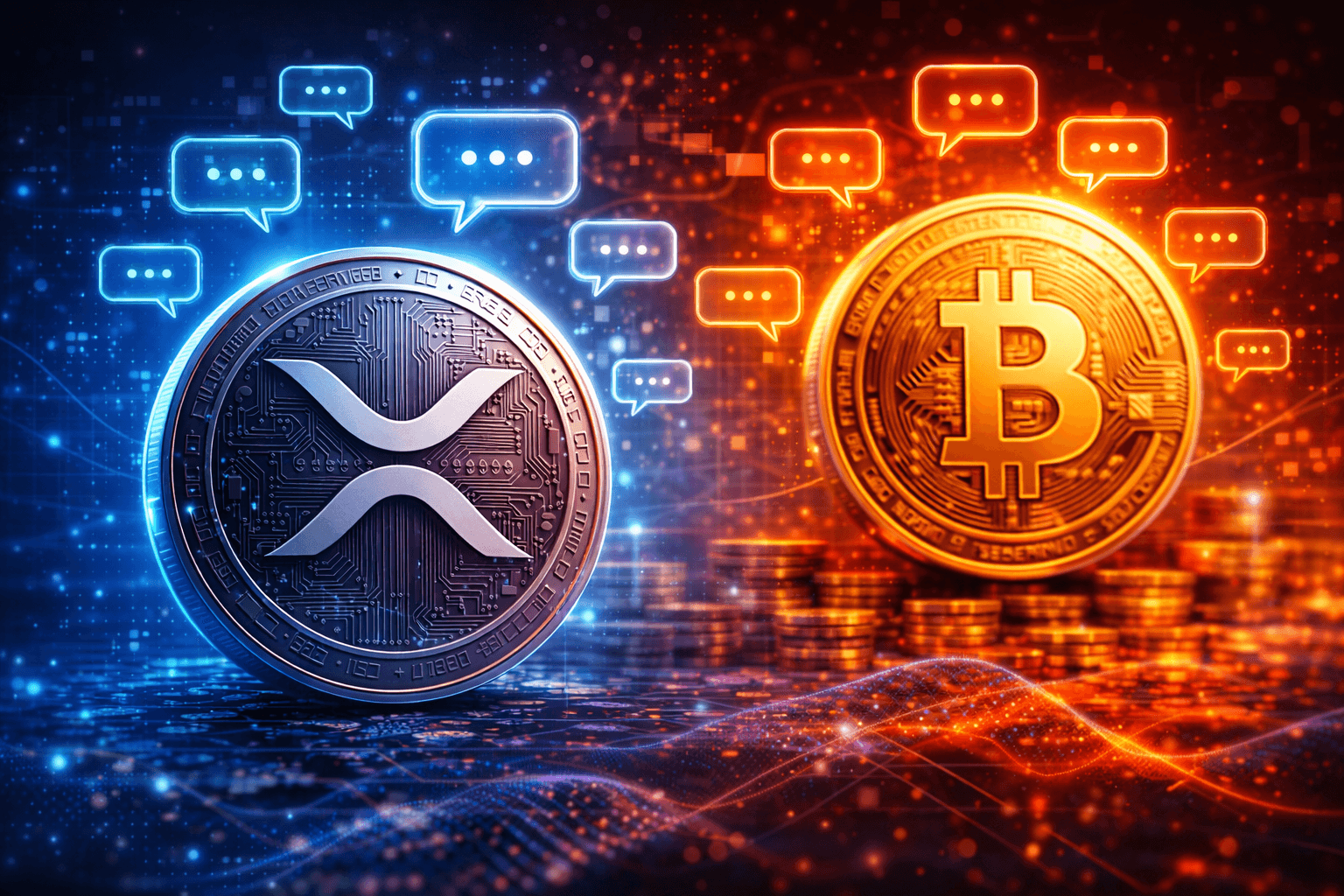
is emerging as one of the most actively discussed digital assets among institutional clients, second only to Bitcoin, according to senior leadership at Grayscale Investments. The shift reflects accelerating investor curiosity around the token’s use case, price momentum, and positioning within a maturing crypto market.
During a recent XRP Community Day event, Rayhaneh Sharif-Askary, Head of Product and Research at Grayscale, said XRP now ranks as the second most talked-about asset in client conversations, trailing only Bitcoin. The comment offers insight into evolving investor focus at a time when capital allocation in crypto is becoming increasingly selective.
What’s Driving the Spike in Conversations
According to Sharif-Askary, financial advisors across Grayscale’s network are fielding consistent inquiries about XRP. Clients are seeking clarity on its growth potential, utility in cross-border payments, and long-term viability.
The significance lies not just in sporadic hype, but in sustained engagement. In a market saturated with thousands of tokens, recurring conversations behind only Bitcoin signal strong visibility and potential capital formation interest.
This shift comes as XRP has outperformed several major cryptocurrencies in short-term price action, posting stronger relative gains than Bitcoin, Ethereum, and BNB in recent weeks. While performance alone does not dictate long-term allocation, momentum often catalyzes deeper institutional research.
Performance and Liquidity Reinforce Attention
Beyond advisor chatter, trading activity supports the narrative of rising demand.
South Korea-based exchange Upbit recently surpassed both Binance and Coinbase in XRP spot trading volume, highlighting strong regional participation. South Korea has historically played an outsized role in XRP liquidity cycles, often amplifying price volatility during momentum phases.
High trading volumes typically signal two key factors:
- Deepening liquidity pools
- Active retail and institutional engagement
Liquidity depth matters in portfolio construction, particularly for advisors considering larger allocations.
From Hype to Utility: A Structural Shift?
The renewed focus on XRP may also reflect a broader maturation within crypto markets.
Investors are increasingly prioritizing:
- Clear use cases
- Network longevity
- Ecosystem growth
- Regulatory visibility
Unlike many speculative tokens launched during recent bull cycles, XRP has operated for over a decade, navigating multiple regulatory challenges and market downturns. Its primary value proposition enabling cross-border payments and financial settlement efficiency remains straightforward and infrastructure-oriented.
This utility-driven positioning differentiates XRP from purely narrative-driven assets. While debate continues around adoption pace and competitive positioning, its role in financial settlement infrastructure provides a tangible thesis for advisors seeking exposure beyond Bitcoin and Ethereum.
Real-World Asset Growth Adds Tailwinds
On-chain metrics further support growing engagement. The XRP Ledger currently ranks second in 30-day Real World Asset (RWA) growth, suggesting expanding tokenization and ecosystem activity.
RWA expansion has become one of the dominant structural themes in crypto this cycle, as institutions explore blockchain-based settlement for traditional financial instruments. If this trend sustains, platforms facilitating compliant, scalable issuance could benefit from capital inflows.
However, it remains early to conclude whether XRP’s RWA momentum represents structural adoption or cyclical positioning.
Competitive Landscape: Where XRP Stands
Despite growing attention, XRP operates in a competitive environment that includes Ethereum’s dominant smart contract ecosystem, stablecoin settlement networks, and emerging cross-border payment blockchains.
Bitcoin continues to anchor institutional portfolios as a macro hedge and digital store of value. Ethereum maintains leadership in decentralized finance and tokenization infrastructure.
For XRP to convert discussion into durable allocation, it must demonstrate:
- Continued network usage growth
- Institutional-grade infrastructure reliability
- Regulatory clarity across major jurisdictions
- Sustained liquidity expansion
Discussion trends alone do not guarantee capital deployment but they often precede it.
Strategic Interpretation: Signal or Sentiment?
The key question is whether XRP’s rising mention frequency represents structural repositioning or cyclical rotation.
Historically, sustained advisor engagement signals early-stage portfolio exploration. Advisors typically research, model risk, and evaluate liquidity before formal allocation decisions. Repeated inquiries can therefore act as an early indicator of potential capital inflows.
However, sentiment-driven spikes can also reverse if broader market conditions deteriorate.
The fact that XRP ranks second only to Bitcoin in discussions suggests elevated relevance but relevance must translate into adoption metrics to drive long-term valuation expansion.
What’s Next
If XRP continues pairing visibility with measurable ecosystem growth, it could strengthen its role in diversified digital asset portfolios.
Key variables to monitor include:
- Institutional fund flows
- Cross-border payment partnerships
- RWA issuance volumes
- Regulatory developments
For now, the conversation momentum is undeniable. Whether it evolves into sustained capital allocation remains the next critical phase.
Topics
Covering startup news, AI, technology, and business at ThePrimely. Delivering accurate, in-depth reporting on the stories that shape the future.