
172-Year-Old Bank Slashes XRP Price Target Amid Crypto Downturn
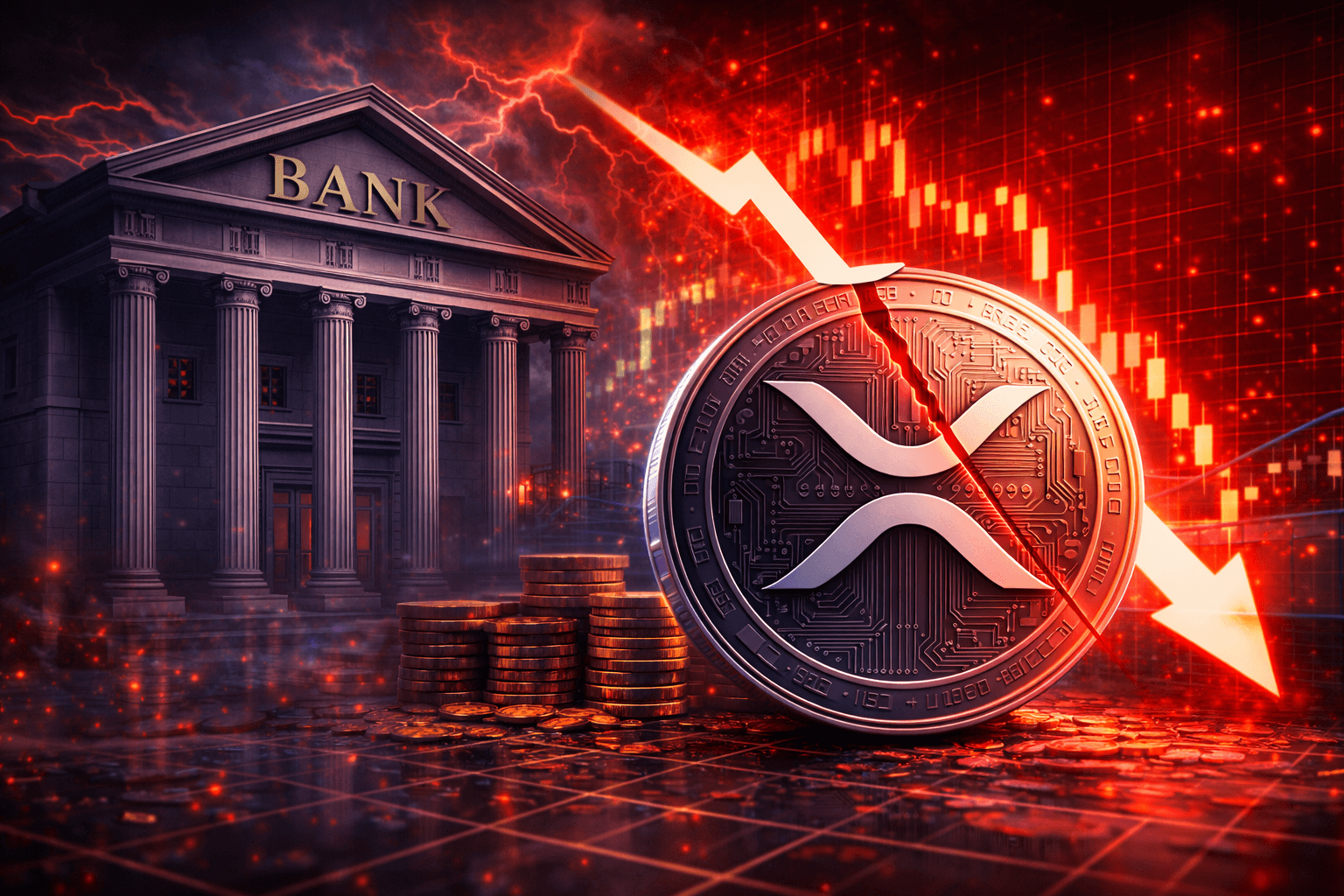
A seasoned global bank known for its long history in finance has given a sobering assessment of XRP’s near-term outlook. Standard Chartered Bank, which has been tracking digital assets closely, downgraded its 2026 year-end price forecast for XRP to $2.80, roughly 65% below its prior $8 target issued late last year.
The revision signals caution among institutional analysts despite recent regulatory clarity and the emergence of exchange-traded funds (ETFs) tied to XRP. This comes as crypto markets remain under pressure and sentiment sours across major tokens.
What Happened
Standard Chartered’s digital assets research team, led by Geoffrey Kendrick, updated its price targets for several major cryptocurrencies after a challenging start to 2026. For XRP, the new $2.80 estimate represents a significant cut from the earlier, more optimistic outlook tied to regulatory developments and ETF flows.
The bank also revised its price expectations for other blue-chip tokens:
- Bitcoin (BTC): from $150,000 to $100,000
- Ethereum (ETH): from $7,000 to $4,000
- Solana (SOL): from $250 to $135
At press time, XRP was trading near $1.48, down modestly over the past week.
Why Standard Chartered Cut Its Forecast
Standard Chartered attributed the downgrade to persistent market headwinds across the broader crypto sector. According to the bank’s research note, crypto price action has been challenging in recent months, with macroeconomic uncertainty, tighter liquidity conditions, and weaker risk asset performance weighing on digital tokens.
Key factors behind the recalibration include:
- Prolonged price weakness across major cryptocurrencies
- Declining investor appetite and thinner trading volumes
- Risk-off sentiment among institutional and retail participants
Analysts have noted that even regulatory wins and ETF introductions often catalysts for renewed interest have not immediately translated into sustained price recovery. Standard Chartered’s shift reflects the view that sentiment and capital flows remain subdued.
Regulation, ETFs, and Market Dynamics
Standard Chartered’s earlier bullish forecast was anchored in positive developments for XRP, including long-running legal battles with the U.S. Securities and Exchange Commission (SEC) and the launch of XRP-linked ETFs by major issuers such as Canary, Franklin Templeton, and Bitwise.
Those factors spurred optimism in late 2025, with some analysts seeing XRP as a candidate for broader institutional adoption once regulatory uncertainty eased. However, the crypto market’s volatility and a broader sell-off in digital assets erased much of that early year momentum.
ETF flows have also ebbed amid market weakness. Data show assets in XRP-linked ETFs declined from about $1.6 billion in early January to roughly $1 billion by mid-February, a drop of around 40%, indicating reduced institutional inflows into the asset.
Competitive & Market Implications
Standard Chartered’s updated targets underscore a broader risk repricing across crypto assets. The simultaneous downgrades across BTC, ETH, SOL, and XRP suggest analysts are incorporating a more defensive outlook into forecasts.
For XRP specifically, this reset contrasts sharply with longer-term bullish narratives that emphasize cross-border payments, settlement infrastructure, and deep network utility. While some market participants remain bullish, anticipating renewed interest once macro headwinds ease, major institutional research desks appear more cautious in the near term.
This divergence between optimistic structural narratives and cautious macro pricing reflects a confluence of factors: slower inflows, episodic volatility, and lingering macroeconomic uncertainty that dampens risk appetite.
What Comes Next
Looking ahead, the path for XRP’s price performance may depend on several variables:
- Macro conditions: Broader risk asset performance and monetary policy signals could influence crypto demand.
- ETFs and institutional interest: Renewed ETF inflows or large institutional engagement could counteract short-term bearish pressure.
- Regulatory developments: Continued clarity around XRP’s legal status and financial utility may support long-term adoption.
Standard Chartered’s revision does not necessarily abandon the long-term utility case for XRP but acknowledges that near-term price performance is constrained by market dynamics beyond token-specific fundamentals.
As crypto markets seek stability, analysts will be watching whether investor sentiment recovers and FX inflows into digital asset products pick up key ingredients for reversing near-term price forecasts.
Topics
Covering startup news, AI, technology, and business at ThePrimely. Delivering accurate, in-depth reporting on the stories that shape the future.