
Bangladesh Cotton Imports Shift Toward U.S. Supply
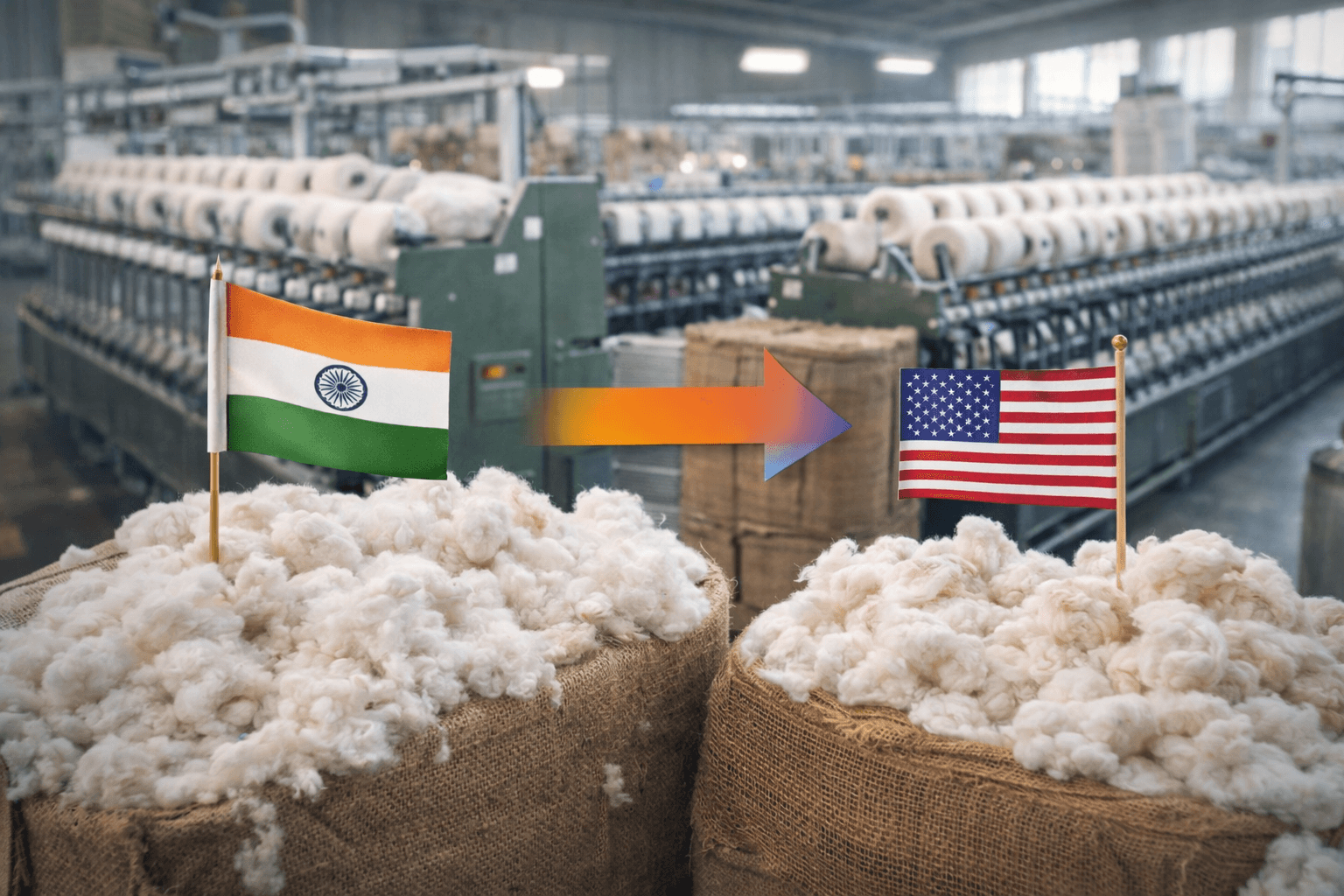
Dhaka / New Delhi: Bangladesh cotton imports are set to shift gradually from India to the United States as authorities move to diversify supply sources and secure higher-quality fiber for the country’s textile sector. Officials say the strategy aims to strengthen sourcing stability while improving yarn and fabric quality.
Bangladesh ranks among the world’s largest garment exporters and depends heavily on imported raw cotton. India has traditionally supplied most of this demand, but recent policy signals suggest Dhaka wants to reduce reliance on any single supplier.
Reports from major international media indicate there is no fixed timeline yet for fully replacing Indian shipments, suggesting the transition will likely be gradual.
Featured Snippet Summary
Bangladesh cotton imports are shifting from India toward the United States as the country seeks higher quality fiber and diversified supply. India still supplies the largest share, but U.S. shipments have grown steadily, indicating a gradual change rather than a sudden trade switch.
Bangladesh Cotton Imports by Source
Recent trade data shows how Bangladesh sources cotton from multiple regions. The figures below reflect broad trends compiled from trade statistics and industry reports.
| Source | 2019 | 2020 | 2021 | 2022 | 2023 |
| India | ~6.5M bales | ~6.2M | ~6.8M | ~7.0M | ~6.9M |
| United States | ~1.8M | ~2.0M | ~2.3M | ~2.5M | ~2.6M |
| Brazil | ~0.5M | ~0.6M | ~0.7M | ~0.8M | ~0.85M |
| Africa and others | ~1.2M | ~1.3M | ~1.4M | ~1.45M | ~1.5M |
Key insight:
Bangladesh cotton imports still depend heavily on India, but U.S. volumes have risen consistently over recent years. Brazil and African exporters hold smaller shares but show steady growth.
Why Bangladesh Cotton Imports Are Shifting
Quality and fiber performance
U.S. cotton is often valued for longer staple length and stronger fibers. Textile manufacturers prefer these characteristics when producing finer yarn and premium garments.
Supply diversification strategy
Relying too much on a single supplier increases vulnerability to price swings, logistics disruptions or policy changes. Expanding sourcing partners spreads risk and improves supply security.
Competitive pricing cycles
Global cotton markets fluctuate. In some grades and seasons, U.S. cotton offers competitive pricing that appeals to large textile buyers.
Officials stress that diversification does not necessarily mean a complete replacement of Indian cotton.
Impact on India’s Cotton Export Market
India has long been a major supplier to Bangladesh’s garment industry. Any reduction in its share could affect:
- export revenue for Indian producers
- bilateral trade balances
- demand for specific cotton grades tailored to Bangladeshi mills
However, Indian exporters note that geographic proximity and lower transport costs still provide a competitive advantage. Longstanding trade relationships may also help preserve market share.
What the Shift Means for U.S. Cotton Producers
The policy direction could create opportunities for American exporters, especially for higher-grade cotton varieties.
The United States remains one of the world’s largest cotton exporters. Reliable logistics, quality certification systems and stable supply volumes make it an attractive supplier for Asian textile hubs.
Analysts say Bangladesh cotton imports could gradually tilt toward U.S. suppliers if quality advantages and price competitiveness continue.
Broader Textile Industry Implications
Bangladesh’s garment sector drives a large portion of its export earnings. Any change in raw material sourcing can influence:
- production costs
- export pricing competitiveness
- factory margins
- foreign exchange flows
Because sourcing shifts usually occur slowly, analysts expect Bangladesh cotton imports to diversify step by step rather than change abruptly.
Outlook for Bangladesh Cotton Imports
Market watchers expect Bangladesh to maintain a multi-supplier strategy. India is likely to remain a major source in the near term, while U.S. shipments could expand if mills prioritize quality improvements.
Future trends will depend on global cotton prices, shipping costs, currency movements and trade policy conditions.
FAQ Schema Section (Ready for Rich Results)
What is happening to Bangladesh cotton imports?
Bangladesh cotton imports are gradually shifting from India toward the United States as the country seeks better quality fiber and more diversified sourcing.
Why is Bangladesh reducing reliance on Indian cotton?
Officials cite supply diversification, fiber quality differences and price competitiveness as key reasons.
Will Bangladesh stop importing cotton from India completely?
No. Authorities have not announced a timeline for a full replacement. Analysts expect a gradual diversification rather than a sudden shift.
Why is U.S. cotton attractive to Bangladesh mills?
U.S. cotton often offers longer staple fibers, consistent quality and reliable supply logistics, which suit higher-end textile production.
How could this affect global cotton trade?
If the shift continues, U.S. exporters could gain market share while India may see a modest reduction in shipments to Bangladesh.
Topics
Covering startup news, AI, technology, and business at ThePrimely. Delivering accurate, in-depth reporting on the stories that shape the future.