
Bitcoin and Iran Noise: Stop Chasing Trump and Watch These Signals
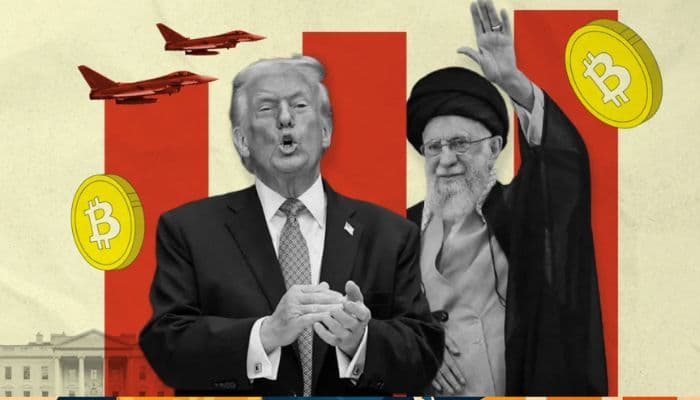
The Bitcoin Iran war signal has become the dominant force driving crypto prices for five straight weeks but most traders are watching the wrong signal entirely. Every peace comment from President Trump sends Bitcoin higher and oil lower. Every hawkish statement reverses the move. The market has been whipsawed so many times that Iran's own Parliament Speaker called Trump's statements a reverse indicator and was promptly proven right.
The uncomfortable reality is that Trump's rhetoric is noise. The real indicators that will determine whether Bitcoin breaks out or breaks down are not coming from Truth Social or White House briefings. They are coming from oil infrastructure data that most crypto traders never look at.
Three metrics matter right now. The Strategic Petroleum Reserve depletion cliff. Ship insurance premiums for Hormuz transit. And actual tanker traffic through the strait. These three tell you everything. Trump's statements tell you nothing durable.
Five Weeks of Whipsaw: How Bitcoin Became Hostage to Headlines
Since the US Iran war began on February 28, Bitcoin has traded in a band roughly between $60,000 and $73,000. It has rallied on every de escalation headline and sold off on every escalation headline, and it has ended each week approximately where it started.
The pattern has repeated with numbing consistency. Trump signals peace on Truth Social, Bitcoin and risk assets jump, oil falls. The next day Trump turns hawkish, or Iran denies any progress, or a tanker gets struck and the whole trade reverses. The Fear and Greed Index has been pinned between 8 and 14 for over a month, sitting deep in extreme fear territory while the price itself churns sideways.
Trump's April 1 primetime address to the nation illustrated the problem perfectly. Markets had spent two days pricing in de escalation after Trump signaled the war might end in two to three weeks. The speech reversed all of that in under twenty minutes. Trump did not outline any shift in Iran policy, did not signal a pathway to a ceasefire, and said the Strait of Hormuz would reopen "naturally" once hostilities subside without specifying when. Brent crude jumped 5% to above $106. Asian shares fell 2.1%. Bitcoin gave back its two day gain and dropped 2.2% to $66,609.
For traders still trying to position around Trump's next statement, the track record of the past five weeks offers a clear verdict: it does not work.
The Real Signal No. 1: The SPR Depletion Cliff Is Weeks Away
The most important indicator for Bitcoin and global risk assets right now is not a price chart or a political statement. It is the state of the world's Strategic Petroleum Reserves.
When the Strait of Hormuz effectively shut down after the war began, tanker traffic through the route which handles roughly 20% of the world's seaborne oil trade collapsed almost immediately. The International Energy Agency's 32 member nations responded with the largest coordinated strategic stock release in the IEA's 50 year history. Initially approximately 400 million barrels, later raised to 426 million barrels as additional nations joined.
Those emergency releases have been covering a supply shortfall of roughly 4.5 to 5 million barrels per day the gap created by the near shutdown of Hormuz flows. Without the SPR releases, oil prices would already be dramatically higher than the $100 to $110 range markets have been navigating.
The problem is that those reserves are now expected to be exhausted within the next two weeks. When they run dry, the effective supply shortfall does not stay at 4.5 to 5 million barrels per day. It doubles to roughly 10 to 11 million barrels per day because the buffer is gone and normal flows have not resumed.
Saudi Arabia's description of this scenario: "a shock of unprecedented scale with no obvious buffer left to absorb it."
An oil shock of that magnitude would not just push crude prices higher. It would trigger massive risk aversion across every asset class simultaneously. For Bitcoin and crypto markets, which have been behaving as risk assets throughout this conflict, the implications are severe.
The critical point is this: the SPR cliff arrives on a physical timeline, not a political one. It does not matter whether Trump continues the war or declares it over. If actual oil flows through Hormuz are not materially restored within the next two weeks, the SPR runs dry and the unmanaged disruption scenario becomes the baseline.
The Real Signal No. 2: Hormuz Ship Insurance Premiums
Political statements about the Strait of Hormuz's safety are meaningless. The insurance market's assessment of actual risk is not.
Before the war began, insurance costs for navigating the Strait of Hormuz ran at less than 1% of a ship's value per trip. As of April 2, those premiums have climbed to as high as 7.5% per trip. For a $100 million vessel, that means a single transit now costs $2 million to $3 million in insurance alone, compared to roughly $250,000 before the conflict.
This is not a negotiated political signal. It is a financial market pricing actual observed risk in real time. Insurance underwriters are assessing the probability of a ship being damaged or destroyed on each transit. When they set the premium at 7.5%, they are saying the risk is real, material, and ongoing.
The threshold that actually matters for risk asset recovery is clear. When Hormuz ship insurance premiums drop below 2%, that is the credible signal that the route is genuinely safer. No political speech, no White House briefing, no Truth Social post can replicate what is embedded in those prices. Market participants can watch this metric in real time and trust that it reflects ground truth rather than political messaging.
Until premiums fall below that 2% threshold, every rally in Bitcoin built on peace talk optimism has a known structural ceiling. The insurance market is telling you the Strait is not safe. If the Strait is not safe, oil flows do not normalize. If oil flows do not normalize, the SPR cliff materializes. And if the SPR cliff materializes, the global risk off event that follows will dwarf anything the crypto market has experienced in the past five weeks.
The Real Signal No. 3: Actual Tanker Traffic Through Hormuz
The most concrete data point of all is the volume of ships actually moving through the Strait of Hormuz. This cannot be faked, managed, or spun.
Before the conflict began, more than 100 ships transited Hormuz daily. Since the war started on February 28, only 21 tankers have made the passage across the entire five week period. That is not a slowdown. That is a near complete halt.
The math is straightforward. Global oil markets require consistent daily throughput. Roughly 20 million barrels of oil equivalent per day flows through Hormuz in normal conditions. With 21 transits in five weeks versus the expected 700 plus, that flow has not been restored in any meaningful way regardless of what diplomatic signals have been sent or received.
A sustainable rally in Bitcoin and risk assets requires tanker traffic to return toward something approaching normal volumes. The number 21 across five weeks tells you that has not happened. Until that number starts climbing toward dozens of ships per day, then toward the hundreds that characterized the pre war baseline, every relief rally driven by political optimism remains structurally vulnerable.
S&P Global Market Intelligence tracks this data in real time. It is publicly available, objectively measured, and cannot be manipulated by political statements. It is the most honest scorecard available for the Hormuz situation.
Why Trump's Statements Have Become a Reverse Indicator
The five week pattern of Bitcoin chasing Trump's Iran rhetoric has produced a predictable outcome: skilled traders have identified the pattern and are now trading against it.
Iran's Parliament Speaker Mohammad Bagher Ghalibaf captured the dynamic precisely when he posted on X on March 30 a post that generated nearly 15 million views describing Trump's pre market statements as a "reverse indicator." His explicit advice: when the statements pump markets, short them. When they dump markets, go long.
Within hours of the post, the advice proved accurate. S&P 500 futures had opened lower, then reversed. The prediction, from Iran's own parliamentary leadership, was correct.
This matters for Bitcoin traders because it quantifies how far the market's ability to trade Trump's Iran statements has degraded. When the counterparty to the conflict is publicly advising a trading strategy based on the predictable unreliability of those statements, the information value of each successive statement approaches zero.
QCP Capital confirmed this assessment in a market note, describing Bitcoin as trading in a $65,000 to $70,000 band throughout the conflict rising on peace signals and falling on escalation with price action "drifting lower into weekends as positioning is pared" before stabilizing at each week's open. The range bound nature of the price action across five weeks of dramatically varying headlines tells you that the political noise is not driving sustained directional moves.
What Bitcoin's Real Structure Looks Like Right Now
Beneath the geopolitical noise, Bitcoin's underlying market structure tells a more nuanced story.
Bitcoin ETFs have attracted approximately $2.5 billion in net inflows over the past month, nearly reversing earlier outflows. BlackRock's Bitcoin ETF has ranked among the top 2% of all ETFs by inflows year to date. Net Bitcoin outflows from exchanges last month signal a shift toward accumulation, with investors buying and withdrawing to self custody rather than selling.
These are structural positives. They tell you that institutional investors are using current prices as accumulation opportunities rather than exiting. That underlying demand floor is one reason Bitcoin has not broken below $60,000 despite five weeks of war driven risk off sentiment.
April has historically been Bitcoin's strongest month. Technical support near $60,000 has been identified by multiple analysts as the next meaningful floor if the SPR cliff triggers a broader risk off event.
The market structure is not broken. Bitcoin is holding a range during one of the most sustained geopolitical risk events in recent memory. That is a form of resilience. But resilience within a range is not the same as the conditions being in place for a breakout.
The Decision Framework: What to Watch, What to Ignore
For Bitcoin traders trying to navigate the next two to four weeks, a simple decision framework emerges from the three real indicators.
Watch: Hormuz ship insurance premiums. Below 2% means the route is genuinely safer and risk appetite can sustainably return. Above 5% means the market's diplomatic optimism is detached from physical reality.
Watch: Tanker traffic volume through Hormuz. Movement toward 30 to 50 ships per day is a meaningful positive signal. Movement toward 80 to 100 per day would signal near normalization and would justify a sustained Bitcoin rally.
Watch: SPR inventory levels and the two week depletion timeline. If governments announce additional emergency reserve releases or alternative supply arrangements that bridge the gap, the cliff is pushed back. If no such announcement comes, the unmanaged disruption scenario approaches.
Ignore: Every Trump statement about Iran on Truth Social, in press briefings, or in primetime addresses until one of the three real indicators above confirms that it corresponds to an observable change on the ground.
The market has now been educated by five weeks of consistent evidence that Trump's statements have a half life measured in hours. The indicators that have a half life measured in weeks are the ones built on physical infrastructure data. Trade those, not the words.
FAQ
1. Why has Bitcoin been stuck in a range during the Iran war? Bitcoin has been trading between roughly $60,000 and $73,000 for five straight weeks because geopolitical headlines are driving short term moves in both directions without changing the underlying supply demand structure. Peace signals cause brief rallies. Escalation signals cause brief sell offs. The net effect across each week is approximately zero directional movement, leaving Bitcoin range bound despite dramatic intraday volatility.
2. What is the SPR depletion cliff and why does it matter for Bitcoin? The Strategic Petroleum Reserve depletion cliff refers to the expected exhaustion of the emergency oil reserves that IEA member nations have been releasing to offset the supply shortfall created by the Strait of Hormuz shutdown. When those reserves run out projected within the next two weeks the supply shortfall could double from 4.5 to 5 million barrels per day to approximately 10 to 11 million barrels per day. An oil shock of that magnitude would trigger severe risk aversion across all asset classes including Bitcoin.
3. How do ship insurance premiums predict Bitcoin's direction? Hormuz transit insurance premiums reflect actual assessed risk from underwriters who have direct financial exposure to getting it wrong. When premiums are at 7.5% of ship value per trip, the market is pricing real, observed danger. When they fall below 2%, the market is pricing genuine safety improvement. Unlike political statements, insurance premiums cannot be manipulated they move based on verified on the ground conditions. A drop below 2% would be the most credible signal that a sustained Bitcoin rally is justified.
4. What does the tanker traffic data show about the Hormuz situation? Only 21 tankers have transited the Strait of Hormuz since the war began on February 28. Before the war, more than 100 ships passed daily. This data confirms that despite multiple rounds of diplomatic signaling, actual oil flows through the strait have not meaningfully recovered. Until tanker traffic returns to volumes approaching normal, every Bitcoin rally built on peace talk optimism lacks the physical evidence needed to sustain it.
5. Why are Bitcoin ETF inflows positive despite all the chaos? Bitcoin ETFs attracted approximately $2.5 billion in net inflows over the past month, and exchange outflows show investors are accumulating and moving BTC to self custody. This behavior buying on dips during a period of maximum fear is consistent with institutional investors treating current prices as attractive entry points for long term allocation rather than selling into the uncertainty. It provides a structural demand floor that has prevented a deeper correction despite sustained geopolitical pressure.
6. When could Bitcoin break out of its current range? A sustained breakout above the current range requires the three real indicators to align. Ship insurance premiums need to fall below 2%. Tanker traffic needs to return toward meaningful daily volumes. And either the SPR depletion cliff needs to be addressed through additional supply arrangements or the physical security of the Hormuz route needs to visibly improve. When those conditions are met, the macro headwinds that have been capping Bitcoin will have genuinely eased rather than simply been paused by a political statement.
The Bottom Line for Bitcoin Traders
The Bitcoin Iran war signal market has produced one clear lesson over five weeks: political statements do not move prices sustainably. Physical reality does.
The three indicators that actually matter SPR inventory levels approaching exhaustion, ship insurance premiums still at 7.5% of vessel value per Hormuz transit, and 21 tanker transits across five weeks compared to 100 plus daily before the war all point in the same direction. The physical disruption to global oil supply has not eased despite the noise.
That does not mean Bitcoin cannot rally. It is accumulating institutional interest, ETF inflows are positive, and April has historically been the calendar's strongest month for crypto. The structural case for Bitcoin is intact.
But a sustained rally requires the real signals to improve not another Trump statement that Iran's parliament speaker will correctly predict will be reversed by tomorrow. Until insurance premiums fall, tankers return, and the SPR cliff is addressed, every peace talk bounce in Bitcoin remains exactly what the past five weeks have shown: a temporary move within a range, driven by noise, waiting for the signal.
Topics
Covering startup news, AI, technology, and business at ThePrimely. Delivering accurate, in-depth reporting on the stories that shape the future.