
India Startup News Today: AI, Funding, and Global Expansion Surge
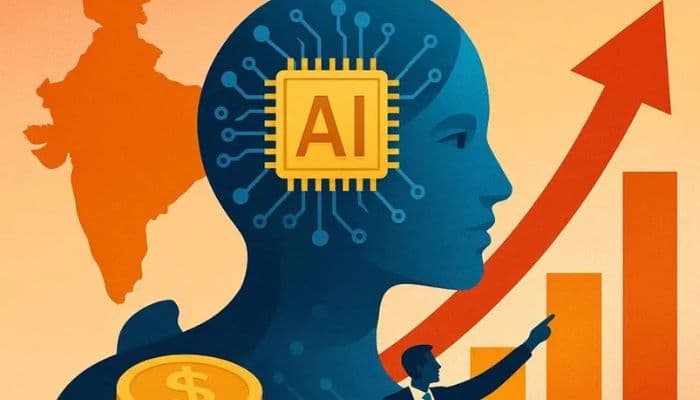
India startup news today on April 1 reflects an ecosystem operating at full momentum. Capital is flowing with intent. AI is moving from promise to measurable operational impact. Global expansion is becoming a standard strategic ambition rather than an exception. And the infrastructure supporting the next generation of Indian companies regulatory, financial, and technological is being rebuilt for scale.
The day's developments span a $50 million venture fund launch in Singapore, a Series A for an AI led savings platform, a Series B for a multilingual agentic AI company, and a semiconductor partnership designed to advance India's self reliance goals. Meanwhile, boAt is entering Malaysia, Pixxel is tackling space debris globally, and consumer brands are moving toward omnichannel models with discipline.
This is not a single story. It is the picture of an ecosystem entering what may be its most consequential phase yet.
Capital Takes the Lead: A $50 Million Debut Fund and Four Funding Rounds
The clearest indicator of an ecosystem's health is where capital chooses to go. Today's funding activity tells that story with precision.
Future Wealth Investments Launches $50 Million Fund
Singapore based Future Wealth Investments has announced the launch of its debut venture fund targeting a corpus of $50 million with a $10 million greenshoe option. The fund is focused on early stage Indian startups from pre seed through Series A, writing cheques between $250,000 and $5 million, and aims to back approximately 20 companies.
A Singapore based firm launching a dedicated India focused fund at this scale is a meaningful signal. It reflects how the international investment community is viewing India's early stage opportunity not as speculative but as a structured, high potential asset class with identifiable return profiles across AI, fintech, and deeptech.
Bachatt Raises $12 Million Series A Led by Accel
Bachatt, a savings and wealth platform built for merchants and selfemployed individuals, has closed a $12 million Series A led by Accel, with participation from Lightspeed and Info Edge Ventures. The company plans to expand its AI led wealth management and credit offerings for an underserved segment of India's working population.
The participation of Accel and Lightspeed two of the most active and credible early stage funds in India signals strong conviction in Bachatt's model. Serving merchants and the self employed is a high impact opportunity. This demographic generates substantial economic activity but has historically been excluded from formal financial products due to irregular income patterns and limited credit history.
Bachatt's AI led approach to credit assessment and wealth building for this segment represents a meaningful step toward genuine financial inclusion rather than simply digitizing existing products.
Gnani.ai Closes $10 Million Series B for Global Expansion
Gnani.ai has secured $10 million in Series B funding led by Aavishkaar Capital. The company builds agentic AI and multilingual voice solutions for enterprise clients seeking automation and localization at scale. The fresh capital will accelerate Gnani's global expansion strategy and deepen its technology capabilities.
Gnani operates in one of the most strategically important AI categories for Indian enterprises: voice and language. India's linguistic diversity with 22 scheduled languages and hundreds of dialects makes multilingual AI a genuinely complex technical challenge that very few companies are positioned to solve. Gnani's specialization in this space gives it a structural advantage in the domestic market and a differentiated offering for global enterprise clients in multilingual geographies.
The Series B at this stage signals that the company has demonstrated product market fit and is now in execution mode for international growth.
Dugar Finance Raises $5 Million for MSME Lending
Dugar Finance closed a $5 million round to expand MSME lending operations in semi urban and rural markets. The focus on underserved geographies beyond major metro areas reflects a growing recognition that India's MSME financing gap is most acute precisely in the markets that large urban focused lenders have historically ignored.
Fanon Raises $1 Million for Gen Z Fandom Content
Fanon, a fandom driven storytelling platform targeting the Gen Z content ecosystem, raised $1 million in pre seed funding. The platform operates in a segment generating over 500 billion views annually, targeting a generation that consumes, creates, and distributes content at a scale and speed that traditional media cannot match.
AI Becomes the Operational Backbone, Not Just the Narrative
Across today's developments, AI is consistently appearing not as a pitch point but as a measurable driver of business outcomes.
Gnani.ai's multilingual agentic AI is addressing enterprise demand for workflow automation that works across Indian and international language environments. KOGO AI's enterprise platform, KOGO Workspace, is enabling organizations to build custom workflows and applications using natural language interfaces removing the technical barrier between business users and the software they need.
The impact is already being measured in operational terms. Girikon.AI reports up to 40% faster response times through its AI voice platform, a quantifiable improvement that translates directly into cost reduction and customer experience gains for the businesses using it.
AI is also reshaping how talent flows through the economy. TeamLease Digital's returnship initiative is actively bringing experienced professionals back into the workforce, targeting a growing talent shortage particularly acute in AI adjacent roles that are commanding significantly elevated salaries. The initiative recognizes that technical talent is not only about training new graduates it is also about reintegrating experienced professionals whose skills have been underutilized.
The direction across all of these developments is consistent. AI is no longer a feature or a differentiator for Indian startups. It is becoming the foundational layer on which competitive businesses are being built.
Strategic Partnerships Push India's Self Reliance Agenda Forward
India's ambition to build domestic technological capability rather than depend on imported solutions is visible across several key partnerships announced this week.
IndiesemiC and Kaynes Semicon: Chip Design Meets Domestic Manufacturing
IndiesemiC has partnered with Kaynes Semicon to integrate chip design capabilities with domestic semiconductor assembly and testing. This is a significant step in India's effort to build an end to end semiconductor ecosystem rather than remaining dependent on international fabrication and testing infrastructure.
The semiconductor supply chain disruptions of recent years exposed how vulnerable global manufacturing is to concentrated chokepoints. India's response building domestic capability across design, assembly, and testing addresses that vulnerability directly and positions Indian companies to participate in global semiconductor supply chains as producers rather than just consumers.
IIT Madras Advances Lab Grown Diamond Technology
IIT Madras is making progress in lab grown diamond technology for applications in quantum computing, photonics, and sensing. These are not niche academic pursuits. Quantum computing, advanced sensing, and photonics are categories where the next generation of computing infrastructure will be built, and materials with unique optical and electronic properties like lab grown diamonds are essential inputs.
India developing domestic research capability in these areas positions Indian institutions and eventually Indian companies to participate in the global quantum and photonics supply chains that will define computing over the next decade.
4baseCare Brings Precision Oncology to Maharashtra's Public Health System
4baseCare has partnered with the Maharashtra government to establish a precision oncology center bringing AI driven, genomics based cancer treatment into the public health system. This collaboration represents healthcare innovation at its most impactful applying cutting edge technology to address cancer treatment in a population that has historically had limited access to precision medicine.
The collaboration model a startup partnering with state government to deploy advanced technology in public healthcare is a template that could be replicated across other states and healthcare verticals.
Global Expansion: Indian Startups Looking Beyond Borders With Intention
Indian startups are increasingly treating global expansion not as a future aspiration but as a current strategic priority. Three developments today illustrate this clearly.
boAt Enters Malaysia With Binny Bansal's Opptra
Consumer electronics brand boAt has announced entry into Malaysia in partnership with Opptra, the Southeast Asia focused venture backed by Binny Bansal, Flipkart's co founder. The Malaysian market, with its digitally native consumer base and strong middle class growth, is a logical first step in Southeast Asian expansion for a brand that has dominated India's audio accessories category.
The Opptra partnership provides boAt with regional market expertise, regulatory navigation, and distribution relationships that would take years to build independently. For Binny Bansal, the collaboration adds a proven Indian consumer brand to Opptra's Southeast Asian portfolio.
Pixxel Tackles Space Debris Through Global Collaboration
Space tech startup Pixxel has announced a collaboration with Cosmoserve to address the growing challenge of space debris. As the number of satellites in low Earth orbit increases, space debris management is becoming a critical infrastructure challenge for the entire global space ecosystem.
Pixxel's involvement in this domain signals India's growing role in addressing shared global space challenges rather than simply launching satellites. It positions Pixxel as a participant in the governance and sustainability of space infrastructure, which carries long term strategic value beyond the immediate commercial opportunity.
Braiin Limited Acquires VIS Networks for AI Enterprise Reach
Braiin Limited's acquisition of VIS Networks underscores India's growing capability in AI led enterprise solutions with global delivery potential. Acquisitions of this type consolidating complementary capabilities under a single entity reflect the maturation of India's enterprise technology sector, where companies are now building scale through strategic consolidation rather than organic growth alone.
Fintech, Regulatory Technology, and Payment Infrastructure Scale Up
The fintech layer of India's startup ecosystem is evolving beyond basic digital payments into sophisticated capital markets innovation, regulatory compliance, and cross border infrastructure.
Pay10's cross border payments platform is simplifying international transactions for Indian businesses, addressing structural inefficiencies that have historically made global trade unnecessarily complex for Indian exporters and importers. As Indian businesses expand internationally, the demand for efficient cross border payment infrastructure grows in direct proportion.
Perfios' DPDP compliance suite addresses the Digital Personal Data Protection Act's requirements for businesses handling consumer data. As India's data protection framework matures, regulatory technology that helps businesses comply without disrupting operations will become essential infrastructure rather than optional tooling.
Mufin Green Finance's structured healthcare financing transaction represents innovation at the intersection of capital markets and social impact, creating new financing instruments for healthcare access that blend financial engineering with policy alignment.
Consumer Brands Build Scale Through Discipline and Omnichannel Strategy
While technology companies dominate the headline conversation, consumer brands are building compelling businesses through product quality, pricing discipline, and strategic distribution expansion.
BlaBliBlu, a fragrance startup, has reached a Rs 100 crore annual run rate driven by a product first strategy and affordable pricing that resonates across India's diverse consumer base. Reaching this scale without relying on deep discounting or heavy marketing spend signals genuine product market fit.
Beyond Appliances is expanding into offline retail with an experience store model that blends digital discovery with physical engagement. The insight behind this approach is straightforward: for considered purchases like appliances, consumers want to see, touch, and experience products before buying. Digital only distribution leaves that need unmet.
Niyo is building a phygital network for forex services, expanding through physical branches while maintaining its digital core. The combination of digital convenience and physical presence addresses the trust requirements of financial services consumers who are not yet fully comfortable with purely digital financial products.
The consistent thread across all three is that digital first brands are embracing omnichannel strategies not because digital has failed but because physical presence deepens customer relationships in ways that purely digital models cannot replicate.
What Today's Ecosystem Signals About India's Direction
Taken together, April 1's startup developments paint a picture that goes well beyond daily funding news. They describe an ecosystem that has developed genuine clarity about where it is going and how it intends to get there.
AI is foundational, not supplemental. Capital is flowing to companies that use AI to solve real operational problems at scale, not just to companies that mention AI in their pitch. The distinction is becoming clearer with every funding round.
Global ambition is structural, not aspirational. boAt in Malaysia, Pixxel on space debris, Gnani.ai's international expansion, Braiin's acquisition these are operational moves, not positioning statements. Indian companies are building globally because they have products, partnerships, and models that work beyond Indian borders.
Domestic capability is being built with strategic intent. The IndiesemiC Kaynes semiconductor partnership, IIT Madras's diamond research, and 4baseCare's public health collaboration all reflect an India that is investing in the infrastructure of technological sovereignty.
Infrastructure is maturing across every layer. Financial infrastructure through Pay10 and Mufin. Regulatory infrastructure through Perfios. Human capital infrastructure through TeamLease Digital. Each layer being strengthened simultaneously accelerates the entire ecosystem.
FAQ
1. What is the most significant startup funding news in India today? Several major rounds closed on April 1. Future Wealth Investments launched a $50 million debut venture fund focused on Indian early stage startups. Bachatt raised $12 million in Series A led by Accel. Gnani.ai closed $10 million in Series B for agentic AI expansion. Dugar Finance raised $5 million for MSME lending. Fanon secured $1 million in pre seed for Gen Z fandom content. Together these represent strong and diverse capital deployment across stages and sectors.
2. What is Gnani.ai and why is its funding significant? Gnani.ai builds agentic AI and multilingual voice solutions for enterprise clients. It raised $10 million in Series B led by Aavishkaar Capital to accelerate global expansion. Its specialization in multilingual AI critical in India's linguistically diverse environment gives it a structural advantage domestically and a differentiated offering for global enterprise clients operating in multilingual markets.
3. What does boAt's Malaysia entry mean for Indian consumer brands? boAt's entry into Malaysia in partnership with Opptra signals that Indian consumer brands are ready to compete in Southeast Asian markets with proven products and strategic local partnerships. It reflects a broader shift where Indian consumer companies are treating global expansion as a current priority rather than a future option. The Binny Bansal backed Opptra partnership provides the regional market expertise that makes the expansion credible.
4. What is the IndiesemiC Kaynes Semicon partnership about? IndiesemiC has partnered with Kaynes Semicon to integrate semiconductor chip design with domestic assembly and testing. This is part of India's broader effort to build an end to end domestic semiconductor ecosystem. The partnership addresses the gap between chip design capability which India has been building and domestic manufacturing and testing infrastructure, which has historically been underdeveloped.
5. How is AI changing India's startup talent landscape? AI is creating a talent shortage particularly acute in AI adjacent roles that command significantly elevated salaries. TeamLease Digital's returnship initiative addresses this by reintegrating experienced professionals who left the workforce back into AI and technology roles. The initiative recognizes that solving the AI talent gap requires activating underutilized experienced professionals alongside training new graduates.
6. What is the significance of 4baseCare's Maharashtra government partnership? 4baseCare's collaboration with the Maharashtra government to establish a precision oncology center brings AI driven, genomics based cancer treatment into the public health system. It demonstrates a model where startup innovation is deployed at scale through government partnership, making advanced cancer treatment accessible to populations that would not otherwise have access. It is also a template for how other states could deploy health tech startups in public healthcare infrastructure.
The Road Ahead
India startup news today reflects an ecosystem that has moved decisively beyond its identity as a fast growing but narrowly focused market. The breadth of today's developments spanning AI, semiconductors, space tech, fintech, consumer brands, regulatory technology, and health tech describes an ecosystem that is genuinely multi layered and increasingly self reinforcing.
The quality of capital deployment has improved. Investors are backing companies with real technology advantages and measurable operational outcomes, not just large addressable markets. The ambition of founders has expanded. Global is not a stretch goal it is being executed. The depth of supporting infrastructure is increasing. From regulatory technology to cross border payments to precision oncology, India is building the infrastructure that makes sustained innovation possible.
If this momentum continues with the same discipline and clarity of direction, India's startup ecosystem is not just approaching global relevance. It is already there and the next phase will be about consolidating that position through continued execution at scale.
Topics
Covering startup news, AI, technology, and business at ThePrimely. Delivering accurate, in-depth reporting on the stories that shape the future.