
Air India Travel Demand Hit: Fuel Surge Raises Risk of Flight Cuts
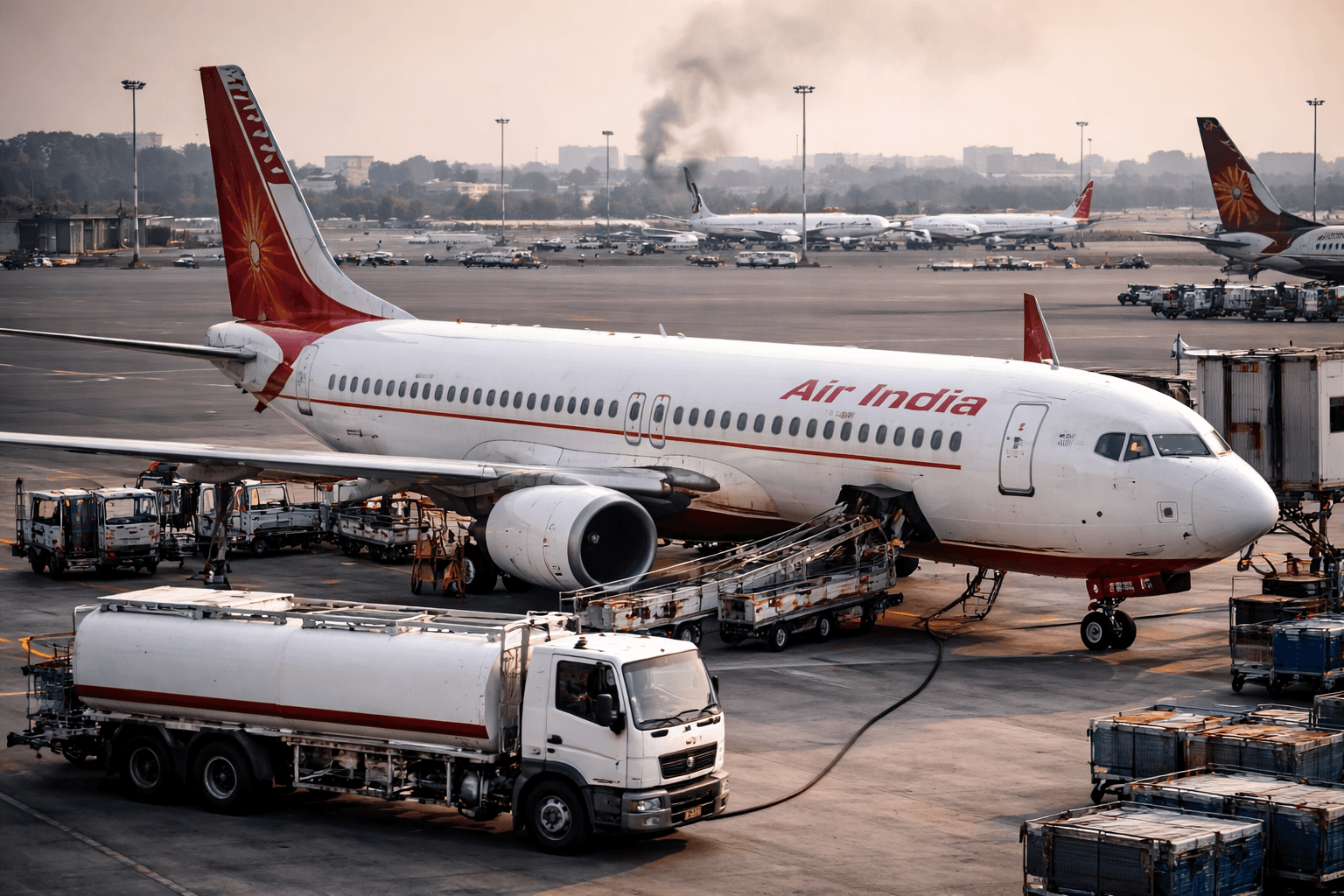
Air India has issued a clear warning about the future of air travel demand as fuel costs surge sharply. The airline’s leadership has indicated that rising operational expenses could affect passenger demand and force airlines to reduce flight capacity.
The Air India travel demand hit reflects a broader shift in the aviation industry, where rising fuel prices are beginning to impact both airlines and passengers.
Fuel Costs Surge Creates Immediate Pressure
The sharp increase in jet fuel prices is the primary driver behind the current situation. The ongoing geopolitical tensions in West Asia have disrupted supply chains and pushed fuel costs significantly higher.
Air India CEO Campbell Wilson noted that jet fuel prices have more than doubled, and the full financial impact will likely be felt in the coming months.
Fuel is one of the largest cost components for airlines, often accounting for nearly 35–40% of total operating expenses.
This sudden rise has created immediate pressure on airline margins.
Limited Scope to Raise Ticket Prices
While airlines typically pass on higher costs to passengers, there is a clear limit to how much fares can be increased.
According to Air India’s leadership, ticket prices cannot be raised indefinitely without affecting demand.
This creates a difficult balance. If fares rise too quickly, fewer passengers may choose to travel. If fares remain low, airlines absorb losses.
This constraint is central to the current challenge facing the aviation sector.
Flight Cuts Emerging as a Likely Outcome
Given the cost pressures and pricing limitations, airlines are now considering reducing capacity.
Air India has indicated that flight cuts may become necessary depending on how fuel costs and demand evolve.
This trend is not limited to India. Globally, airlines are already adjusting operations, cutting unprofitable routes, and optimizing schedules.
Reduced capacity is often the most immediate response to sustained cost increases.
Broader Industry Impact and Global Trends
The issue extends beyond a single airline. The global aviation sector is facing one of its most challenging periods since the pandemic.

Across the industry, airlines are dealing with rising fuel costs, disrupted routes, and operational uncertainty. Fuel prices have surged above $100 per barrel, with some estimates nearing $120 amid geopolitical tensions.
Airlines worldwide are raising fares, adding fuel surcharges, and cutting flights to manage costs.
These developments indicate that the current situation is part of a broader structural challenge.
Impact on Passengers and Travel Demand
For passengers, the impact is already visible. Airfares are increasing, and travel routes are becoming longer due to airspace restrictions.
Air India and other carriers have introduced fuel surcharges to offset rising costs, adding to ticket prices.
As prices rise, discretionary travel demand may weaken. This is particularly relevant for price-sensitive markets like India, where cost plays a key role in travel decisions.
The result could be a gradual slowdown in passenger growth.
Strategic Implications for Airlines
The Air India travel demand hit highlights a broader strategic challenge for airlines.
They must now balance three key factors:
- Rising fuel costs
- Passenger demand sensitivity
- Operational efficiency
Airlines that can manage costs effectively while maintaining competitive pricing will be better positioned to navigate this period.
However, prolonged fuel price volatility could reshape industry dynamics, particularly for carriers operating on thin margins.
Topics
Covering startup news, AI, technology, and business at ThePrimely. Delivering accurate, in-depth reporting on the stories that shape the future.