
Lula Foreign Interference Criticism Signals Rising Global South Pushback
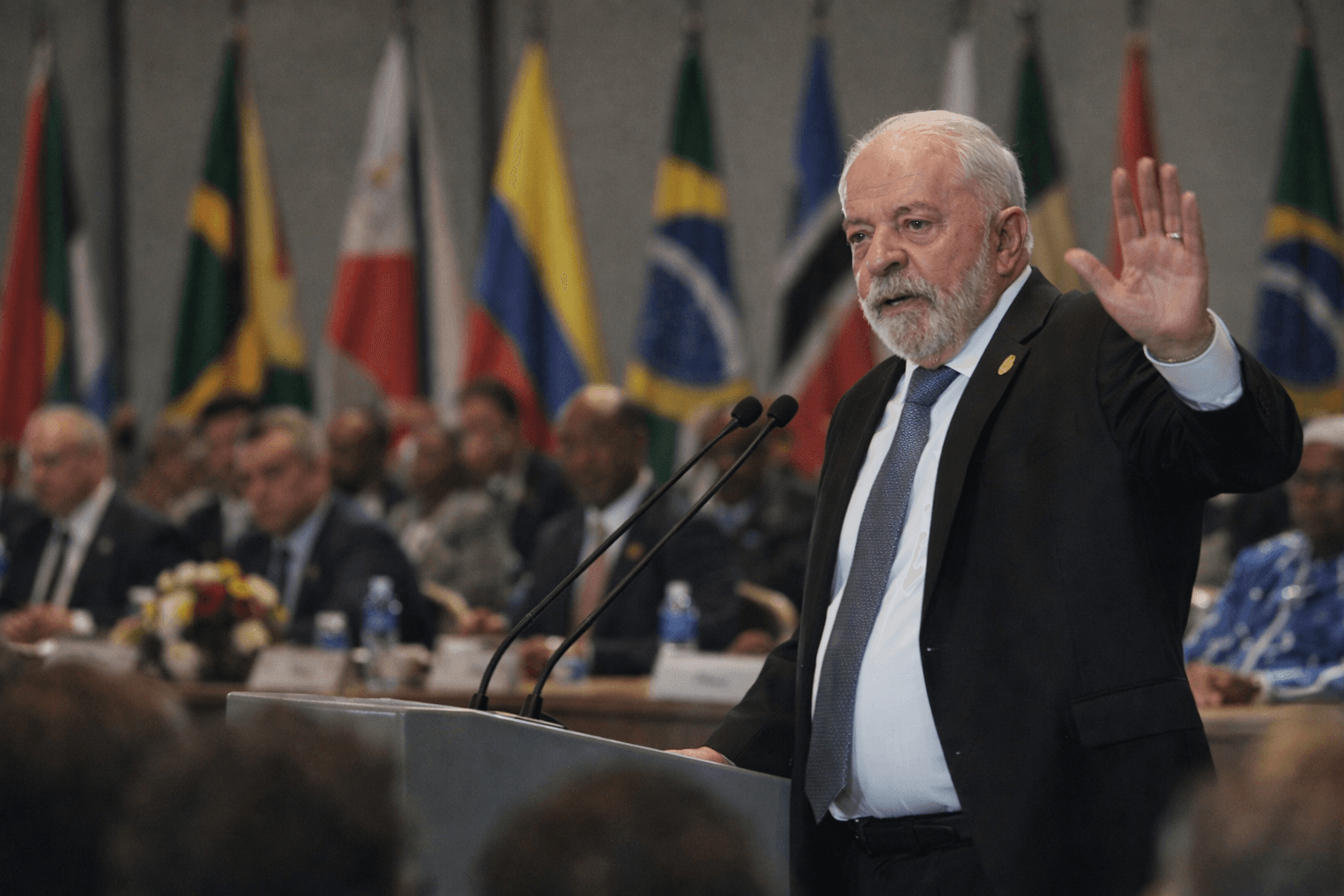
Brazil’s President Luiz Inácio Lula da Silva has delivered a sharp critique of foreign interference in developing nations, highlighting what he described as a return to colonial-style influence. His remarks come at a time of rising geopolitical tensions and shifting global power dynamics.
The Lula foreign interference criticism reflects a broader sentiment among developing countries seeking greater autonomy in international affairs.
Strong Remarks at Global Summit
Lula made his comments during a high-level summit in Colombia, where leaders from Latin America and Africa gathered to discuss global challenges.
He warned against what he sees as renewed external control over developing nations, stating that powerful countries are again attempting to influence or dominate weaker economies.
Without directly naming any leader, his remarks were widely interpreted as criticism of recent United States actions in the region.
He questioned policies affecting countries like Cuba and Venezuela, arguing that such actions undermine democratic principles and sovereignty.
Colonial History as a Central Argument
A key theme of Lula’s speech was historical context. He pointed out that many developing countries have already experienced centuries of exploitation during colonial rule.
Lula argued that current geopolitical actions risk repeating that pattern. He warned that global powers are now targeting critical minerals and natural resources in developing regions, suggesting a new form of economic control.
This framing connects modern geopolitical tensions with long-standing concerns about resource extraction and inequality.
Criticism of Military Actions and Global Governance
Lula also expanded his criticism to recent military conflicts. He questioned the justification behind ongoing wars, drawing parallels with past interventions such as the Iraq War.
He specifically raised concerns about the ongoing conflict involving the United States and Israel in West Asia, suggesting that such actions reflect a broader pattern of intervention.
In addition, Lula criticized the United Nations for failing to effectively address global conflicts. He argued that the current system lacks the ability to enforce peace or ensure balanced decision-making.
Geopolitical Context and US-Brazil Tensions
Lula’s remarks come amid ongoing tensions between Brazil and the United States. Over the past year, disputes have included trade policies, political interference allegations, and differing positions on global conflicts.
Recent US actions in Latin America, including interventions and economic measures, have been viewed critically by several regional leaders.
These tensions reflect a broader divide between developed and developing nations on issues of sovereignty and global governance.
A Broader Global South Perspective
The Lula foreign interference criticism is not an isolated position. It aligns with a growing perspective among countries in the Global South.
Leaders from Latin America, Africa, and parts of Asia are increasingly advocating for:
- Greater economic independence
- Reduced reliance on major powers
- Stronger multilateral cooperation
This shift is driven by concerns that current global systems disproportionately favor developed nations.
Strategic Implications for Global Politics
Lula’s statements highlight a significant shift in global political discourse.
Developing nations are becoming more vocal in challenging:
- External intervention
- Resource control by global powers
- Imbalances in international institutions
This could lead to stronger regional alliances and increased efforts to reform global governance structures.
At the same time, it may deepen geopolitical divisions, particularly between Western powers and emerging economies.
Topics
Covering startup news, AI, technology, and business at ThePrimely. Delivering accurate, in-depth reporting on the stories that shape the future.