
Trump Iran Oil Sanctions Waiver: Impact on India Supply
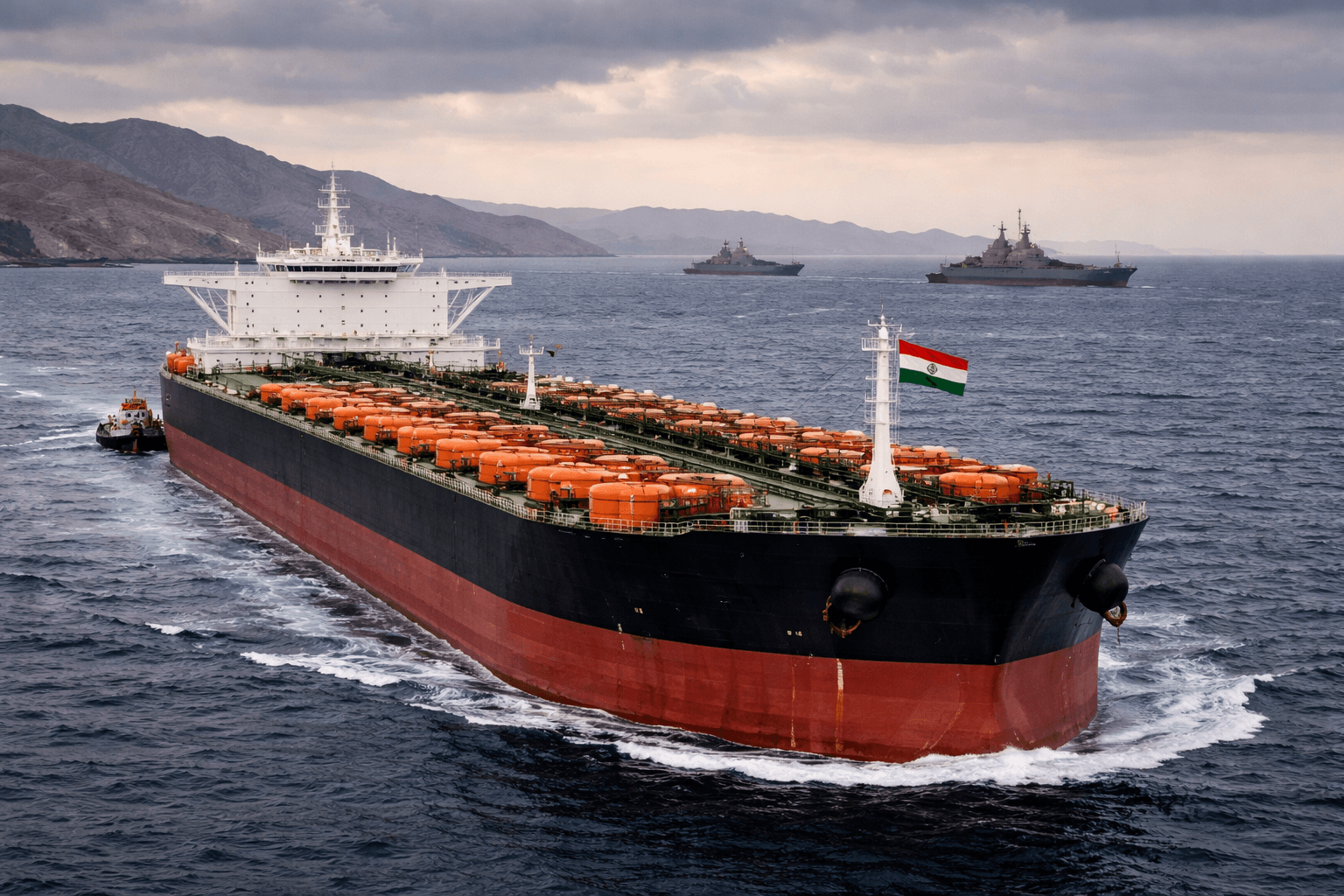
The US decision to allow limited sales of Iranian crude oil could offer short-term relief to India as global supply chains face disruption due to tensions in the Strait of Hormuz.
The waiver allows oil cargoes already loaded on tankers to reach international buyers. Analysts estimate that up to 140 million barrels could enter global markets in the near term.
The move reflects growing concern over supply shortages as the Iran war continues to disrupt shipping routes and energy infrastructure.
Oil prices have already risen sharply due to fears of prolonged supply constraints.
Why the US Allowed Iranian Oil Sales
Washington approved the waiver to reduce pressure on global energy markets.
Disruptions in the Middle East have pushed crude prices above $100 per barrel. Rising fuel costs increase inflation and affect economic stability in many countries.
The Strait of Hormuz carries about 20% of global oil supply. Any threat to this route creates immediate concern in financial markets.
The waiver applies only to oil already at sea. It does not allow long-term trade expansion with Iran.
US policymakers aim to increase supply without making major changes to sanctions policy.
Why This Decision Matters for India
India depends heavily on imported crude oil. A large share of shipments comes from the Middle East through the Strait of Hormuz.
Supply disruptions in this region directly affect India’s fuel costs and inflation outlook.
Additional oil availability could help Indian refiners manage short-term shortages. It may also reduce price volatility if shipments reach markets smoothly.
India earlier reduced purchases from Iran due to US sanctions. Refiners shifted to suppliers such as Iraq, Saudi Arabia and Russia.
The waiver could offer temporary flexibility as companies manage supply risks linked to the ongoing conflict.
Strait of Hormuz Remains a Key Risk
The Strait of Hormuz connects the Persian Gulf to global energy markets. It is the world’s most critical oil transit route.
Recent tensions have reduced shipping activity due to fears of missile attacks and drone strikes.
Insurance costs for vessels have increased sharply. Some shipping companies remain cautious about entering the region.
Oil prices have already crossed $100 per barrel multiple times during the conflict.
Energy analysts warn that prolonged disruption could trigger one of the largest supply shocks in recent decades.
Countries that depend heavily on imported oil remain especially vulnerable to sudden price changes.
Short-Term Relief but Long-Term Uncertainty
The sanctions waiver may ease supply pressure for a limited period.
However, the decision does not remove geopolitical risks linked to the Iran conflict.
Energy markets remain sensitive to military developments and diplomatic tensions.
Prices may continue to fluctuate depending on the stability of shipping routes.
Some analysts believe the waiver shows a pragmatic approach to avoid extreme price spikes.
Others argue the impact may remain limited unless maritime security improves significantly.
India’s Energy Strategy Under Pressure
India has increased efforts to diversify oil suppliers in recent years.
The country now imports crude from a wider range of partners compared with previous decades.
Strategic reserves also provide a buffer during periods of supply disruption.
However, dependence on global markets means price volatility still affects domestic fuel costs.
Policymakers continue to monitor developments in the Middle East closely.
Energy security remains a major priority as global uncertainty continues.
Global Markets Watching the Situation Closely
The Trump Iran oil sanctions waiver India decision highlights the connection between geopolitics and energy supply.
Even temporary disruptions in major oil routes can affect inflation, trade and economic growth worldwide.
Investors, governments and energy companies are closely tracking developments in the Strait of Hormuz.
The waiver provides limited breathing space, but uncertainty remains high.
Future price movements will depend on whether tensions ease or escalate further in the region.
For now, global markets remain cautious as the conflict continues to influence supply expectations.
Topics
Covering startup news, AI, technology, and business at ThePrimely. Delivering accurate, in-depth reporting on the stories that shape the future.